


Oil-free and non-sticky pad printing silicone
Contact Info
- Add:No. 3020-3026, Longgang Avenue, Jixiang Community, Longcheng Subdistrict, Longgang District, Shenzhen, Zip: 518100
- Contact: 洪先生
- Tel:13725031597
- Email:844247811@qq.com
Other Products


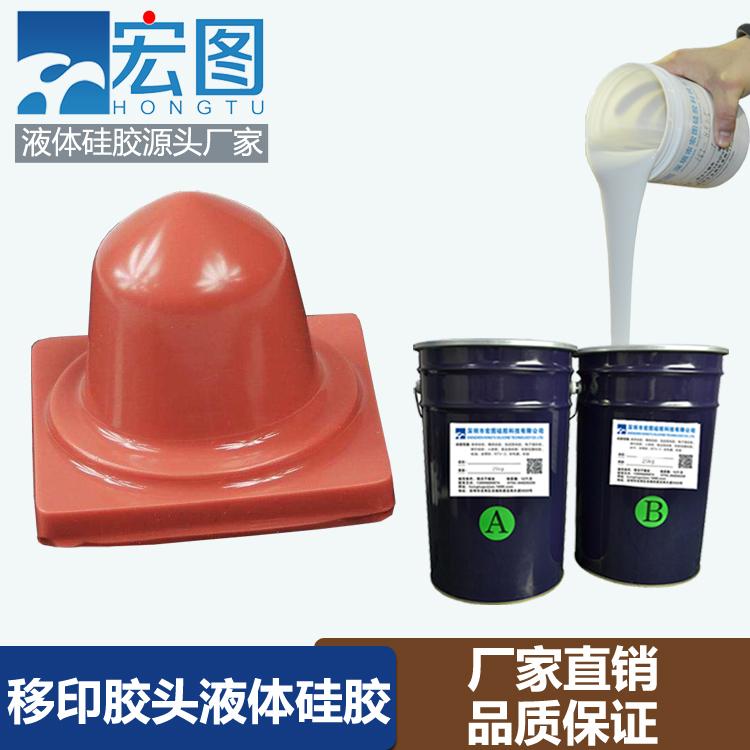
Non-oily, non-sticky pad printing silicone with long service life and high printing frequency
Applications of Pad Printing Silicone:
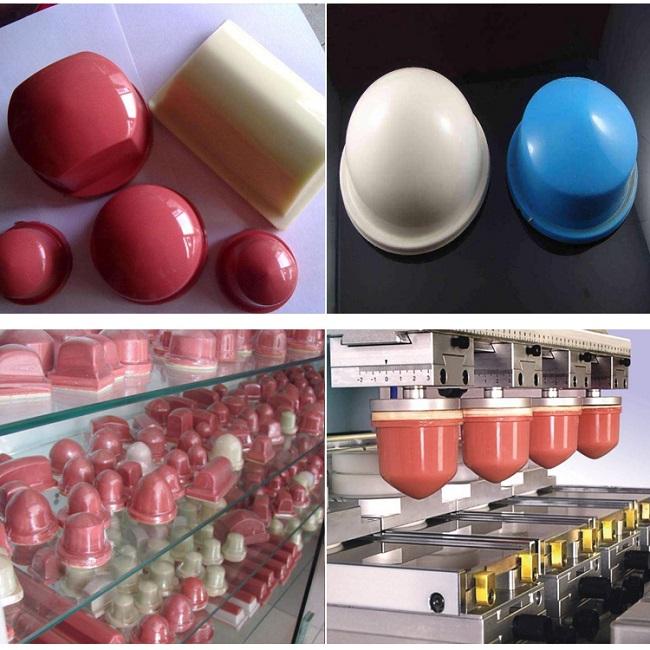
Pad printing silicone is specifically used for manufacturing pad printing pads. It is mainly applied in plastic toys, electroplated products, electronic toys, trademarks, and printing of irregular patterns. The pad printing pad acts as a carrier to transfer patterns from the steel plate onto toy products.
Features of Pad Printing Silicone:
1) Low viscosity, good fluidity
2) Non-shrinking, easy ink application, clear printed patterns
3) Fine texture, good resilience, high printing frequency
4) Professional-grade pad printing silicone is used for manufacturing pad printing pads. It requires fine texture, no impurities, no particles, and excellent resilience. Made from high-quality raw materials and added with DuPont's high-temperature resistant new material, it is processed at high temperatures, offering advantages such as wear resistance, high-temperature resistance, and excellent printing results.
Operation of Pad Printing Silicone:
① First, clean the mold with detergent, then wipe or blow dry the moisture inside the mold, and apply a layer of release agent.
② The normal ratio of pad printing silicone to silicone oil is determined based on customer requirements. If the customer requires printing large pattern areas and a soft pad is needed, increase the amount of silicone oil. Conversely, if a harder pad is required, reduce or avoid adding silicone oil. Generally, the hardness of the pad printing pad should be between 15A° and 25A°. Excessive silicone oil will make the pad too soft, limiting the number of prints. Even the best silicone quality can be compromised by excessive silicone oil, leading to reduced wear resistance, solvent resistance, and accelerated aging.
③ A typical ratio is as follows: 100g of silicone mixed with 30g of silicone oil results in a pad hardness of 20A°, suitable for printing small patterns on products like alloy toy cars with small contact areas. For larger contact areas or softer pads, the ratio of silicone to silicone oil can be adjusted to 100:30, 100:50, etc. However, note that increasing silicone oil reduces hardness, print frequency, wear resistance, and solvent resistance, leading to higher costs and material waste.
④ The curing agent ratio and chemical reaction of silicone are as follows: Take 100g of silicone and 50g of silicone oil, mix and stir thoroughly. After the silicone oil and silicone are fully blended, add 2%–3% of the total weight of silicone and silicone oil as curing agent, stir for another 2–3 minutes, and then proceed to vacuum degassing. The degassing time should generally not exceed 10 minutes, as prolonged degassing may cause the silicone to cure too quickly, affecting the quality of the poured silicone.
Principles of Pad Printing Pad Manufacturing:
a. The vulcanization system of rubber is the foundation of significant advancements in the rubber industry. Pad printing pads are made using the principle of room-temperature vulcanized silicone rubber cross-linking into a network-structured elastomer under the action of vulcanizing agents.
b. Rubber consists of large molecular chain hydrocarbons. Rubber with only carbon atoms in the main chain is called carbon-chain rubber; rubber with other atoms besides carbon in the main chain is called heterochain rubber. If the main chain contains organic groups with atoms like silicon (Si), tin (Sn), or boron (B), it is termed an elemental organic polymer. Silicone rubber is an elemental organic polymer with organic silicon groups in its main chain. There are two vulcanization processes for silicone rubber: high-temperature vulcanization, corresponding to high-temperature vulcanized silicone rubber (HTV), and room-temperature vulcanization, corresponding to room-temperature vulcanized silicone rubber (RTV). RTV silicone rubber is further divided into addition-type and condensation-type.
c. Condensation-type silicone rubber contains terminal hydroxyl groups (-OH), which easily condense with silanes containing hydrolyzable groups (-OCH3, -OCOCH3) for room-temperature vulcanization. The cross-linking agent is ethyl silicate, and the catalyst is dibutyltin dilaurate. Addition-type silicone rubber typically contains -CH=CH terminal groups and usually uses polysiloxane with Si-H bonds as a cross-linking agent for self-addition reactions to form an elastomer.
| Industry Category | Chemicals/Organosilicon/Silicone Resin |
|---|---|
| Product Category | |
| Brand: | 宏图硅胶 |
| Spec: | 宏图系列 |
| Stock: | 10000 |
| Manufacturer: | 宏图硅胶 |
| Origin: | 114403 |


