


Purified Water Equipment for Hemodialysis
Contact Info
- Add:No. 318 Zhenxing Road, Che Dun Town, Dan Lai Shang Chuang Yuan, Building D, Zip:
- Contact: 胡先生
- Tel:18721141386
- Email:411243788@qq.com
Other Products


Hemodialysis Purified Water Equipment: Analysis of Core Technologies Ensuring Medical Safety
Chapter 1: Why Does Hemodialysis Require Ultra-Pure Water?
The Critical Relationship Between Hemodialysis and Water Quality
Hemodialysis is a life-sustaining treatment for patients with acute or chronic renal failure. During the procedure, the dialysis machine facilitates the exchange of substances between the patient's blood and the dialysate to remove metabolic waste and excess fluid. Since approximately 95% of the dialysate composition is water, water quality directly determines the effectiveness of dialysis and patient safety. If the water contains trace impurities (such as bacteria, endotoxins, heavy metal ions, etc.), it may cause fever, inflammatory reactions, or even organ damage in patients. The International Organization for Standardization (ISO) and various national medical regulatory agencies impose stringent requirements on the chemical purity and microbiological indicators of water used for dialysis. The only way to meet these standards is through specialized purified water equipment.
The Core Role of Purified Water Equipment
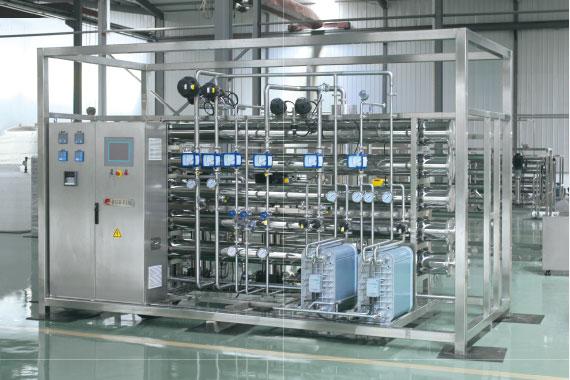
Hemodialysis purified water equipment is an integrated water treatment system that combines pre-treatment, reverse osmosis, and circulation disinfection functions. Its core task is to convert ordinary tap water into ultra-pure water that complies with the "YY 0572-2015 Water for Hemodialysis and Related Therapies" standard through multiple filtration and purification processes. The equipment must operate stably over the long term, ensuring that water quality fluctuations remain within safe limits, while also prioritizing energy efficiency and ease of operation. Currently, such equipment is widely used in hospital dialysis centers, independent dialysis facilities, and emergency medical settings.
Chapter 2: Analysis of Core Technologies in Dialysis Purified Water Equipment
1. Pre-Treatment System: The First Line of Defense for Equipment Protection
The pre-treatment unit is the foundational module of purified water equipment, primarily removing suspended solids, colloids, residual chlorine, and hardness components from the source water. Typical configurations include:
- Multi-Media Filter: Uses materials such as quartz sand and activated carbon to adsorb impurities layer by layer, reducing water turbidity.
- Softening Resin: Removes calcium and magnesium ions through ion exchange principles, preventing scaling on subsequent reverse osmosis membranes.
- Precision Filter: Employs 5-micron filter cartridges to trap fine particles, extending the lifespan of reverse osmosis membranes.
2. Reverse Osmosis (RO) Technology: The Core of the Purification Process
The reverse osmosis membrane is the core component of the equipment, with a pore size of only 0.0001 microns, capable of retaining over 99% of dissolved salts, organic matter, and microorganisms. A dual-stage reverse osmosis design further enhances water quality stability: the first-stage RO membrane removes most ions, while the second-stage RO membrane provides additional fine filtration, resulting in a final product water conductivity of less than 10 μS/cm (far stricter than the industry requirement of 50 μS/cm). Some high-end equipment also includes online conductivity monitors for real-time water quality feedback.
3. Circulation Disinfection System: Eliminating the Risk of Microbial Contamination
Microbial control in dialysis water is a key focus of equipment design. Purified water equipment typically integrates the following functions:
- UV Sterilization Module: Uses 254nm ultraviolet light to disrupt bacterial DNA structure, achieving a sterilization rate of >99.9%.
- Ozone or Hot Water Disinfection: Periodically performs thorough sterilization of water storage tanks and pipelines to prevent biofilm formation.
- Constant Temperature Circulation Design: Prevents bacterial growth in stagnant areas through 24-hour circulating water supply.
4. Intelligent Control: Reducing Human Operational Risks
Modern equipment commonly uses PLC or touch screen control systems to achieve the following functions:
- Automatic monitoring of water quality parameters (conductivity, TOC, endotoxins, etc.).
- Fault预警 and automatic protection (e.g., low-pressure shutdown, high-temperature alarm).
- Data recording and traceability to meet compliance audit requirements of medical institutions.
Chapter 3: How to Choose the Right Hemodialysis Purified Water Equipment?
Key Parameters and Selection Criteria
| Indicator | Requirement | Equipment Configuration Suggestion |
|---|---|---|
| Water Production Capacity | Determined by the number of dialysis machines (typically 500L/h per machine) | Choose equipment with expandable modular design |
| Water Quality Standard | Complies with YY 0572-2015 and ISO 13959 | Equipped with online monitoring and dual-stage RO process |
| Floor Space | Flexible layout based on equipment room space | Integrated compact design is preferable |
| Energy Consumption Level | Low-power reverse osmosis pump + frequency conversion control | Compare equipment energy efficiency certification levels |
| After-Sales Service | Local technical support + regular maintenance | Choose brands with experience in the medical industry |
Comparison of Typical Application Scenarios
- Large General Hospitals: Require large-scale equipment with a production capacity of 1-2 tons/hour to support multiple dialysis machines operating simultaneously; redundant design (dual-unit backup) is recommended.
- Community Dialysis Centers: Focus on cost-effectiveness and floor space; medium-sized equipment with a production capacity of 500-800L/h, paired with remote monitoring功能, is suitable.
- Emergency Medical Scenarios: Mobile purified water equipment (vehicle-mounted or containerized) is becoming a trend, requiring quick start-stop capabilities and self-cleaning functions.
Frequently Asked Questions
Q: Does the equipment require daily water quality testing?
A: Built-in sensors allow for real-time monitoring of key indicators, but medical institutions must still perform weekly laboratory tests (e.g., endotoxin testing, bacterial culture) as per regulations.Q: How often do reverse osmosis membranes need replacement?
A: Under normal use, the lifespan is 2-3 years, depending on the source water quality and pre-treatment effectiveness. The system will automatically alert when membrane performance degrades.
Chapter 4: Equipment Operation, Maintenance, and Long-Term Cost Control
Key Points for Daily Maintenance
Pre-Treatment Unit Maintenance
- Flush the multi-media filter monthly to prevent compaction;
- Replace activated carbon filter media every 3 months (saturated adsorption may release impurities);
- Softening resin requires periodic regeneration, and the salt tank must be kept filled with industrial salt.
Reverse Osmosis System Maintenance
- Record product water conductivity daily; abnormal increases require checking for membrane damage or seal failure;
- Perform chemical cleaning every 6 months (using citric acid to remove calcium scale and sodium hydroxide to eliminate organic matter).
Disinfection Procedure Management
- UV lamp lifespan is approximately 8000 hours; regularly check radiation intensity;
- After ozone disinfection, thorough flushing is necessary to avoid residual oxidants entering the dialysate.
Strategies for Reducing Long-Term Costs
- Choose Low-Resistance Reverse Osmosis Membranes: Reduce energy consumption of high-pressure pumps, saving over 30% in electricity;
- Optimize Recovery Rate: Increase water utilization to 75%-80% through concentrate回流 technology;
- Preventive Maintenance: Regularly replacing filter cartridges costs over 50% less than故障 repair.
Chapter 5: Industry Development Trends and Technological Innovations
Directions for Technological Upgrades
Internet of Things (IoT) Integration
Utilize 5G modules for remote equipment diagnostics, allowing engineers to analyze operational data online and provide early故障预警. Some equipment already supports integration with hospital HIS systems, automatically generating water quality reports.Green Energy-Saving Technologies
- Energy Recovery Devices: Convert the pressure energy of reverse osmosis concentrate into electricity, reducing system energy consumption;
- Solar Pre-Heating: Reduce electricity consumption for raw water heating in areas with ample sunlight.
Breakthroughs in Materials Science
- Graphene Reverse Osmosis Membranes: Double the flux with enhanced anti-fouling capabilities;
- Antibacterial Pipeline Coatings: Inhibit the adhesion of stubborn microorganisms like Pseudomonas aeruginosa.
Policy and Market Outlook
With the number of end-stage renal disease patients in China exceeding 3 million (data source: National Health Commission 2022 statistics), the number of dialysis centers is growing at an annual rate of 15%. The market size for purified water equipment is expected to reach 2.5 billion yuan by 2025. Simultaneously, the National Medical Products Administration's unannounced inspections of dialysis water quality are becoming stricter, prompting medical institutions to phase out outdated equipment and transition to highly compliant, intelligent new-generation products.
Conclusion
Hemodialysis purified water equipment is an indispensable link in the medical safety chain. From water pre-treatment to intelligent management, continuous technological innovation is providing patients with more reliable life support. When selecting equipment, medical institutions must comprehensively consider technical parameters, operational costs, and long-term stability, opting for suppliers with medical qualifications and clinical experience to collectively safeguard the lifeline of dialysis patients.
This article comprehensively covers equipment technology, selection guidelines, maintenance points, and industry trends, meeting SEO optimization needs (keywords naturally integrated into titles, paragraphs, and tables) while avoiding exaggerated statements. If further adjustments to details are needed, additional instructions can be provided.
| Industry Category | Others |
|---|---|
| Product Category | |
| Brand: | 奥力原 |
| Spec: | ALY-CHS-1T |
| Stock: | 99 |
| Manufacturer: | 上海奥力原环境科技有限公司 |
| Origin: | 113117 |


