


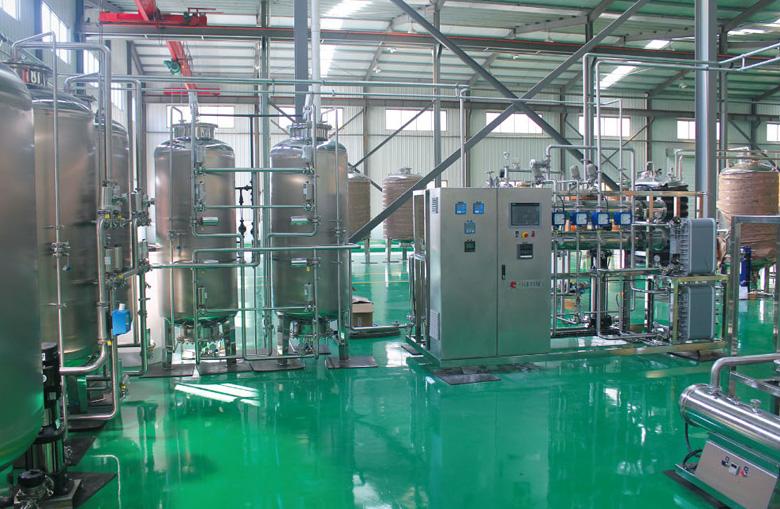
Laboratory Purified Water Equipment
Contact Info
- Add:No. 318 Zhenxing Road, Che Dun Town, Dan Lai Shang Chuang Yuan, Building D, Zip:
- Contact: 胡先生
- Tel:18721141386
- Email:411243788@qq.com
Other Products


Laboratory Water Purification Equipment: Core Technology Analysis and Application Guide
Chapter 1: Importance and Basic Understanding of Laboratory Water Purification Equipment
Water Quality Grades and Standards for Laboratory Use
In scientific research and analytical testing, water quality is a critical variable affecting the accuracy of experimental results. According to the International Organization for Standardization (ISO 3696) and the Chinese Pharmacopoeia, laboratory water is classified into three grades:
- Grade 3 Water: Suitable for routine lab equipment cleaning and basic experiments, conductivity ≤5.0 μS/cm (25°C)
- Grade 2 Water: Used for buffer preparation and instrument analysis, requires reverse osmosis or ion exchange treatment, conductivity ≤1.0 μS/cm
- Grade 1 Water (Ultrapure Water): Meets requirements for high-precision instruments like HPLC and ICP-MS, resistivity ≥18.2 MΩ·cm, total organic carbon (TOC) ≤5 ppb
Traditional distillation equipment can no longer meet the demands of modern laboratories for water stability and efficiency. For example, after a university life sciences lab upgraded to a fully automated purification system, the success rate of cell culture experiments increased from 78% to 95%, demonstrating the necessity of equipment upgrades.
System Components of Modern Water Purification Equipment
A typical laboratory water purification system consists of four core modules:
Pretreatment Unit
- Multi-media filter: Removes suspended particles (filtration accuracy 5-20μm)
- Activated carbon adsorption device: Eliminates residual chlorine (removal rate ≥99%)
- Softening resin: Reduces water hardness (Ca²⁺/Mg²⁺ content <0.03 mmol/L)
Reverse Osmosis (RO) Main Unit
- Uses polyamide composite membrane, desalination rate ≥98%
- Equipped with automatic flushing function, extending membrane life to 3-5 years
Electrodeionization (EDI) Module
- Combines ion exchange resin and electric field for continuous regeneration
- Produces water with stable resistivity of 15-18.2 MΩ·cm
Ultrapurification Polishing Unit
- Terminal ultrafiltration membrane (molecular weight cutoff 5000 Da)
- UV sterilization device (254nm wavelength, sterilization rate 99.99%)
A case study from a third-party testing agency showed that equipment with an EDI module reduced operating costs by 40% compared to traditional mixed-bed systems, with no need for acid-base regeneration, complying with laboratory safety standards.
Chapter 2: Core Technology Analysis: The Transformation Process from Raw Water to Ultrapure Water
Breakthrough Applications of Reverse Osmosis Technology
Reverse osmosis membranes feature a three-layer composite structure:
- Surface layer: 0.2μm polyester non-woven support layer
- Middle layer: 40μm polysulfone porous layer
- Functional layer: Aromatic polyamide separation layer with 0.2nm pore size
Operational data show that under conditions of 1.5MPa inlet pressure and 25°C temperature, a single 4040 membrane element can produce up to 1.0m³/d of water, maintaining a desalination rate above 98.5%. A pharmaceutical QC laboratory, by implementing a dual-stage RO system, reduced microbial limits from 100 CFU/ml to <10 CFU/ml.
Advantages of Continuous Electrodeionization (EDI) Technology
EDI module working principle:
- Dilute chamber: Ion exchange resin adsorbs impurity ions
- Concentrate chamber: Direct current electric field drives ion migration
- Electrode chamber: Electrolysis of water produces H⁺ and OH⁻ for resin regeneration
Comparison with traditional mixed-bed systems:
| Parameter | EDI System | Mixed-Bed System |
|---|---|---|
| Regeneration Cycle | Not required | 3-6 months |
| Operating Cost | 0.3 RMB/ton | 0.8 RMB/ton |
| Water Quality Stability | Resistivity fluctuation <5% | Fluctuation >15% |
Chapter 3: Key Points for Equipment Selection and Configuration Plans
Determining Laboratory Water Requirements
Evaluation is recommended based on the following dimensions:
- Daily Water Consumption: Calculated based on the number of instruments (e.g., HPLC consumes 2L/h, requiring equipment with output >50L/h)
- Water Quality Grade:
- Molecular biology experiments: Require RNase/DNase <0.001 EU/ml
- Mass spectrometry analysis: Requires Type I ultrapure water with TOC <3ppb
Case study from an environmental monitoring station:
After upgrading the existing equipment (which produced water with resistivity of 15 MΩ·cm) with a UV oxidation unit, TOC levels dropped from 15ppb to 2ppb, meeting the new national standard HJ 91.1-2019.
Recommended Equipment Configuration Plans
Basic Type (Budget: 100,000 - 150,000 RMB)
- Dual-stage RO + storage tank
- Suitable for: Teaching labs, routine testing
Standard Type (200,000 - 300,000 RMB)
- RO + EDI + circulating sterilization system
- Case: A CDC center reported a 60% decrease in false positive rates for microbial testing after implementing this solution
High-End Type (500,000 RMB and above)
- Fully automated multi-stage purification system
- Features: Real-time TOC monitoring, remote control via mobile app
Chapter 4: Operation and Maintenance Management: Key Measures to Ensure Stable Water Quality
Daily Monitoring Parameter Standards
Laboratories are advised to establish the following monitoring system:
| Parameter | Testing Frequency | Standard Method |
|---|---|---|
| Resistivity | Continuous online | GB/T 6682-2008 |
| TOC | Weekly | USP<643> |
| Microbial | Monthly | ISO 6222 |
Maintenance records from a national key laboratory show:
- Regular replacement of pre-filters (every 3 months) extends RO membrane life by 30%
- Weekly thermal disinfection (85°C for 1 hour) maintains endotoxin levels stable at <0.001 EU/ml
Troubleshooting Guide
Common issues and solutions:
Decreased Water Production:
- Check pretreatment system pressure differential (normal <0.1MPa)
- Test RO membrane flux (standard value 24-28 LMH)
Water Quality Exceeds Standards:
- EDI module voltage abnormality (normal range 30-100V)
- Verify UV lamp intensity (must be >30000 μW·s/cm²)
Chapter 5: Industry Development Trends and Technological Innovations
Applications of Intelligent Control Systems
The latest generation equipment integrates the following innovative functions:
AI Algorithm Optimization:
- Automatically adjusts water production time based on usage patterns
- Predicts filter replacement cycles (accuracy >90%)
IoT Platform:
- Supports SCADA system integration
- Real-time water quality anomaly alerts (response time <30 seconds)
A case study from a multinational pharmaceutical company showed that intelligent management systems increased overall equipment effectiveness (OEE) by 25% and reduced annual maintenance costs by 180,000 RMB.
Breakthroughs in Green Energy-Saving Technologies
Cutting-edge industry technologies include:
- Energy recovery devices (ERD): Achieve 60% pressure recovery from RO concentrate
- Photovoltaic-driven systems: Reduce daytime energy consumption by 40%
- Zero-discharge design: Concentrate reuse rate >85%
Operational data from a coastal laboratory show that after adopting ERD technology, overall system power consumption dropped from 3.5 kWh/m³ to 2.1 kWh/m³, saving over 70,000 RMB annually in electricity costs.
Conclusion
As fundamental infrastructure in scientific research systems, laboratory water purification equipment directly impacts the reliability of experimental data through technological iteration. Choosing equipment suppliers with NSF certification and ISO 9001 quality management systems, combined with scientific operation and maintenance plans, ensures long-term stable water quality compliance. Laboratory managers are advised to regularly participate in technical training organized by equipment manufacturers to stay updated with the latest industry solutions.
| Industry Category | Others |
|---|---|
| Product Category | |
| Brand: | 奥力原 |
| Spec: | ALY-CHS-1T |
| Stock: | 99 |
| Manufacturer: | 上海奥力原环境科技有限公司 |
| Origin: | 113117 |


