


Purified Water Equipment for Cosmetic Production
Contact Info
- Add:No. 318 Zhenxing Road, Che Dun Town, Dan Lai Shang Chuang Yuan, Building D, Zip:
- Contact: 胡先生
- Tel:18721141386
- Email:411243788@qq.com
Other Products


Purified Water Equipment for Cosmetics Production: Technical Analysis and Application Guide
Chapter 1: The Core Role of Purified Water Equipment in Cosmetics Production
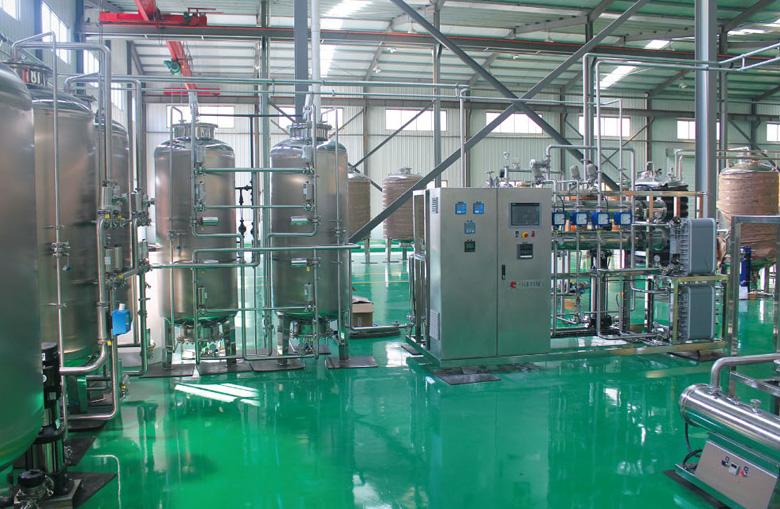
In the cosmetics production process, purified water is an irreplaceable basic raw material. From formula preparation to product filling, the quality of purified water directly affects the safety, stability, and user experience of the product. Purified water equipment for cosmetics production, as a core supporting system in modern cosmetics factories, removes impurities, microorganisms, and ions from water through multiple technological means, providing high-quality water sources that meet international standards for the manufacturing of high-end skincare, makeup, and personal care products.
1.1 The Key Impact of Purified Water on Cosmetics Quality
Water constitutes 60%-90% of cosmetic ingredients, and the purity of water directly determines product performance. Calcium and magnesium ions in ordinary tap water can react with surfactants, causing creams to clump or emulsions to separate; excessive microorganisms may lead to product spoilage; and heavy metal residues pose safety risks. For example, after a certain international brand introduced purified water equipment in its mask production line, the product stability test pass rate increased from 85% to 99%, and quality variations between batches significantly decreased.
1.2 Industry Standards and Regulatory Requirements
According to the "Cosmetics Production Quality Management Standard" and ISO 22716, production water must meet the following key indicators:
- Conductivity ≤ 2.1 μS/cm (25°C)
- Microbial limit < 10 CFU/100ml
- Total Organic Carbon (TOC) < 500 ppb
- Endotoxin < 0.25 EU/ml
Purified water equipment ensures continuous compliance with water quality standards through real-time monitoring systems and is equipped with data recording functions to meet the traceability requirements of GMP certification. Data from a third-party testing agency shows that companies using professional purified water equipment have a 42% higher pass rate in unannounced inspections by regulatory authorities compared to those using traditional processes.
1.3 Economic Benefit Analysis of Equipment Selection
Although the initial investment in equipment accounts for 15%-20% of the total production line investment, its comprehensive benefits are significant:
- Reduction in raw water waste: Recycling efficiency can reach over 85%
- Reduction in product recall risks: Microbial control pass rate increases by 30%-50%
- Extended equipment lifespan: High-purity water reduces pipeline corrosion, extending maintenance cycles by 2-3 times
A medium-sized cosmetics OEM factory's practice shows that the equipment investment payback period is approximately 18 months, with annual operational cost savings of about 1.2 million RMB thereafter.
Chapter 2: Core Technology System of Purified Water Equipment
Modern purified water equipment adopts a modular design, integrating key technologies such as pretreatment, reverse osmosis, EDI continuous deionization, and sterilization to form a complete purified water preparation system. For example, a certain brand's five-stage treatment system can achieve a water purity of 18.2 MΩ·cm, meeting the standards for water for injection.
2.1 Precision Filtration of the Pretreatment System
The pretreatment unit consists of multi-media filters, activated carbon adsorbers, and softeners:
- Quartz sand filtration layer removes suspended particles larger than 20μm
- Coconut shell activated carbon adsorbs residual chlorine and organic matter (adsorption capacity ≥ 900 mg/g)
- Sodium ion exchange resin reduces hardness to below 0.03 mmol/L
Experimental data shows that an optimized pretreatment system can extend the lifespan of reverse osmosis membranes by 40% and reduce energy consumption by 18%.
2.2 Reverse Osmosis (RO) Membrane Separation Technology
Using spiral-wound composite membrane elements, the following is achieved under 1.5-2.5 MPa pressure:
- Desalination rate ≥ 98%
- Organic matter rejection rate > 99%
- Microbial removal rate > 99.5%
New anti-fouling membrane materials, through surface grafting modification technology, increase membrane flux by 25% while enhancing acid and alkali resistance, making them suitable for water quality conditions in different regions.
2.3 EDI Continuous Electrodeionization Technology
Combining ion exchange resin with electrodialysis to achieve:
- No chemical regeneration required: Continuous water production stability reaches 99.9%
- Ion removal rate > 99.99%
- Product water resistivity can reach 16-18 MΩ·cm
Comparative tests by a certain equipment manufacturer show that, compared to traditional mixed-bed processes, EDI systems can reduce operational costs by 30% and wastewater discharge by 60%.
Chapter 3: Equipment System Structure and Intelligent Control
Modern purified water equipment uses 304/316L stainless steel as the main structure and is equipped with a PLC intelligent control system, forming a complete closed-loop system of preparation, storage, and distribution.
3.1 Modular System Composition
- Preparation unit: Integrated unit including pretreatment, RO main unit, and EDI module
- Storage tank system: 316L stainless steel tank with nitrogen sealing to prevent microbial growth
- Circulation pipeline: Sanitary clamp connections with slope design to ensure complete drainage
- Disinfection system: Triple protection with ozone/UV/pasteurization
3D flow simulation of a well-known brand's equipment shows that its pipeline design maintains a flow velocity of >1.5 m/s, effectively preventing biofilm formation.
3.2 Intelligent Control System
Equipped with a 7-inch touchscreen human-machine interface to achieve:
- Real-time monitoring of over 20 parameters, including conductivity, TOC, and flow rate
- Automatic recording of operational data (compliant with FDA 21 CFR Part 11 requirements)
- Self-diagnosis and early warning of faults (accuracy > 95%)
After integrating with the industrial Internet of Things, one company reduced equipment fault response time from 4 hours to 15 minutes, cutting downtime losses by 70%.
3.3 Energy-Saving and Consumption-Reduction Design
- Energy recovery device: Reverse osmosis concentrate pressure recovery efficiency > 35%
- Variable frequency control water pump: Adjusts power according to demand, saving 25%-40% electricity
- Heat exchange system: Pasteurization heat utilization rate increased to 85%
Environmental department tests show that new equipment reduces energy consumption per ton of water by 1.2 kWh compared to traditional equipment, reducing annual CO2 emissions by approximately 15 tons.
Chapter 4: Equipment Selection and Configuration Solutions
Selecting suitable purified water equipment requires comprehensive consideration of multiple factors, including water quality, production capacity, and space. Industry association research shows that scientific selection can improve equipment efficiency by 30%-50%.
4.1 Key Selection Parameters
- Raw water quality: Pretreatment process selection based on TDS value (>500 ppm requires secondary RO)
- Peak water consumption: Recommended selection at 120% of actual demand (e.g., 6-ton model for 5-ton daily production)
- Site conditions: Modular equipment reduces footprint by 40% compared to traditional systems
A daily chemical company achieved a 10 T/h purified water supply system in a 300 m² workshop through 3D simulation layout.
4.2 Configuration Recommendations for Enterprises of Different Scales
- Startups (<1 T/h): Integrated RO + EDI unit with mobile casters
- Medium-sized enterprises (1-5 T/h): Split design with expansion interfaces reserved
- Large groups (>5 T/h): Multiple units in parallel with a central monitoring room
A listed company's distributed water supply system achieved 92% equipment utilization through intelligent scheduling, saving 18% energy compared to single-unit mode.
4.3 Validation and Certification System
Comprehensive validation documents include:
- DQ (Design Qualification): Equipment parameters meet URS requirements
- IQ (Installation Qualification): Pipeline slope, material certificates, etc.
- OQ (Operational Qualification): 72-hour continuous operation test
- PQ (Performance Qualification): 3-month water quality monitoring data
Over 90% of companies passing GMP audits adopt a full lifecycle validation plan.
Chapter 5: Operation, Maintenance Management, and Technological Innovation
Scientific operation and maintenance management can extend equipment lifespan to 10-15 years. Data from a remote operation and maintenance platform of an equipment manufacturer shows that regular maintenance can reduce failure rates by 60%.
5.1 Standardized Operation and Maintenance Process
- Daily monitoring: Record pressure, flow rate, and water quality data daily
- Periodic maintenance:
- Replace precision filter cartridges monthly
- Calibrate online instruments quarterly
- Replace RO membranes annually (depending on actual desalination rate)
- Disinfection procedure: Bi-monthly pasteurization cycle (maintain 80°C for 1 hour)
5.2 Fault Diagnosis and Handling
Establish a fault code database (containing 200+ common issues):
- High-pressure pump abnormal noise: Check if inlet pressure is <0.1 MPa
- Decreased water production: Possible membrane fouling or seal aging
- Abnormal conductivity: Check if EDI module current and voltage are normal
A maintenance team enabled customers to independently resolve 80% of common faults through remote guidance.
5.3 Industry Technology Development Trends
- Green manufacturing: Membrane distillation technology reduces energy consumption by 30%
- Digital twin: Virtual simulation systems improve operation and maintenance efficiency by 40%
- New material applications: Graphene membranes increase desalination rate to 99.9%
A research institute predicts that the market penetration rate of intelligent purified water equipment will increase to 75% in the next five years, becoming an industry standard.
This article systematically elaborates on the technical principles, structural characteristics, and selection points of purified water equipment for cosmetics production. Through detailed data and case analyses, it provides professional reference for enterprise equipment procurement and upgrades. With rising regulatory standards and technological advancements, adopting advanced purified water equipment has become a necessary choice to ensure product quality and enhance market competitiveness.
| Industry Category | Others |
|---|---|
| Product Category | |
| Brand: | 奥力原 |
| Spec: | ALY-CHS-1T |
| Stock: | 99 |
| Manufacturer: | 上海奥力原环境科技有限公司 |
| Origin: | 113117 |


