


Purified Water Equipment for Dairy Processing
Contact Info
- Add:No. 318 Zhenxing Road, Che Dun Town, Dan Lai Shang Chuang Yuan, Building D, Zip:
- Contact: 胡先生
- Tel:18721141386
- Email:411243788@qq.com
Other Products


Purified Water Equipment for Dairy Processing: Key Guarantee for Efficient Production
In the dairy processing industry, water purity directly affects product quality, safety, and production efficiency. Whether producing liquid milk, yogurt, milk powder, or cheese, purified water is an indispensable raw material. As a core production support system, purified water equipment for dairy processing effectively removes impurities, microorganisms, and ions from water, ensuring the safety and stability of production water. This article provides a comprehensive analysis of the working principles, technical advantages, core components, and industry applications of such equipment to help users gain an in-depth understanding of its importance.
Chapter 1: Why is Purified Water Equipment Necessary for Dairy Production?
The dairy production process imposes extremely strict requirements on water quality. According to national standards (e.g., GB 19301-2010 "National Food Safety Standard for Dairy Products"), processing water must not contain microbial contamination, heavy metal residues, or chemical pollutants. Ordinary municipal water or groundwater may contain the following risk components:
- Microbial Contamination: Bacteria, viruses, etc., may cause product spoilage or food safety issues.
- Dissolved Solids (e.g., calcium and magnesium ions): Can cause equipment scaling, affecting sterilization efficiency or product taste.
- Organic Residues: Pesticides, disinfectants, etc., may enter the finished product through water, impacting consumer health.
Purified water equipment converts raw water into purified water that meets dairy production standards through multi-stage filtration and deep treatment. For example:
- In pasteurization processes, high-purity water ensures heat exchange efficiency and prevents scaling from clogging pipelines;
- In formula milk powder production, low-conductivity water allows precise control of nutritional component ratios;
- In fermented dairy products, microorganism-free water ensures culture activity and fermentation stability.
Additionally, purified water equipment helps companies meet international certification requirements (e.g., HACCP, ISO 22000), enhancing product export competitiveness.
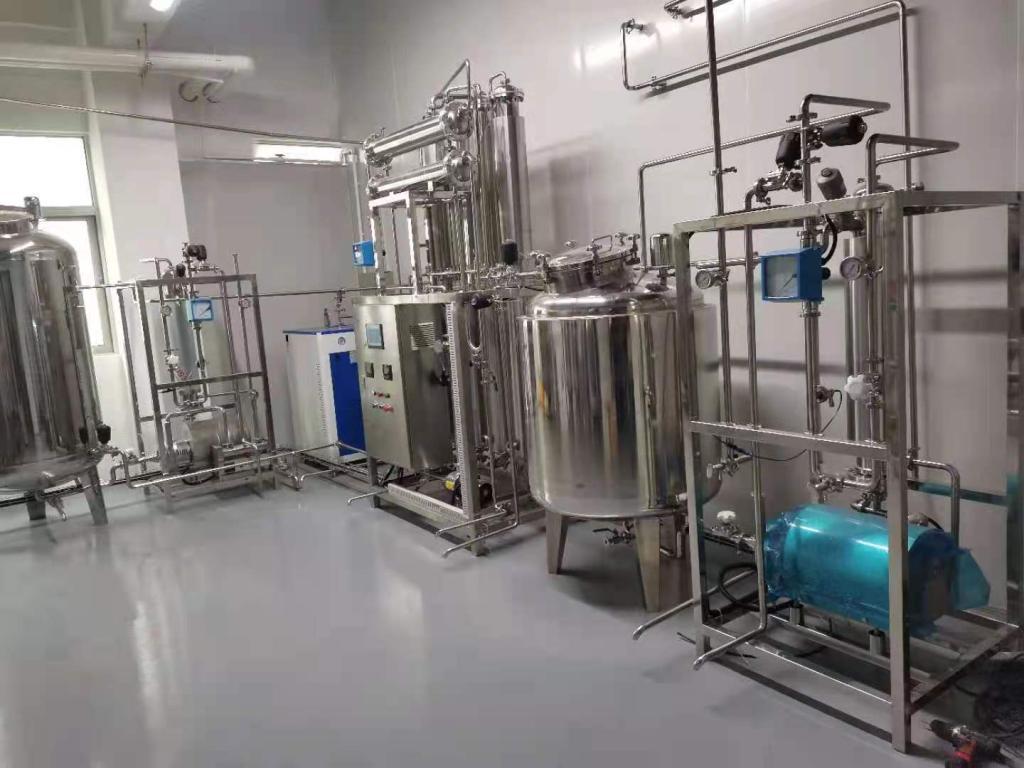
Chapter 2: Analysis of Core Technologies in Dairy Purified Water Equipment
Purified water equipment for dairy processing typically adopts a combination of "pretreatment + reverse osmosis + deep purification" processes to ensure water quality meets industry standards. The following are its core technology modules:
1. Pretreatment System: Removal of Suspended Solids and Colloids
- Multi-media Filter: Uses filter media such as quartz sand and activated carbon to adsorb suspended particles and residual chlorine.
- Softener: Employs ion exchange resin to replace calcium and magnesium ions, preventing scaling in subsequent membrane components.
2. Reverse Osmosis (RO) System: Desalination Rate Up to 99%
Reverse osmosis membranes use high pressure to drive water molecules through a semi-permeable membrane, retaining dissolved salts, organic matter, and microorganisms. RO product water conductivity can be controlled below 5 μS/cm, meeting the needs of dairy cleaning, ingredient mixing, and other processes.
3. Electrodeionization (EDI) System: Deep Desalination and Continuous Water Production
EDI technology combines ion exchange resin and electric field action to continuously produce ultrapure water (conductivity ≤0.1 μS/cm) without chemical regeneration. It is suitable for aseptic filling processes with extremely high water quality requirements.
4. Ultraviolet Sterilization and Ozone Disinfection
- UV Sterilization: 254 nm ultraviolet light destroys microbial DNA, ensuring no live bacteria in the water.
- Ozone Generator: Dissolved ozone kills biofilm in pipelines, preventing secondary contamination.
5. Fully Automatic Control System
PLC or touchscreen control interfaces enable real-time monitoring of water quality (e.g., TOC, pH, flow rate), supporting data traceability and fault alarms to reduce manual operation risks.
Chapter 3: Equipment Composition and Customized Solutions
A complete set of dairy purified water equipment typically includes the following modules, which can be flexibly configured based on production scale and water quality requirements:
1. Raw Water Storage and Delivery Unit
- Raw water tanks are equipped with level sensors and breather valves to avoid external contamination.
- Booster pumps use food-grade stainless steel materials, offering corrosion resistance and compliance with hygiene standards.
2. Multi-stage Filtration Unit
- Precision Filter: 5 μm filter cartridges further capture particles remaining after pretreatment.
- Ultrafiltration (UF) System (optional): Used to remove macromolecular organic matter and colloids.
3. Core Purification Unit
- RO Membrane Group: Membrane elements in 4040 or 8040 specifications are selected based on water production requirements.
- EDI Module: Suitable for milk powder or functional dairy production lines requiring high-purity water.
4. Pure Water Storage and Distribution System
- Storage tanks use 316L stainless steel with electrolytically polished inner walls, equipped with sterile breather valves and spray balls.
- Distribution pumps and circulation pipeline designs ensure stable pressure at water points, avoiding stagnant water areas.
5. Customized Design Cases
- Small Dairy Plants: Water production capacity of 1-5 m³/h, with integrated designs to save space.
- Large Dairy Enterprises: Modular combined systems supporting parallel water supply for multiple production lines.
Chapter 4: Equipment Selection and Daily Maintenance Guide
How to Choose Suitable Purified Water Equipment?
- Water Quality Analysis: Test raw water indicators such as hardness, COD, and microorganisms to determine the process route.
- Production Capacity Requirements: Select equipment specifications based on daily water usage (e.g., cleaning, ingredient mixing, sterilization).
- Energy Efficiency Ratio: Compare power consumption per ton of water across different models, prioritizing variable frequency energy-saving designs.
Key Maintenance Points
- Pretreatment Filter Media Replacement: Backwash quartz sand every 6-12 months; replace activated carbon annually.
- RO Membrane Cleaning: Regularly use citric acid or EDTA solution to remove inorganic scale and organic matter.
- EDI Module Maintenance: Monitor voltage and current to avoid resin damage from polarity reversal.
- System Disinfection: Circulate citric acid or ozone water through pipelines monthly for cleaning.
Common Problem Solutions
- Decreased Water Production: Check for membrane fouling or insufficient pump pressure.
- Increased Water Conductivity: Investigate issues such as RO membrane damage or aging seals.
Chapter 5: Industry Application Cases and Future Development Trends
Case 1: Upgrade of a High-end Yogurt Production Line
A dairy company's original equipment had fluctuating product water conductivity, leading to unstable fermentation culture activity. After switching to a "RO+EDI" dual-stage system, conductivity stabilized below 0.5 μS/cm, and product qualification rates increased from 92% to 99.6%.
Case 2: Zero-Bacteria Water Solution for an Infant Formula Milk Powder Plant
Through a process combining "ultrafiltration + dual-stage RO + ozone disinfection," the total bacterial count in purified water was ≤1 CFU/mL, meeting the stringent requirements of GB 10765-2021 for infant food.
Future Technology Directions
- Intelligent Monitoring: AI algorithms predict membrane fouling trends, enabling preventive maintenance.
- Green Energy Saving: Residual pressure recovery devices can reduce reverse osmosis system energy consumption by over 30%.
- Material Upgrades: New materials such as ceramic membranes and graphene membranes extend service life to over 10 years.
Conclusion
Purified water equipment for dairy processing is a core asset for ensuring product quality and enhancing corporate competitiveness. From pretreatment to deep purification, and from automated control to modular design, its technological evolution consistently revolves around "safety, efficiency, and energy saving." When selecting equipment, companies must consider their specific needs, choose compliant and reliable suppliers, and establish scientific maintenance systems to ensure long-term stable operation. As the dairy industry continues to upgrade its quality requirements, technological innovation in purified water equipment will become a vital force driving industrial progress.
| Industry Category | Machinery & Equipment/Food & Beverage Processing Equipment/Snack Food Processing Equipment |
|---|---|
| Product Category | |
| Brand: | 奥力原 |
| Spec: | ALY-CHS-1T |
| Stock: | 99 |
| Manufacturer: | 上海奥力原环境科技有限公司 |
| Origin: | 113117 |


