


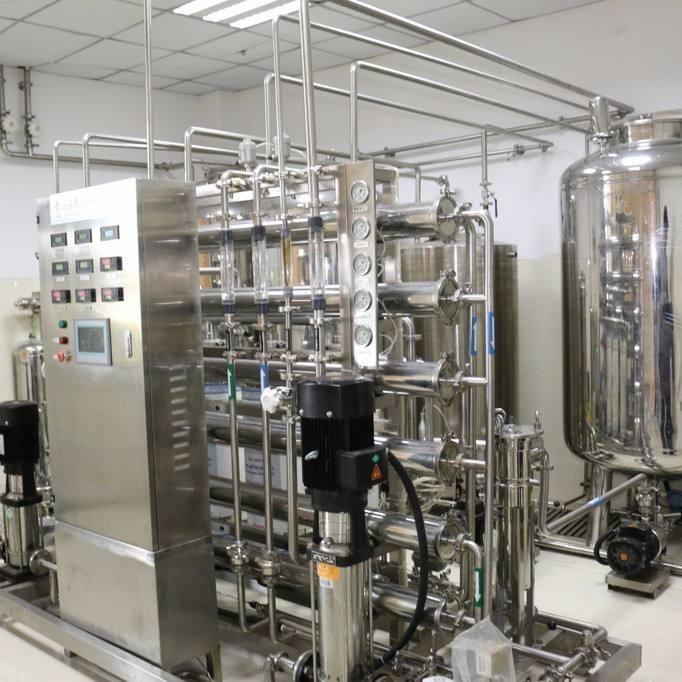
Small Purified Water Equipment
Contact Info
- Add:No. 318 Zhenxing Road, Che Dun Town, Dan Lai Shang Chuang Yuan, Building D, Zip:
- Contact: 胡先生
- Tel:18721141386
- Email:411243788@qq.com
Other Products


【Small Purified Water Equipment: Comprehensive Analysis and Application Guide】
Chapter 1: Core Value and Application Scenarios of Small Purified Water Equipment
1.1 Definition and Classification of Purified Water Equipment
Purified water equipment is a professional system that removes impurities, microorganisms, and dissolved substances from water through physical or chemical means. Based on processing capacity and technical complexity, it can be categorized into laboratory-grade, industrial-grade, and medical-grade equipment. Among these, small purified water equipment is specifically designed for small to medium-scale water usage scenarios, with a processing capacity typically ranging from 50 to 500 L/h. It features a compact footprint and flexible operation.
1.2 Why Choose Small Purified Water Equipment?
- Cost-Effectiveness: Compared to large-scale equipment, small systems require lower initial investment and reduce energy consumption by 30%-50%, making them suitable for small and medium-sized enterprises with limited budgets.
- Precise Adaptation: Customizable water quality standards for various industry needs (e.g., laboratory analysis water, medical disinfection, food processing), such as high-purity water with resistivity ≥15 MΩ·cm or water for injection compliant with the Chinese Pharmacopoeia.
- Space Efficiency: Modular design occupies only 0.5-2 m², allowing flexible deployment on workbenches, workshop corners, and other areas.
1.3 Analysis of Typical Application Scenarios
- Medical Field: Used for instrument cleaning in dental clinics and dialysis fluid preparation, meeting YY/T 0572-2015 standards.
- Laboratory Scenarios: Supports ultrapure water requirements for HPLC analysis, cell culture, etc., with TOC (Total Organic Carbon) <50 ppb.
- Food and Beverage Industry: Production of bottled water and beverage ingredients, ensuring no detection of coliform bacteria.
- Electronics Industry: Provides ultrapure water with low particle content (≤1 μm) for chip cleaning.
Chapter 2: Technological Breakthroughs: Five Core Processes of Small Equipment
2.1 Pretreatment System: The First Line of Defense for Water Quality Stability
- Multi-Media Filtration: Utilizes a combination of quartz sand and activated carbon to remove suspended solids and residual chlorine, protecting subsequent membrane components.
- Softening Device: Reduces hardness to <1.5 mg/L through sodium ion exchange resin, preventing RO membrane scaling.
2.2 Reverse Osmosis (RO) Technology: Desalination Rate Up to 98%
- Uses imported polyamide composite membranes with an operating pressure of 0.8-1.5 MPa, capable of removing heavy metals, bacteria, and 99% of dissolved salts.
- Case Data: A pharmaceutical company reduced conductivity from 500 μS/cm to 5 μS/cm using a dual-stage RO system.
2.3 Electrodeionization (EDI) Technology: Chemical-Free Water Production
- Combines ion exchange membranes with a DC electric field to maintain stable water resistivity at 15-18 MΩ·cm.
- Compared to traditional mixed beds: extends regeneration cycles by 5 times and reduces operating costs by 40%.
2.4 UV Sterilization: Dual Assurance of Water Safety
- 254 nm wavelength UV lamps with a radiation dose of 30 mJ/cm² eliminate 99.9% of microorganisms.
- Equipped with intensity sensors to automatically remind users of lamp replacement cycles (typically 8000-12000 hours).
2.5 Intelligent Control System: Simplified Operation
- 7-inch touchscreen displays real-time parameters such as TDS, flow rate, and pressure (20+ parameters).
- Supports remote monitoring via mobile app, with automatic audio-visual alarms for abnormal conditions.
Chapter 3: Purchasing Guide: Key Parameters and Pitfalls to Avoid
3.1 Clarify Water Quality Requirements: Four Core Indicators
- Conductivity: ≤5 μS/cm for standard purified water; ≤0.1 μS/cm for ultrapure water.
- Microbial Limits: ≤10 CFU/100ml for water for injection.
- TOC Content: <500 ppb for analytical laboratories.
- Water Production Flow Rate: Select based on peak water usage, with a recommended 20% margin.
3.2 Three-Dimensional Evaluation Method for Equipment Selection
- Material Standards: Check if the pipeline system uses 316L stainless steel and if membrane housings have a pressure resistance ≥1.6 MPa.
- Energy Efficiency Rating: Compare electricity consumption per ton of water (conventional equipment: 0.8-1.2 kW·h).
- Certifications: Look for NSF, CE certifications, and medical device registration certificates (if required).
3.3 Analysis of Common Purchasing Misconceptions
- Misconception 1: "Imported brands are always superior to domestic ones."
Fact: Leading domestic manufacturers offer EDI modules with a lifespan of up to 10 years at 60% of the cost of imported ones. - Misconception 2: "Lower price means better value."
Case: A food factory purchased low-cost equipment, resulting in maintenance costs over twice the purchase price within three years.
3.4 Value-Added Service Evaluation Checklist
- Free water quality testing provided.
- Warranty period for core components (recommended ≥3 years).
- Emergency response time (quality service providers承诺 remote guidance within 4 hours).
Chapter 4: Operation and Maintenance: Practical Solutions to Extend Equipment Lifespan
4.1 Daily Operation Guidelines
- Pretreatment Maintenance:
- Weekly check of sand filter pressure difference (backwash required if ΔP >0.1 MPa).
- Monthly testing of softening resin exchange capacity.
- RO Membrane Cleaning:
- Initiate chemical cleaning when water production decreases by 15% or desalination rate drops by 10%.
- Recommended use of NaOH solution at pH=11 for a 30-minute circulation.
4.2 Quick Reference Guide for Fault Codes
| Code | Meaning | Emergency Response |
|---|---|---|
| E01 | Low Pressure Alarm | Check raw water pump and pressure switch |
| E05 | High Conductivity | Inspect RO membrane seals for aging |
| E12 | Insufficient UV Intensity | Clean quartz sleeve or replace lamp |
4.3 Consumable Replacement Cycles and Cost Analysis
- RO Membrane: 2-5 years (varies significantly with water quality).
- Precision Filter Cartridge: 3-6 months.
- Activated Carbon: Annual replacement.
Cost Case: Annual consumable expenses for a laboratory account for approximately 15%-20% of total costs.
4.4 Water Quality Anomaly Handling Flowchart
Raw Water Testing → Pretreatment Check → Membrane System Diagnosis → Disinfection Procedure → Validation Test
Chapter 5: Industry Trends: Integration of Intelligence and Sustainable Development
5.1 Deep Application of IoT Technology
- AI algorithms predict membrane fouling trends with >85% accuracy in certain branded equipment.
- Blockchain technology enables consumable traceability, preventing counterfeit parts.
5.2 New Breakthroughs in Energy-Saving Technologies
- Energy Recovery Devices (ERD) improve concentrate pressure recovery efficiency to 35%.
- Photovoltaic-driven equipment has been piloted in remote clinics.
5.3 Evolution of Modular Design
- Quick-connect structures enable filter cartridge replacement in 15 minutes.
- Scalable design allows upgrades from 50 L/h to 300 L/h.
5.4 Opportunities from Environmental Policies
- The updated Water Pollution Prevention and Control Law drives equipment upgrades in small and medium-sized enterprises.
- Green manufacturing subsidies can refund up to 20% of purchase costs.
Conclusion
Small purified water equipment is driving a water revolution through technological innovation. Whether for a startup laboratory or a medium-sized food factory, choosing an appropriate purification system not only ensures production safety but also delivers significant economic benefits throughout its lifecycle. Users are advised to conduct water quality testing and需求 analysis before purchase, selecting reputable manufacturers with comprehensive service systems to maximize the value of every drop of water.
| Industry Category | Others |
|---|---|
| Product Category | |
| Brand: | 奥力原 |
| Spec: | ALY-CHS-1T |
| Stock: | 99 |
| Manufacturer: | 上海奥力原环境科技有限公司 |
| Origin: | 113117 |


