


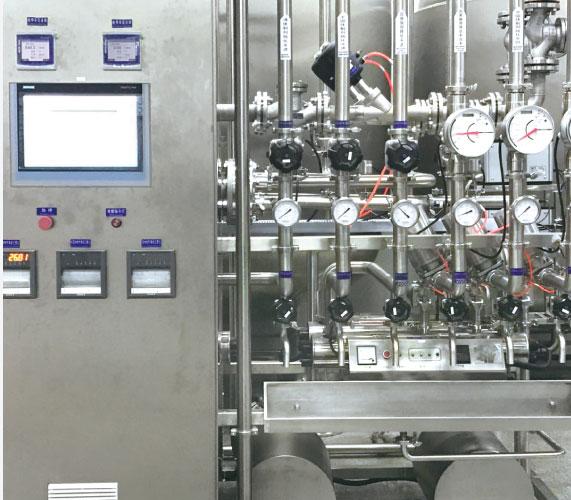
Purified Water Circulation Pipeline Delivery System
Contact Info
- Add:No. 318 Zhenxing Road, Che Dun Town, Dan Lai Shang Chuang Yuan, Building D, Zip:
- Contact: 胡先生
- Tel:18721141386
- Email:411243788@qq.com
Other Products


Purified Water Circulation Pipeline Distribution System: Core Equipment and Application Analysis
Chapter 1: Composition and Importance of Purified Water Circulation Pipeline Systems
The purified water circulation pipeline distribution system is a critical infrastructure ensuring water quality safety in industries such as pharmaceuticals, electronics, and food. Through scientifically designed pipeline networks and intelligent control devices, this system achieves continuous circulation and stable supply of purified water. Its core value lies in preventing secondary contamination of water quality, reducing water resource waste, and ensuring that the water quality at the point of use complies with stringent standards such as the National Pharmacopoeia and GMP through real-time monitoring.
In the pharmaceutical industry, this system directly impacts the production quality of sterile products such as injections and eye drops; in semiconductor manufacturing, the purity of ultrapure water must reach PPT (parts per trillion) levels, and the stability of the pipeline system directly affects chip yield. The system uses 316L stainless steel pipes with electrolytically polished inner walls to a mirror finish of Ra ≤ 0.5μm, effectively preventing microbial growth. The circulation pump units are equipped with variable frequency control, automatically adjusting flow rates based on water usage to maintain a turbulent flow state of 0.8-1.2 m/s within the pipeline, avoiding stagnant water zones.
Chapter 2: Technical Analysis of Core System Equipment
2.1 Intelligent Delivery Pump Units
Equipped with sanitary-grade centrifugal pumps as the power core, with a flow range of 5-200 m³/h and a head of up to 60 meters. The pump body features a fully welded structure, mechanical seals, and online sterilization interfaces. The innovatively designed double mechanical seal system monitors seal fluid pressure in real time, with leakage < 3 ml/h, far exceeding ISPE guidelines.
2.2 Water Storage and Distribution Units
316L stainless steel storage tanks are equipped with nitrogen protection systems to maintain a slight positive pressure in the headspace, preventing airborne microbial contamination. The breather valve uses a 0.22μm hydrophobic PTFE membrane, with an integrity test bubble point value ≥ 3.4 bar. The distribution module integrates online monitoring instruments for temperature, conductivity, and TOC, with a data refresh rate of 0.5 seconds per reading.
2.3 Circulation Pipeline System
The pipeline system, designed with 3D modeling, achieves zero dead-leg connections, with branch pipe length-to-diameter ratios ≤ 6:1. Automatic welding ensures weld smoothness matching the base material, with a 100% pass rate in endoscopic inspections. Pipeline slopes are strictly controlled at 0.5%-1%, ensuring complete drainage capability.
2.4 Ozone-Ultraviolet Combined Disinfection System
Utilizes a synergistic approach of continuous disinfection with 0.2 ppm ozone and instantaneous sterilization with 254 nm ultraviolet light, improving microbial control effectiveness by 3 log units compared to single methods. The ozone generator output is precise to ±0.02 mg/L, and the UV intensity monitoring module provides real-time feedback on sterilization efficiency.
2.5 PLC Automation Control System
The Siemens S7-1500 series PLC is equipped with a 10.1-inch industrial touchscreen, supporting OPC UA protocol for integration with plant DCS systems. It includes 30 standard operating modes, can store 100 sets of process parameters, has an alarm response time < 0.1 seconds, and historical data storage for ≥ 5 years.
Chapter 3: System Operation Principles and Technical Advantages
The system ensures water quality through an integrated "production-storage-distribution-circulation" operational model. Water produced by the purification unit first enters the storage tank, undergoes UV sterilization, and is then pressurized by delivery pumps into the main circulation pipeline. Return water from the pipeline endpoints is monitored for conductivity, and based on water quality changes, it is automatically diverted to recovery or discharge processes.
For temperature control, plate heat exchangers and PID adjustment algorithms maintain water temperature within 70-80°C for hot circulation or 4-10°C for cold circulation, with fluctuations ≤ ±1°C. The pressure control module, through coordinated operation of electric control valves and pressure transmitters, maintains endpoint pressure ≥ 3.5 bar, ensuring stable flow rates at points of use.
Compared to traditional systems, the new generation achieves:
- Energy reduction: Variable frequency pump units save 40% energy, with heat recovery rate > 65%
- Water quality assurance: Microbial indicators < 1 CFU/100ml, TOC < 50 ppb
- Ease of maintenance: CIP cleaning cycles extended to 3 months, spare part replacement time reduced by 70%
Chapter 4: Industry Application Scenarios and Selection Recommendations
4.1 Biopharmaceutical Sector
Complies with FDA 21 CFR Part 11 requirements, supporting three-level access management and audit trail functions. Suitable for critical processes such as buffer preparation and culture media preparation in vaccine production. Recommends configuration with double tube sheet heat exchangers and redundant disinfection systems.
4.2 Electronics and Semiconductor Industry
Must meet SEMI F63 standards, paired with 18.2 MΩ·cm ultrapure water modules. Recommends double mechanical seal magnetically driven pumps with VCR fitting pipelines, helium mass spectrometer leak detection rate < 1×10⁻⁹ mbar·L/s.
4.3 Food and Beverage Production
Certified with 3D sanitary design, seamlessly integrated with CIP cleaning systems. Recommends selection of distribution tanks with sight glasses, equipped with online turbidity monitors, complying with HACCP certification requirements.
4.4 Laboratory Pure Water Systems
Compact units with flow ranges of 0.5-5 m³/h, supporting multi-stage treatment including RO+EDI+UF. Recommends modular design with预留 ports for third-party instrument integration, compatible with LIMS systems.
4.5 Hospital Central Water Supply
Meets YY/T 1244 standards, with instantaneous sterilization devices installed on branch pipelines. Recommends configuration of emergency backup power, water interruption protection response time < 15 seconds, ensuring water supply safety in critical areas such as operating rooms and dialysis centers.
Chapter 5: System Maintenance and Efficiency Improvement Strategies
Establish a three-tier maintenance system:
- Daily inspections: Check pressure fluctuations (allowable range ±0.2 bar), abnormal noises, and instrument readings
- Monthly maintenance: Lubricate mechanical seals, calibrate sensors, update system software
- Annual overhaul: Replace filter elements, inspect pressure vessels, check pipeline inner wall integrity
Data-driven operations:
- Develop microbial trend analysis models, reducing warning cycles from 7 days to 48 hours
- Use digital twin technology to simulate system aging processes and predict spare part replacement cycles
- Employ energy consumption intelligent analysis platforms to identify inefficient operation periods and optimize equipment start-stop strategies
By implementing the above strategies, a pharmaceutical company successfully increased system overall equipment effectiveness (OEE) from 82% to 95%, saving 350,000 RMB annually in maintenance costs, and reducing water quality deviation incidents by 90%.
This article systematically analyzes the technical characteristics and application practices of purified water circulation pipeline distribution systems, providing reference for equipment selection and upgrades in related industries. For actual construction, it is recommended to conduct URS requirement analysis, select suppliers with ASME BPE certification, and ensure system performance through FAT factory acceptance testing.
| Industry Category | Others |
|---|---|
| Product Category | |
| Brand: | 奥力原 |
| Spec: | ALY-CHS-1T |
| Stock: | 99 |
| Manufacturer: | 上海奥力原环境科技有限公司 |
| Origin: | 113117 |


