


1000L Pure Steam Generator Equipment
Other Products


# 1000L Pure Steam Generator Equipment Process #
# 1. Raw Water Supply and Pretreatment The 1000L pure steam generator has certain requirements for raw water quality, which typically comes from municipal water supply or other suitable sources. First, the raw water enters the raw water storage tank, where preliminary testing is conducted. Raw water pretreatment is a critical step. Sand filtration is used to remove large suspended particles such as sediment, rust, etc., as these impurities can affect the operation of subsequent equipment and steam quality. This is followed by activated carbon filtration, which adsorbs organic matter, residual chlorine, and some odors, reducing corrosion to the equipment and the impact on steam purity. Ion exchange softening is also an important step, using ion exchange resin to remove calcium, magnesium, and other ions from the water, preventing scale formation during heating and ensuring efficient and stable operation of the equipment.
## 2. Heating and Vaporization The pretreated raw water is transported through pipelines to the heating chamber of the steam generator. At this stage, heat is primarily provided to the raw water through methods such as steam or electric heating. Once the raw water absorbs sufficient heat, it begins to boil and vaporize. For a large output demand like 1000L, the heating system must have sufficient power and efficient heat transfer performance. During the vaporization process, most impurities in the water remain in the liquid phase due to differences in boiling points, while water molecules transition into steam. To ensure steam production efficiency and quality, the design of the heating chamber must ensure uniform heating of the raw water, avoiding dry firing caused by localized overheating. Additionally, precise control of heating temperature and pressure is necessary to maintain a stable vaporization process.
## 3. Steam-Water Separation
The steam generated during vaporization may carry small droplets and tiny impurities, so steam-water separation is required. The steam-water separation device utilizes principles such as centrifugal force and gravity to separate steam and droplets. For example, a cyclone separator can use centrifugal force to throw droplets toward the wall during high-speed rotation, where they flow down along the wall, while pure steam continues to flow upward. Additionally, equipment such as mesh demisters can be used to further remove residual tiny droplets in the steam, improving steam purity.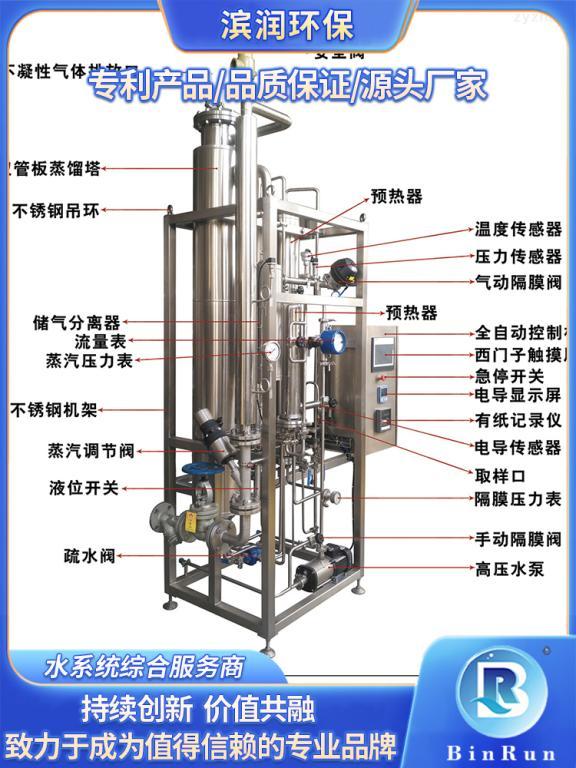
## 4. Steam Purification and Drying The steam after steam-water separation requires further purification and drying. Special filtration devices, such as precision microporous filters, can be used to remove any remaining tiny particulate impurities in the steam. At the same time, methods like adsorption drying are employed to remove trace moisture from the steam, ensuring that the produced pure steam meets extremely high purity standards and satisfies the requirements of industries such as pharmaceuticals and food for sterile, impurity-free pure steam.
## 5. Pure Steam Output and Monitoring
The purified and dried pure steam is output through pipelines and can be used in various processes requiring pure steam. During output, key parameters of the pure steam, such as temperature, pressure, and purity, must be monitored in real time. Through sensors and monitoring devices installed on the pipelines, any abnormal parameters can be promptly addressed with adjustments to ensure stable pure steam quality and provide reliable support for the production process. Additionally, the equipment should have comprehensive safety protection mechanisms to prevent accidents caused by excessive pressure, abnormal temperatures, or other issues.
| Industry Category | Chemicals/Chemical Intermediates/Intermediate Compounds |
|---|---|
| Product Category | |
| Brand: | 滨润 |
| Spec: | BR-1000L |
| Stock: | 100 |
| Manufacturer: | 湖北滨润环保科技有限公司 |
| Origin: | 114201 |


