


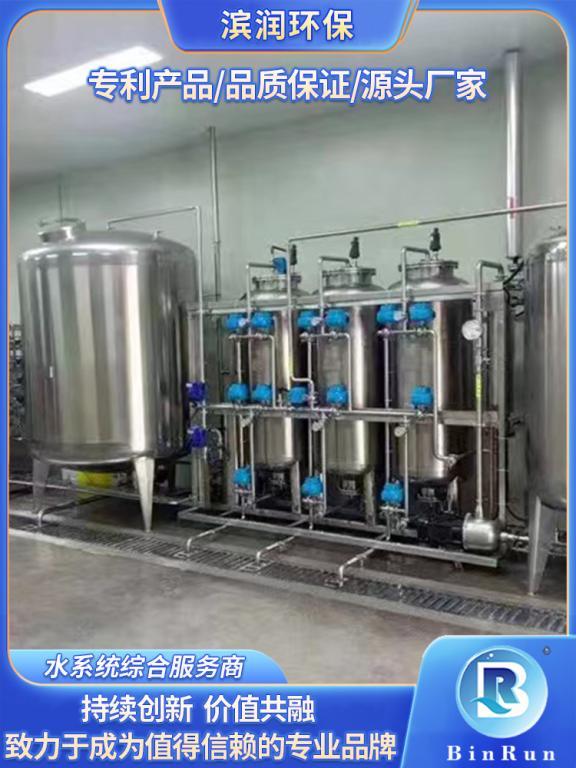
0.5 Ton Pharmaceutical Purified Water Equipment
Price:
¥165000
Other Products


Description
Additional Information
- # 0.5 Ton Pharmaceutical Purified Water Equipment Process
- ## I. Pretreatment Process
- ### (1) Raw Water Intake and Mechanical Filtration The raw water for pharmaceutical purified water is typically sourced from municipal water supply or other sources that meet certain standards. The raw water first enters a mechanical filter, which is filled with filter media such as quartz sand. Mechanical filtration primarily removes larger suspended particles from the water, such as sediment and rust. If these impurities are not removed, they can cause wear and tear on subsequent equipment, reducing its lifespan, and potentially contaminating the quality of the purified water. As the raw water passes through the quartz sand filter layer, suspended particles are trapped in the gaps between the filter media, resulting in preliminary clarification of the water.
- ### (2) Activated Carbon Adsorption After mechanical filtration, the water enters an activated carbon filter. Activated carbon has a highly porous structure and a large specific surface area. In this step, activated carbon serves two main functions. On one hand, it adsorbs residual chlorine in the water. Residual chlorine is a byproduct of the disinfection process in tap water and, if it enters subsequent stages like reverse osmosis, it can cause oxidative damage to the reverse osmosis membrane. On the other hand, activated carbon also adsorbs certain organic matter in the water, including small-molecule organic pollutants. These organic compounds may affect the quality of the purified water and pose potential risks to the pharmaceutical production process, such as reacting with drug ingredients. ## II. Reverse Osmosis Process
- ### (1) High-Pressure Pump Pressurization The pretreated water is pressurized by a high-pressure pump. This is because the reverse osmosis process requires overcoming osmotic pressure to allow water molecules to pass through the reverse osmosis membrane. The reverse osmosis membrane is a semi-permeable membrane that only permits water molecules to pass through while retaining impurities such as salts, microorganisms, and organic matter. The high-pressure pump must provide sufficient pressure to ensure an adequate water flux through the reverse osmosis membrane, meeting the production requirement of 0.5 tons per hour. Generally, for equipment of this scale, the pressure of the high-pressure pump can be adjusted within an appropriate range based on the model and quantity of reverse osmosis membranes, typically around 1 - 2 MPa.
- ### (2) Reverse Osmosis Membrane Separation The pressurized water enters the reverse osmosis membrane module. Under the pressure difference formed on both sides of the reverse osmosis membrane, water molecules migrate from the high-concentration side (raw water side) through the membrane to the low-concentration side (product water side), while most impurities are retained on the raw water side. This process removes approximately 95% - 99% of salts, microorganisms, organic matter, etc., from the water. The performance and quality of the reverse osmosis membrane are crucial to the quality of the purified water. Regular cleaning and maintenance of the reverse osmosis membrane are necessary to prevent contamination and scaling on the membrane surface, which could affect its separation efficiency. For example, when the concentration of ions such as calcium and magnesium in the water is too high, scaling can easily form on the membrane surface, reducing its flux.
- ## III. Ion Exchange Process
- ### (1) Mixed-Bed Ion Exchange Although the water treated by reverse osmosis is already of high purity, it may still contain trace amounts of ionic impurities. To further enhance the water's purity, mixed-bed ion exchange resin is commonly used. The mixed bed contains both strong acid cation exchange resin and strong base anion exchange resin. As water passes through the mixed bed, the remaining cations (such as sodium ions, calcium ions, etc.) exchange with hydrogen ions on the cation exchange resin, while anions (such as chloride ions) exchange with hydroxide ions on the anion exchange resin. Through ion exchange reactions, ionic impurities in the water are further reduced, significantly increasing the resistivity of the purified water to meet the requirements of pharmaceutical production for high-purity water.
- ### (2) Ion Exchange Resin Regeneration As the ion exchange process continues, the exchange capacity of the ion exchange resin gradually decreases. To ensure the effectiveness of ion exchange, the resin must be regularly regenerated. For cation exchange resin, regeneration is typically performed using an acidic solution such as hydrochloric acid to recharge the resin with hydrogen ions. For anion exchange resin, an alkaline solution such as sodium hydroxide is used to recharge the resin with hydroxide ions. The regeneration process requires strict control of parameters such as the concentration, flow rate, and regeneration time of the regenerant solution to ensure the regeneration efficiency and service life of the resin.
- ## IV. Sterilization and Terminal Treatment
- ### (1) Ultraviolet Sterilization
After ion exchange, the purified water enters an ultraviolet sterilization unit. Ultraviolet sterilization is a physical sterilization method that destroys the DNA structure of microorganisms through ultraviolet irradiation, rendering them incapable of reproduction and survival. Ultraviolet sterilization offers advantages such as speed, efficiency, and no chemical residues. It effectively eliminates bacteria, viruses, and other microorganisms that may remain in the water, ensuring that the microbial indicators of the purified water comply with pharmaceutical standards. ### (2) Microfiltration
Finally, the purified water passes through a microfiltration filter. The pore size of the microfiltration membrane is typically 0.22μm or 0.45μm. It further removes potential tiny particles, bacterial debris, and other impurities from the water, ensuring the clarity and purity of the purified water entering the pharmaceutical production process and meeting the stringent water quality requirements of pharmaceutical processes. After this series of processes, the 0.5-ton pharmaceutical purified water equipment can stably produce high-quality purified water, providing a reliable water source for pharmaceutical production.
| Industry Category | Chemicals/Chemical Intermediates/Intermediate Compounds |
|---|---|
| Product Category | |
| Brand: | 滨润 |
| Spec: | BR-1000L |
| Stock: | 100 |
| Manufacturer: | 湖北滨润环保科技有限公司 |
| Origin: | 114207 |


