


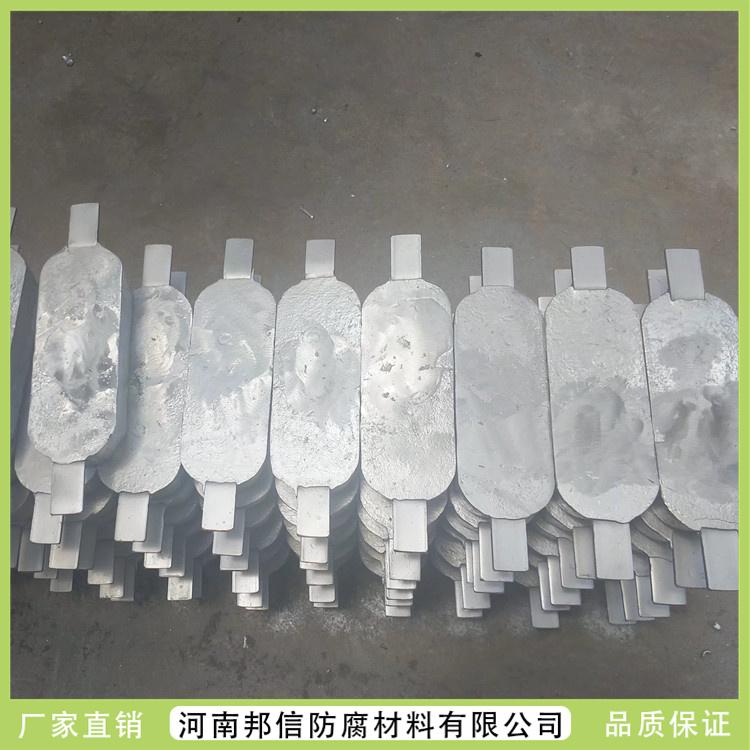
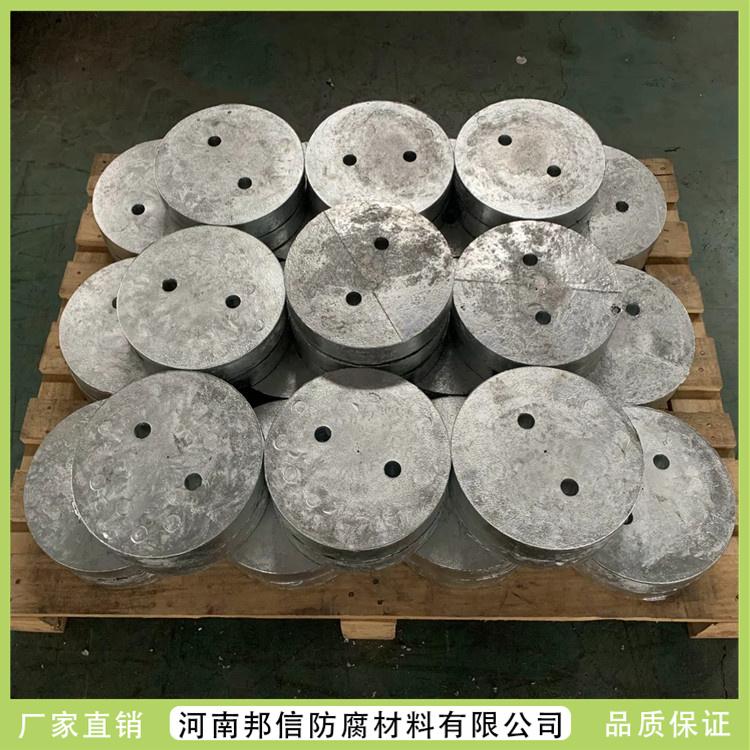
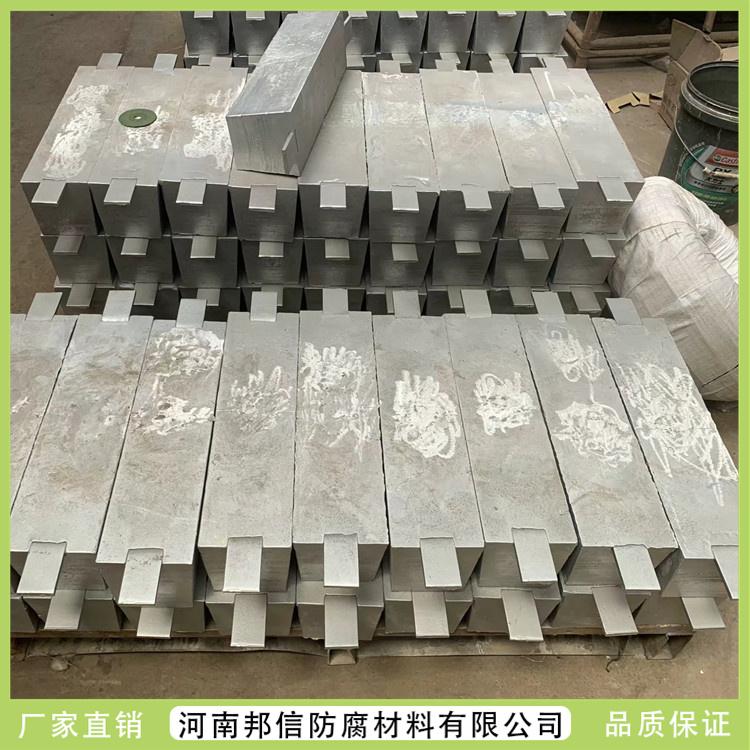
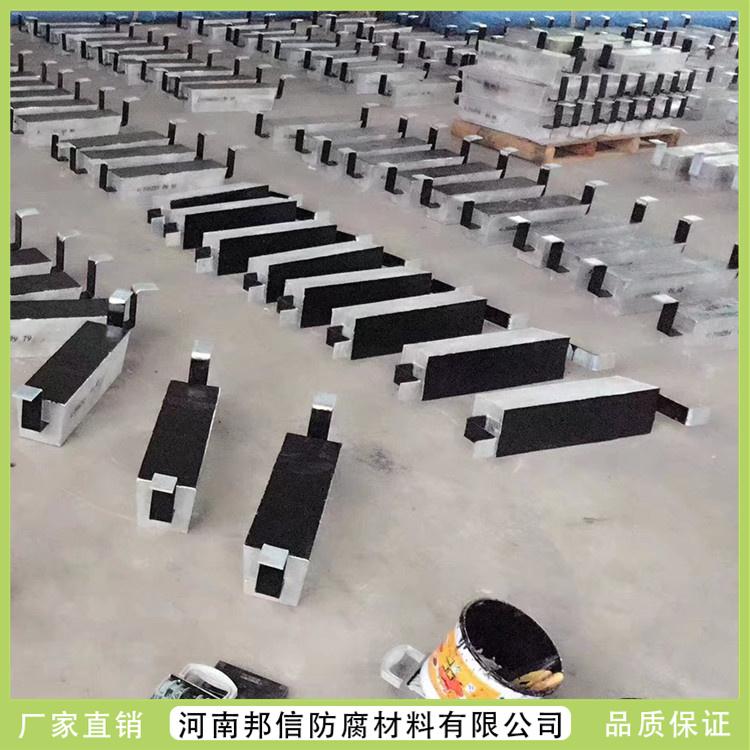
Ballast tank zinc alloy sacrificial anode
Other Products



The standard potential of zinc is -0.76V (SHE). In seawater, the stable potential of high-purity zinc shifts negatively to -1.06V (SCE). Within the pH range of approximately 6-12, the self-corrosion rate of zinc is low. In seawater with a pH of 7-9, the thermodynamically possible process is the dissolution of zinc to form insoluble Zn(OH)₂. Zn(OH)₂ is insoluble in seawater and accumulates on the surface of zinc, preventing its self-corrosion. The formation of carbonates on the zinc surface also makes it prone to passivation in seawater. Thermodynamically, the density of zinc is 7.14 g/cm³, with an open-circuit potential of -1.03V. In soil, the current efficiency exceeds 65%. ΔE = 0.2V
It is typically used in water with a resistivity of less than 500 Ω·cm. Zinc anodes can also be used in soil with a resistivity of less than 15 Ω·m.
High-purity zinc is commonly used to manufacture extruded ribbon anodes or as fixed reference electrodes and grounding cells.
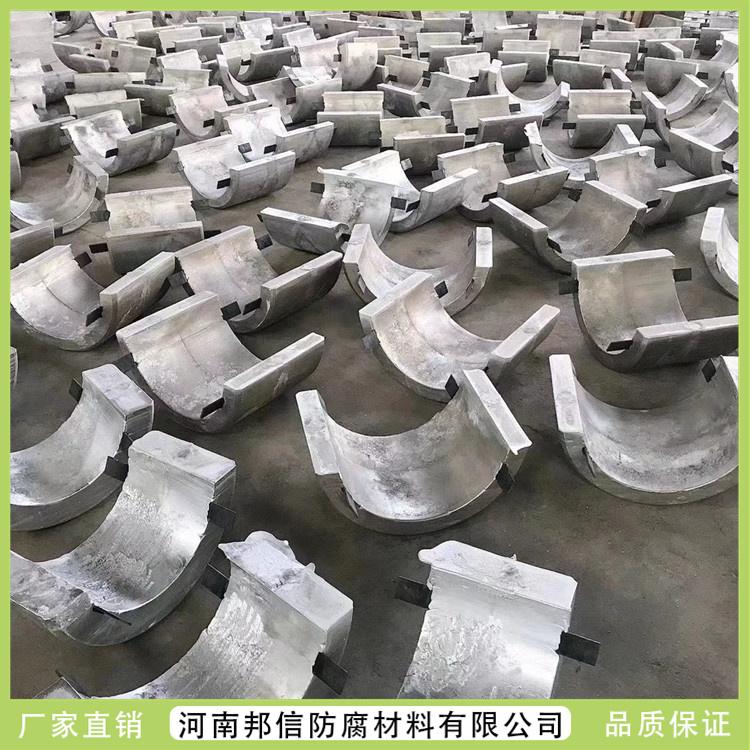
Zinc can also be made into bracelet anodes, primarily used for underwater and subsea pipelines. One type is made into blocks and welded onto steel supports to form a circular shape, while another type is directly made into semi-circular rings that clamp onto the pipeline.
Zinc is another non-ferrous metal that can be used as an auxiliary anode. As an auxiliary anode, the consumption rate of zinc is 10.8 kg/(A·year), which is a theoretical value. When not used as a sacrificial anode, the efficiency is typically taken as 90%.

| Industry Category | Chemicals/Chemical Intermediates/Intermediate Compounds |
|---|---|
| Product Category | |
| Brand: | 邦信防腐 |
| Spec: | |
| Stock: | 1000 |
| Manufacturer: | 河南邦信防腐材料有限公司 |
| Origin: | 114101 |


