


Process parameters of ultrasonic welding technology
Contact Info
- Add:No. 1 Bingong Hutong, Xihu'an Village, Gu'an Industrial Zone, Langfang City, Hebei Province, Zip:
- Contact: 郜维强
- Tel:17701285551
- Email:642165796@qq.com
Other Products


The main process parameters of ultrasonic welding include welding power, vibration frequency, vibration amplitude, static pressure F, and welding 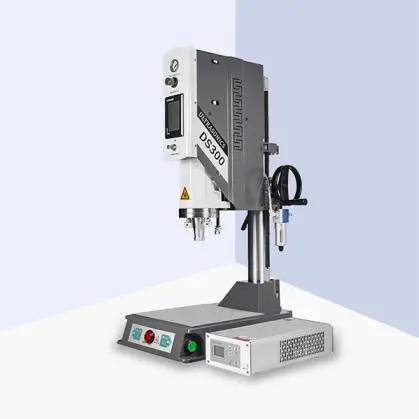
time, etc. (1) Welding Power
Welding capacity depends on the thickness of the weldment and the hardness of material H, which can be determined by the following formula.
Where P is the welding power (W); k is the coefficient; H is the hardness of the material; δ is the thickness of the weldment. Generally, the required ultrasonic welding power increases with the thickness and hardness of the weldment. (2) Vibration Frequency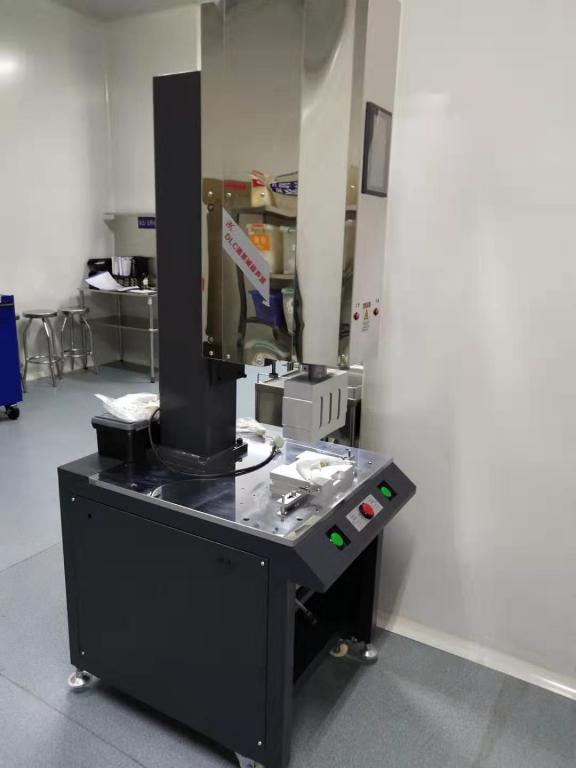
Vibration frequency in ultrasonic technology has two meanings: the value of the resonant frequency and the accuracy of the resonant frequency. The selection of the harmonic resonant frequency is based on the thickness and physical properties of the weldment, typically controlled between 15 and 75 kHz. When welding thin parts, it is preferable to choose a higher resonance frequency because, while maintaining the same acoustic function, increasing the vibration frequency can correspondingly reduce the amplitude, thereby minimizing fatigue damage to thin parts caused by alternating stress. Typically, low-power ultrasonic welding machines (below 100W) select a resonant frequency of 25–75 kHz. When welding thick parts or materials with low hardness and yield strength, a lower vibration frequency should be used. High-power ultrasonic welding machines usually select a lower resonant frequency of 16–20 kHz. Due to severe load changes during ultrasonic welding, detuning may occur at any time, leading to reduced joint strength. Therefore, once the frequency of the welding machine is determined, the resonance of the acoustic system must be maintained, which is the basic guarantee of welding quality and stability. The relationship between the shear strength of the ultrasonic welding point and the vibration frequency. The higher the hardness and the greater the thickness of the material, the more significant the effect of vibration frequency. Amplitude determines the magnitude of the friction work and is related to the removal effect of the oxide film on the material surface, the state of plastic flow, and the heating temperature of the bonding surface. Since it is difficult to measure ultrasonic power in practical applications, amplitude is often used to determine power. n=4g
The relationship between ultrasonic power and amplitude is given by 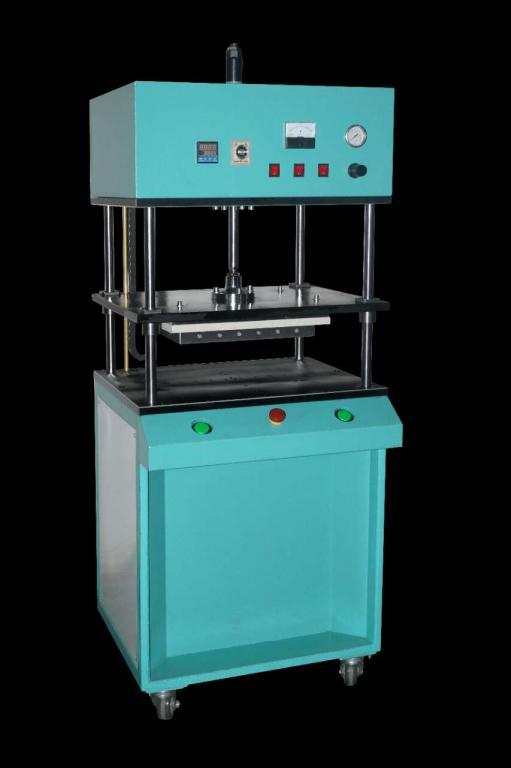
, where v is the relative velocity (mm/s); A is the amplitude (m); μ is the friction coefficient; ω is the angular frequency = 2πf; f is the vibration frequency (kHz); P is the ultrasonic power (W); F is the static pressure (N). The amplitude of ultrasonic welding depends on the thickness and material of the weldment, with a selection range of 5–25 μm. Lower amplitudes are suitable for welding parts with lower hardness or thinner sections, so low-power ultrasonic spot welders have higher frequencies and lower amplitude ranges. As material hardness and thickness increase, the selected amplitude value also increases accordingly. When selecting the material and structure of the transducer, the amplitude is also related to the amplification factor of the concentrator. The amplitude can be adjusted by regulating the output power of the ultrasonic generator. (4) Static Pressure
Static pressure is used to directly transmit ultrasonic vibration energy to the weldment. Its selection depends on the material's thickness, hardness, joint form, and ultrasonic power. Generally, static pressure can be selected by drawing a critical curve. The critical curve of static pressure and power.
When the static pressure is too low, because ultrasound is hardly transmitted to the weldment, it is insufficient to generate a certain amount of friction work between the weldments, and a connection may not form. When the static pressure is too high, the vibration energy cannot be used reasonably. Excessive static pressure increases friction excessively, weakening the relative friction motion between the weldments and even reducing the amplitude, which increases and decreases joint strength. For specific products, static pressure can be determined through the relationship between ultrasonic welding power and the critical curve of static pressure and power. (5) Welding Time
Welding time is the duration during which ultrasonic energy is input into the weldment. The formation of a weld point has a minimum welding time; less than this time is insufficient to damage the oxide film on the metal surface, and welding cannot occur. Generally, as welding time increases, joint strength increases and then gradually stabilizes. However, when welding time is too long, the welding area is heated, the plastic zone expands, the strength of the welding area decreases, and the surface and internal structure of the welding area become coarse, reducing joint strength. The selection of welding time depends on the material's properties and thickness. Welding with high power and short time is generally more effective than with low power and longer time. When static pressure and amplitude increase and material thickness decreases, the ultrasonic welding time may take lower values. For wires or foils, welding time is 0.01 to 0.1 s, while for thick metal plates, welding time usually does not exceed 1.5 s.
In addition to the above main process parameters, there are other process factors that affect the welding process, such as the precision of the welding machine and the welding atmosphere. Under normal conditions, ultrasonic welding does not require gas protection for the weldment. Only in special applications, such as titanium welding, lithium and steel welding, etc., is argon protection used. In some packaging applications, welding may need to be performed in a dry box or sterile room.
| Industry Category | Others |
|---|---|
| Product Category | |
| Brand: | 德莱诚 |
| Spec: | DLC |
| Manufacturer: | 天津超声波焊接机有限公司 |
| Origin: | 111310 |


