


Food Warehouse Dehumidifier
Contact Info
- Add:No. 15 Jiaqi Road, Xianlin Subdistrict, Yuhang District, Hangzhou City, Zhejiang Province, 3rd Floor, South Building 1, Zip: 311100
- Contact: 郑学乐
- Tel:13357144970
- Email:1013522671@qq.com
Other Products


In the field of food storage, humidity is a key factor affecting food quality and safety. Food storage dehumidifiers play an indispensable role in maintaining food quality, extending shelf life, and ensuring food safety.
I. Features of Food Storage Dehumidifiers
(1) High-Precision Humidity Control
Food is highly sensitive to humidity, and different types of food require different humidity ranges for optimal storage. Food storage dehumidifiers are equipped with high-precision humidity sensors and advanced intelligent control systems, capable of accurately detecting subtle changes in humidity and maintaining it within the precise range suitable for food storage. The error is typically controlled within ±5% RH, ensuring that all types of food remain in an ideal humidity environment.
(2) Eco-Friendly and Antibacterial Design
Humid environments are prone to breeding microorganisms such as bacteria and mold, which can severely impact food safety. Food storage dehumidifiers not only have strong dehumidification capabilities but also feature an eco-friendly and antibacterial design. Internal components are made of antibacterial materials that meet food-grade safety standards. Some dehumidifiers are also equipped with ultraviolet sterilization and photocatalyst purification devices, effectively killing harmful microorganisms in the air while dehumidifying, inhibiting the growth of bacteria and mold, and providing a clean and safe storage environment for food.
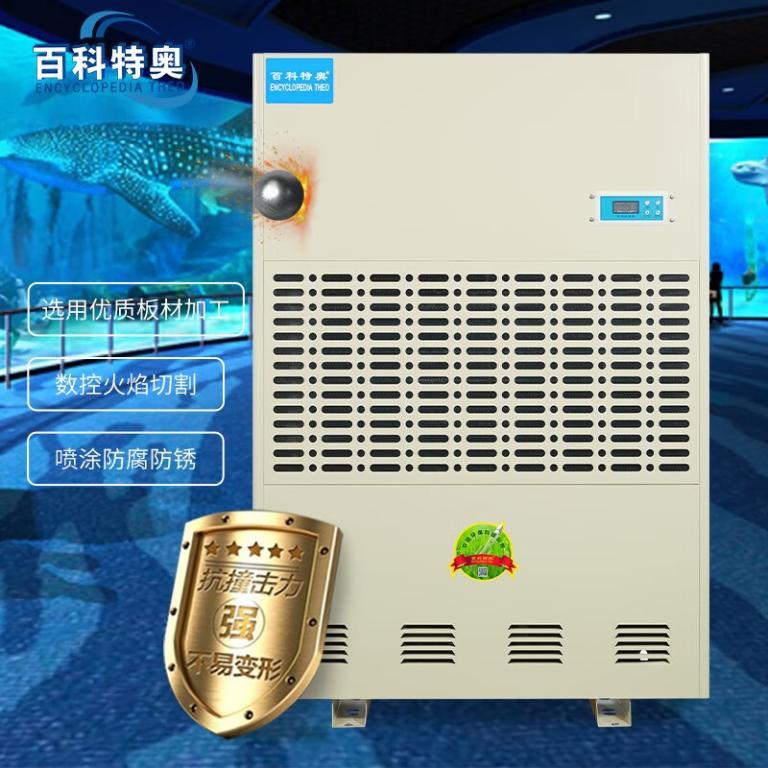
II. Performance Parameters of Food Storage Dehumidifiers
(1) Dehumidification Capacity
Dehumidification capacity is a key indicator of a dehumidifier's performance, typically measured in liters per hour (L/h) or liters per day (L/d). For food storage, the appropriate dehumidification capacity should be selected based on the warehouse area, the types of food stored, and humidity requirements. Generally, small food storage facilities can use dehumidifiers with a capacity of 10-30 L/h; medium-sized facilities are suitable for dehumidifiers with a capacity of 30-80 L/h; and large food storage facilities require high-power dehumidifiers with a capacity of 80 L/h or more.
(2) Input Power
Input power reflects the energy consumption of the dehumidifier during operation, measured in watts (W) or kilowatts (kW). Energy-efficient food storage dehumidifiers use advanced energy-saving technologies and high-efficiency compressors to reduce energy consumption while maintaining strong dehumidification capabilities. Generally, small dehumidifiers have a power rating of 300-1000 W, medium-sized ones range from 1000-3000 W, and large ones are 3000 W or higher.
(3) Applicable Area
Each dehumidifier has a corresponding applicable area, which depends on factors such as dehumidification capacity and space height. Typically, dehumidifiers with a capacity of 10-20 L/D are suitable for food storage areas of 10-20 square meters; those with a capacity of 20-50 L/D are suitable for 20-50 square meters; and those with a capacity of 150 L/D or more can cover warehouses of 150 square meters or larger.
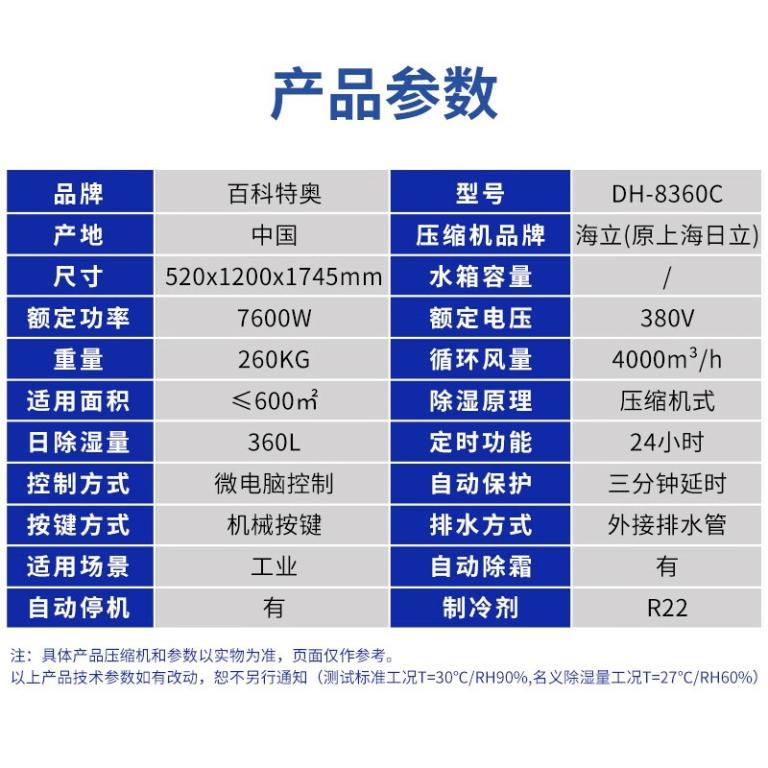
III. Components of Food Storage Dehumidifiers
(1) Compressor
The compressor is the core power component of the dehumidifier, providing the driving force for the entire dehumidification cycle. Food storage dehumidifiers typically use high-efficiency, energy-saving compressors with strong compression capabilities and stable performance. They can maintain high dehumidification efficiency even during prolonged continuous operation, ensuring that the humidity in the food storage area is quickly reduced and maintained at an appropriate level.
(2) Heat Exchange System
The heat exchange system, consisting of a condenser and an evaporator, is a key component for dehumidification and heat exchange. During the dehumidification process, the liquid refrigerant in the evaporator absorbs heat from the air, lowering the air temperature and causing water vapor to condense into droplets. The condenser then condenses the high-temperature, high-pressure gaseous refrigerant into a liquid, releasing heat and warming the dehumidified air before returning it to the food storage area. This prevents excessive temperature drops and maintains temperature balance in the storage environment.
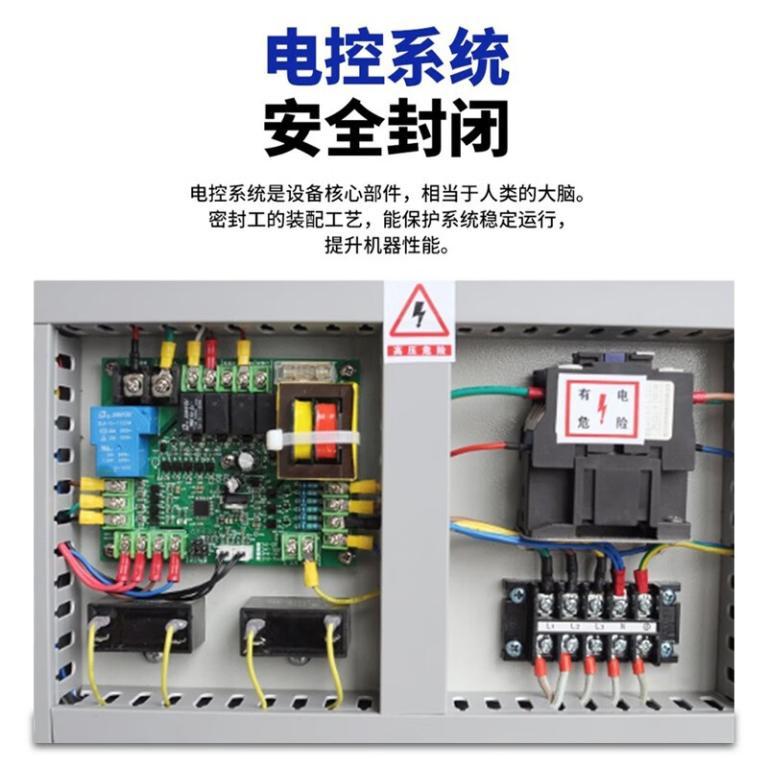
With features such as high-precision humidity control, eco-friendly and antibacterial design, and low-noise operation, along with clear performance parameters and well-designed components, food storage dehumidifiers play a crucial role in preventing food spoilage, preserving food texture, and reducing food waste. Understanding their features, performance parameters, functions, components, and installation conditions helps food storage companies and users select the appropriate dehumidification equipment, install and use it correctly, create an optimal humidity environment for food storage, and ensure food safety and economic benefits for businesses.
| Industry Category | Others |
|---|---|
| Product Category | |
| Brand: | 百科特奥 |
| Spec: | DH-8360C |
| Stock: | 50 |
| Manufacturer: | 杭州特奥环保科技有限公司 |
| Origin: | 113301 |


