


Coated Glass Specialized Pure Water Equipment
Contact Info
- Add:Xinhe Industrial Park, Qingyang County, Chizhou City, Anhui Province, Zip:
- Contact: 周志俊
- Tel:17306773426
- Email:875595691@qq.com
Other Products


Why use purified water as cleaning water in the electroplating industry? Based on our company's years of interaction with various electroplating enterprises, we deeply understand the following points: 1. Generally, the quality of groundwater and tap water is poor, and the cleaning water used in electroplating lines has a significant impact on electroplating quality. Different stages and processes of electroplating have varying requirements for water quality. In the pre-treatment stage of electroplating—such as the degreasing process—tap water, concentrated water produced by pure water equipment, recycled water from water reuse systems, or groundwater can be used. However, when electroplating products require higher standards, ordinary pure water does not meet the requirements. Generally, groundwater has high hardness and high levels of calcium and magnesium ions. The treatment process for tap water is relatively simple, and due to factors such as corrosion in tap water pipelines and scale buildup, tap water also contains many solid particles, minerals, calcium and magnesium ions, and even large amounts of algae and sludge, making its quality relatively poor. Therefore, neither groundwater nor tap water can be directly used for cleaning electroplating products. It is necessary to treat tap water or groundwater with ultrapure water equipment. Only ultrapure water, free of any impurities, calcium, and magnesium ions, can ensure the quality of electroplating products. 2. Impurities in water affect the performance and pass rate of electroplating products. In electroplating production, purified water must be used for rinsing after activation.
If tap water is used, calcium and magnesium ions, impurities, and inorganic ions in the water will gradually be carried into the electroplating tank and accumulate in the electroplating solution. When a certain level of accumulation is reached, it will severely affect the appearance quality and internal corrosion resistance of the electroplating layer, leading to the production of defective products and reducing the pass rate. Only purified water can thoroughly clean electroplating products. In the industry, the water requirements for cleaning small electroplating parts are even higher because workpieces after roughening have a large number of micropores on their surfaces. Rinsing before the sensitization process must use purified water, and additional filtration facilities must be added to the rinsing process to prevent particles in the rinse water from forming "self-catalytic centers" in the electroless nickel solution, rapidly deteriorating the electroless nickel plating solution or affecting the electroplating quality. For surface treatment industries with high decorative and appearance requirements, water quality requirements are also very high. In particular, rinsing after product electroplating must use ultrapure water treated with a mixed-bed ion exchanger as the cleaning water, with a conductivity of less than 1 μS/cm², to thoroughly remove residual electroplating solution and other impurities from the workpiece. The process flow of ultrapure water equipment for the electroplating industry: raw tap water → raw water booster pump → sand filter → carbon filter → softener (selected based on regional differences) → safety filter → RO high-pressure pump → RO reverse osmosis system → RO water tank → pure water booster pump → mixed-bed ion exchange resin → terminal precision filter → equipment water (ultrapure water quality can reach 16 MΩ·cm). Certain heavy metals, such as chromium, can catalyze the oxidation of chlorine, leading to irreversible performance degradation of the membrane and causing membrane damage.
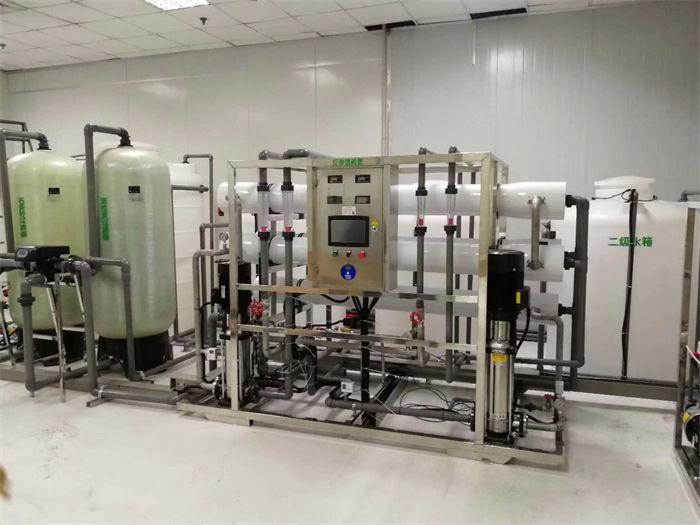
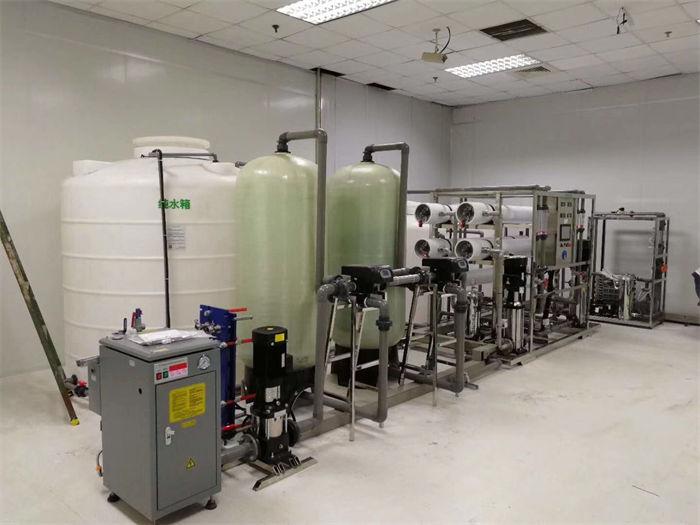
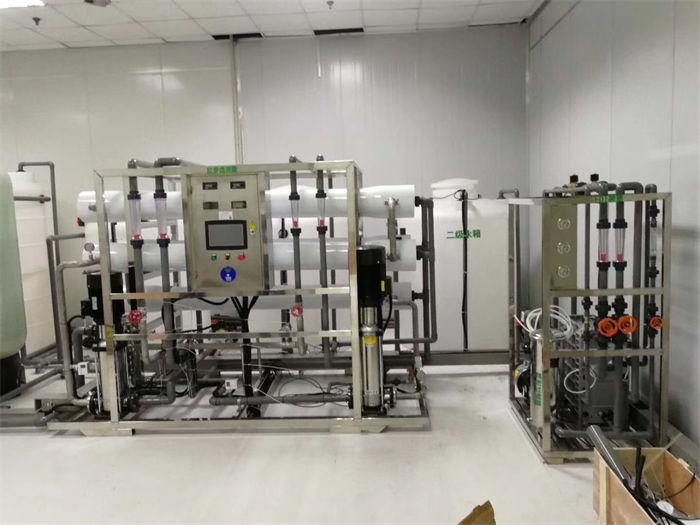
| Industry Category | Environment/Raw Water Treatment Equipment/Reverse Osmosis Equipment |
|---|---|
| Product Category | |
| Brand: | 达方 |
| Spec: | DFRO-2000L |
| Stock: | 10 |
| Manufacturer: | 安徽达方环保设备有限公司 |
| Origin: | 113417 |


