


Reverse Osmosis Equipment_Reverse Osmosis Equipment for Electroplating Industry
Contact Info
- Add:Xinhe Industrial Park, Qingyang County, Chizhou City, Anhui Province, Zip:
- Contact: 周志俊
- Tel:17306773426
- Email:875595691@qq.com
Other Products


The product water from a primary reverse osmosis unit typically has a conductivity of around 10 μS/cm. If higher purity water is required, a mixed bed of cation and anion exchange resins can be used for purification. Its working principle involves the ion exchange method, which removes cationic and anionic ions present in water. For inorganic salts such as sodium chloride (NaCl) in water, the basic reaction for water desalination can be expressed by the following equations: 1. Cation exchange resin: R—H + Na⁺ → R—Na + H⁺ 2. Anion exchange resin: R—OH + Cl⁻ → R—Cl + OH⁻ The overall reaction equation for cation and anion exchange resins can be written as: RH + ROH + NaCl → RNa + RCl + H₂O From this, it can be seen that NaCl in the water is replaced by H⁺ and OH⁻ from the resin, and the reaction products are only H₂O, thus achieving the removal of salts from the water. The water quality can also reach 10-18 MΩ/cm. After the mixed bed resin becomes saturated, the water quality declines and fails to meet usage standards. At this point, acid and alkali regeneration is required. First, the cation and anion resins must be separated, then the cation resin is regenerated with acid and the anion resin with alkali. After rinsing with clean water, they are thoroughly mixed with air agitation before reuse. The regeneration process is cumbersome and produces acidic and alkaline wastewater, so this method is now less commonly used.
In the use of reverse osmosis water purification equipment, certain factors occasionally affect its operational state. Generally, aside from proper usage methods, one critical factor is the inlet water pressure. Changes in water pressure can significantly impact the operation of reverse osmosis water purification equipment. Therefore, during regular use, it is essential to ensure that the inlet water pressure of the reverse osmosis equipment is maintained within a reasonable range. Multi-stage centrifugal high-pressure pumps are used to provide the operating pressure for the main unit of the reverse osmosis water purification equipment to meet desalination requirements. Typically, low-pressure reverse osmosis membranes require an inlet pressure of about 0.6-1.0 MPa, while high-pressure membranes require an inlet pressure of about 1.2-1.5 MPa. If the inlet pressure of the reverse osmosis water purification equipment is too low, the desalination efficiency will significantly decrease, and the water production will fail to meet design requirements. Prolonged operation under low pressure can easily lead to membrane fouling, causing premature failure of the membrane elements.
Reverse osmosis water treatment equipment typically consists of three parts: the raw water pretreatment system, the reverse osmosis purification system, and the ultrapure post-treatment system. The purpose of pretreatment is to ensure that the raw water meets the inlet requirements of the reverse osmosis membrane separation components and to guarantee the stable operation of the reverse osmosis purification system. The reverse osmosis membrane system is an economically efficient purification method that removes over 98% of ions, organic matter, and theoretically 100% of microorganisms from the raw water in a single step. The ultrapure post-treatment system further removes trace ions, organic matter, and other impurities from the reverse osmosis purified water using various integrated technologies to meet the terminal water quality requirements for different applications. II. Working Principle Reverse osmosis is a precise membrane-based liquid separation technology. Operating pressure is applied on the feed (concentrated solution) side to overcome natural osmotic pressure. When the operating pressure applied to the concentrated solution side exceeds the natural osmotic pressure, the natural osmotic flow direction of water molecules reverses. Some water molecules from the feed (concentrated solution) pass through the reverse osmosis membrane, becoming purified product water on the dilute solution side. Reverse osmosis equipment can block all dissolved salts and organic matter with a molecular weight greater than 100 but allows water molecules to pass through. The desalination rate of reverse osmosis composite membranes is generally greater than 99%. It is commonly used in industrial pure water and electronic ultrapure water preparation, drinking water production, boiler feedwater, and other processes. Using reverse osmosis equipment before ion exchange can significantly reduce operational water usage and wastewater discharge. Installing a concentrate recovery valve in a pure water machine can improve raw water utilization. When used in conjunction with a concentrate adjustment valve, it allows for better adjustment of the pressure within the membrane tubes and the production of pure water.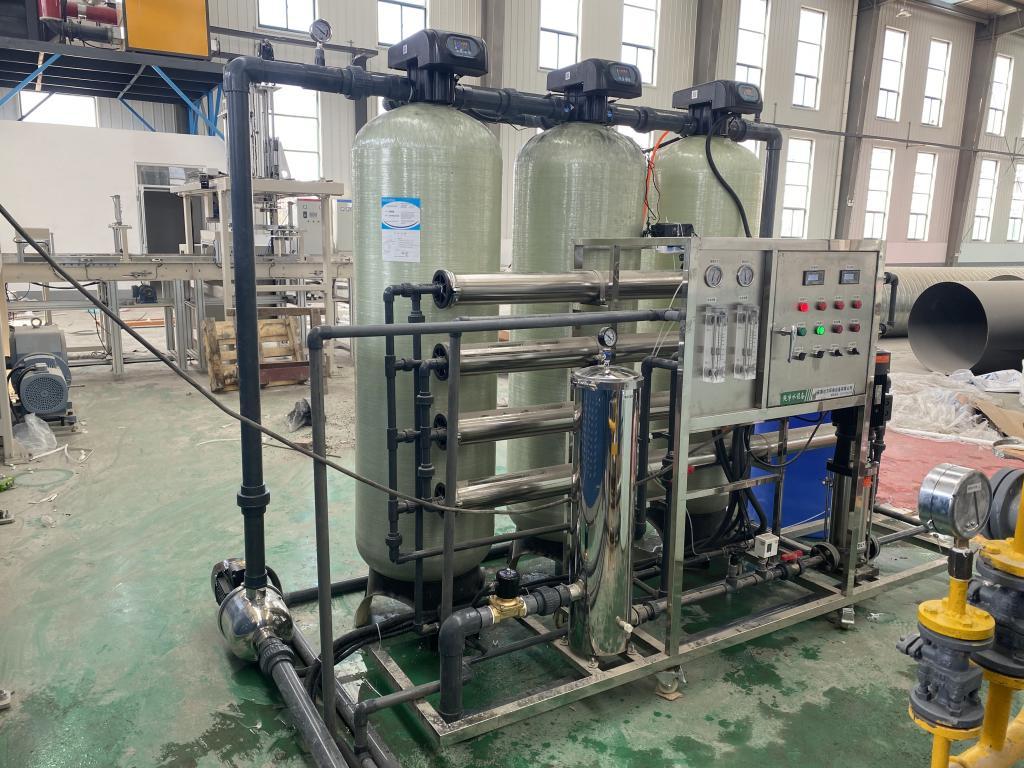
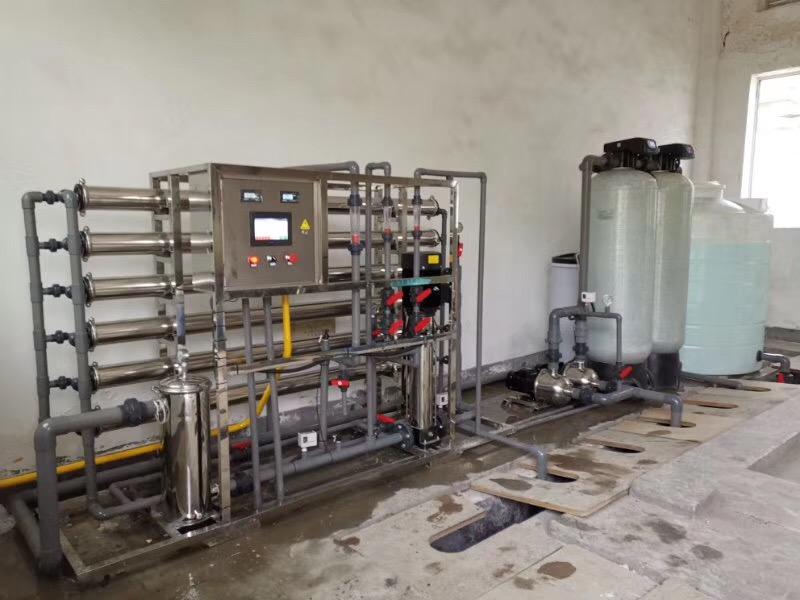
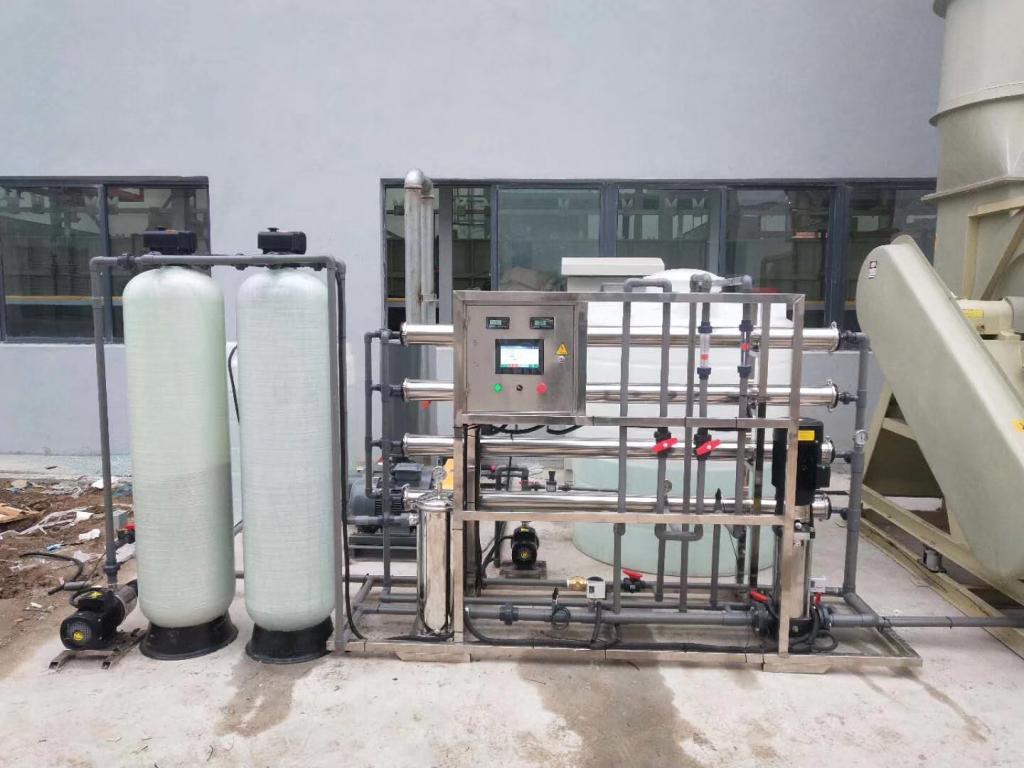
| Industry Category | Environment/Raw Water Treatment Equipment/Reverse Osmosis Equipment |
|---|---|
| Product Category | |
| Brand: | 达方环保 |
| Spec: | DFRO-2000L |
| Stock: | 10 |
| Manufacturer: | 安徽达方环保设备有限公司 |
| Origin: | 113417 |


