


In-situ Laser Online Analyzer
Contact Info
- Add:6th Floor, 2nd Floor, Zone A, Huijinyuan, South Section of Caotan 6th Road, Economic and Technological Development Zone, Xi'an City, Zip: 710021
- Contact: 贾维浩
- Tel:15891421187
- Email:972011706@qq.com
Other Products


In-situ Laser Analyzer (Oxygen, Carbon Monoxide, etc.)
1. Instrument Overview
The JNYQ-O-15Ex probe-type semiconductor laser analyzer is a high-performance product based on Tunable Diode Laser Absorption Spectroscopy (TDLAS) technology. It is primarily used in gas recovery analysis, coke dry quenching circulating gas analysis, blast furnace pulverized coal injection gas analysis, converter gas recovery, process gas analysis after electric tar capture in coke oven gas, industrial process gas analysis, biological fermentation, food industry, environmental monitoring, and other fields. The system adopts an explosion-proof design and can operate in hazardous locations. For details, please contact: Jia Weihao 15891421187; 15891421187
The JNYQ-O-15Ex laser analyzer probe series features easy installation, simple maintenance, long maintenance intervals, high reliability, and strong adaptability. 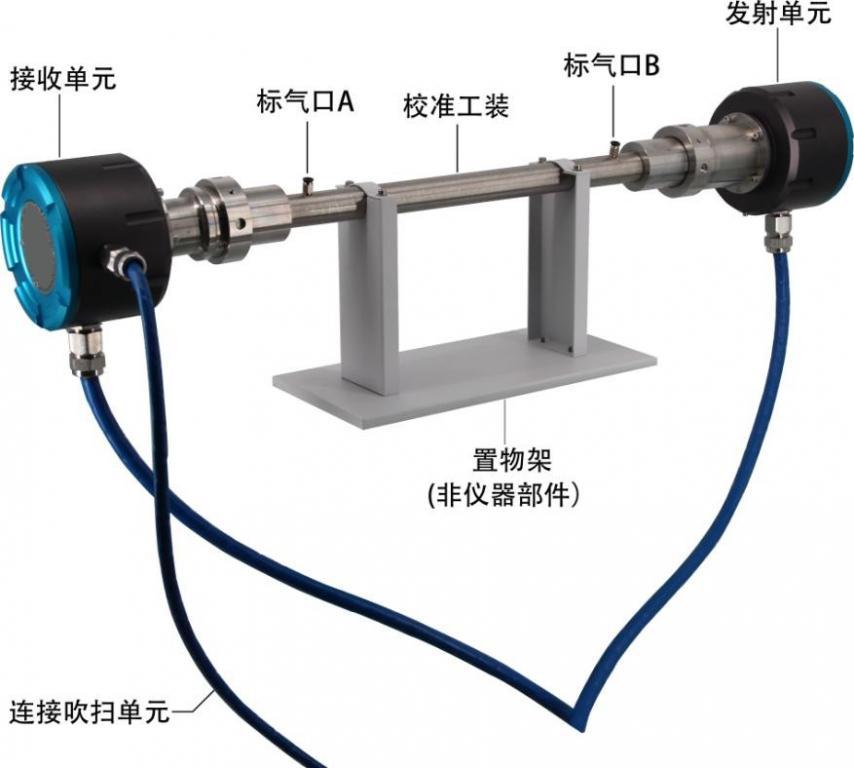
2. Instrument Principle
The laser analyzer system is based on the internationally leading Tunable Diode Laser Absorption Spectroscopy (TDLAS) technology, also known as "single-line spectroscopy" measurement technology. The system uses a tunable semiconductor laser as the light source, modulating the laser frequency by adjusting the operating current intensity of the semiconductor laser, allowing the laser scanning range to slightly exceed the single absorption line of the target gas. As a result, the specific wavelength laser beam emitted by the semiconductor laser is selectively absorbed by the target gas when passing through the measurement tube, causing attenuation of the laser intensity. The system utilizes the fact that different gas components have distinct characteristic absorption lines and the Beer-Lambert relationship between gas concentration and infrared or laser absorption spectroscopy. By detecting the absorption level of the absorption line (i.e., the laser intensity attenuation information), the concentration of the target gas can be determined.
However, unlike traditional non-dispersive infrared (NDIR) analysis technology, which uses a broadband infrared light source with a fixed wavelength, TDLAS technology employs a semiconductor laser with a very narrow spectral width (i.e., excellent monochromaticity) and tunable wavelength as the light source. Therefore, TDLAS technology offers performance advantages that traditional NDIR analysis technology cannot achieve.
Unaffected by Background Gas Cross-Interference
The spectral width of the laser emitted by the semiconductor laser is less than 0.0001nm, which is 1/10^6 of the spectral width of an infrared light source, far smaller than the spectral width of the infrared light source and the single absorption line width of the target gas. Its frequency modulation scanning range also only covers the single absorption line of the target gas (hence, semiconductor laser absorption spectroscopy is also called single-line spectroscopy technology), effectively eliminating the impact of background gas cross-interference. For details, please contact: Jia Weihao 15891421187 15891421187
Unaffected by Changes in Target Gas Environmental Parameters
Changes in environmental parameters of the target gas—temperature or pressure—typically cause variations in line intensity and broadening, which can affect measurement results if not corrected. However, TDLAS technology analyzes a single absorption line of the target gas, making it easier to correct for temperature and pressure effects. To this end, the system incorporates automatic temperature and pressure correction functions, which adjust the gas component measurement values based on the actual measured temperature and pressure of the target gas, enabling precise online gas analysis.
In summary, single-line spectroscopy technology, laser wavelength scanning technology, and automatic environmental parameter correction technology allow TDLAS technology to be used for online gas analysis, providing stronger environmental adaptability compared to traditional sampling gas analysis systems like non-dispersive infrared. For details, please contact: Jia Weihao 15891421187 18789429991 ;15891421187 
3. Instrument Composition
The main functional modules of the JNYQ-O-15Ex laser analyzer consist of a transmitter unit and a receiver unit (see figure below). The transmitter unit drives the semiconductor laser to emit laser light, which passes through the measured environment. The receiver unit performs photoelectric conversion, signal processing, and analyzes the spectral data to obtain measurement results.
The JNYQ-O-15Ex laser analyzer adopts an in-situ installation form, with the transmitter and receiver units directly mounted on the process pipeline via a connection unit. The connection unit includes purge interfaces, optical path adjustment structures, root valves, and installation flanges.
Transmitter Unit
This unit includes a semiconductor laser, collimating optical system, drive circuit board, and temperature control circuit board. The laser is modulated to specific wavelengths and frequencies to enable gas detection. When cleaning or performing other maintenance on the transmitter unit, the root valve in the mechanical connection flange isolates the process pipeline from the operating environment, preventing hazardous gas leaks. The appearance of the transmitter unit is shown in the figure below. For details, please contact: Jia Weihao
15891421187 18789429991 15891421187 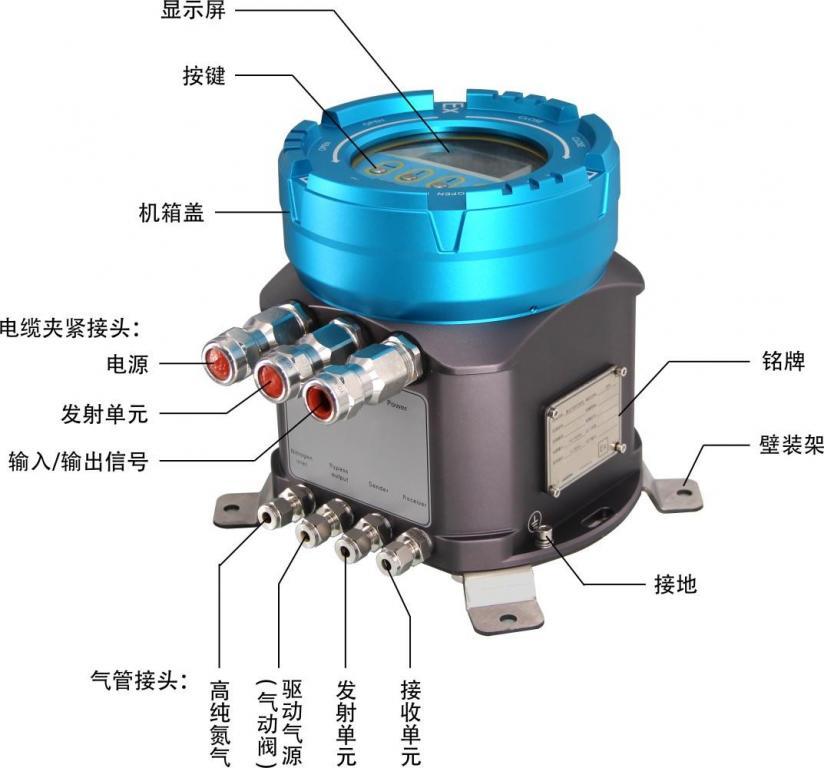
Receiver Unit
The receiver unit is connected to the measurement pipeline via a mechanical connection flange. This unit includes a photoelectric sensor, lens, receiver mainboard, sensor board, and display board. The lens focuses the collimated laser onto the photoelectric sensor. The detected optical signal is then converted into an electrical signal for processing. The second harmonic signal information is detected, converted into concentration information, and displayed on the OLED screen at the receiver end. The appearance of the receiver unit is shown in the figure below.
Purge Unit
Under harsh measurement conditions, to ensure long-term continuous operation of the JNYQ-O-15Ex laser analyzer, purge gas must be used to clean the optical windows on the transmitter and receiver units, preventing severe contamination from dust or other pollutants in the measurement environment that could affect measurements. The purge unit of the JNYQ-O-15Ex laser analyzer consists of filters, pressure reducing valves, and flow stabilizers, providing a stable flow of purge gas for the analyzer.
The purge unit not only supplies purge gas to the transmitter and receiver units but also features a 128×64 OLED screen and buttons to display oxygen concentration and modify analyzer parameters. It can also output analog signals, alarm signals, and communication data.
4. System Workflow
After powering on and opening the root valve, the semiconductor laser emits laser light at specific frequencies through the transmitter unit, passing through the gas channel. The sensor in the receiver unit captures the attenuated laser beam and sends the measurement signal to the central analysis module. The central analysis module processes the measurement signal to obtain the concentration of the target gas, which is displayed on the screen and output via standard interfaces.
To prevent dust and other pollutants from accumulating on the windows, industrial nitrogen or other gases must be continuously purged through the purge inlet, forming a protective gas curtain between the optical windows and the industrial gas.
5. Technical Advantages
Compared to traditional analysis systems, the JNYQ-O-15Ex probe-type laser analyzer, utilizing TDLAS technology, fundamentally resolves issues such as response lag, frequent maintenance, susceptibility to clogging and leakage, numerous wear parts, and high operating costs associated with sample pretreatment. It offers the following features:
Unaffected by background gas cross-interference;
Applicable to harsh conditions such as after electric tar capture;
Low maintenance costs;
Unaffected by dust and window contamination;
Unaffected by changes in target gas environmental parameters;
Integrated design, compact structure, high reliability;
Modular design, allowing on-site replacement of all functional modules, including the laser module;
High level of intelligence, easy operation and maintenance;
No sample pretreatment system required, simple system structure;
Fast response time, not exceeding 3s, ensuring timely process control;
No sample gas emissions, environmentally friendly and pollution-free;
Direct analysis of process gas, high measurement accuracy; For details, please contact: Jia Weihao 15891421187 18789429991 15891421187
Performance Parameters
Performance | |
Measurement Range | 0~30% O2 |
Linearity Error | ±1%FS |
Repeatability | ≤1% |
Span Drift | ±1% FS/half year |
Response Time | T90 less than 10s |
Maintenance Interval | ≤2 times/year, cleaning optical lenses |
Calibration Interval | ≤2 times/year |
Analog Output Signals | |
Quantity | 2 sets |
Analog Output Mode | 4-20mA |
Allowable Load | Less than 500Ω |
Alarm Output | |
Quantity | 2 sets (one set for concentration alarm, one set for status alarm) |
Relay Contact Capacity | 24VDC,0.2A |
Communication | |
Quantity | 1 set |
Communication Method | RS485 (standard) / RS232 (optional) |
Operating Environment | |
Ambient Temperature | -20~+60℃ |
Ambient Humidity | Less than 90%RH |
Purge Gas | 0.4~0.8Mpa high-purity nitrogen |
Mechanical Data | |
Display | 128×64 OLED |
Buttons | Four capacitive touch buttons |
Installation Method | In-situ installation |
Mounting Hardware | Transmitter and receiver units: mounting components Purge unit: wall-mounted bracket |
Weight | Transmitter unit+receiver unit+calibration fixture: net weight approx. 13.5kg |
Purge unit: net weight approx. 8.0kg | |
Electrical Data | |
Power Supply | DC: 24VDC (standard) AC: 100~240VAC,50/60Hz (optional) |
Analyzer Power Consumption | Not exceeding 20VA |
Connections | |
Cable Entry Device | Cable clamping joint |
Gas Connection | G1/4"-Φ6 stainless steel pipe joint (optional) |
6. Utilities
Power Cable: 220VAC brought near the field analyzer, with some slack left;
Purge Gas Source: Nitrogen or instrument air 0.4~0.8Mpa, oil-free, dust-free, water-free, G1/2 galvanized steel pipe brought near the field instrument, with a reserved G1/2 internal thread ball valve;
Installation and Maintenance Platform: In situations such as overhead pipelines where installation and maintenance are inconvenient, an installation and maintenance platform needs to be added; For details, please contact: Jia Weihao
15891421187 18789429991 15891421187 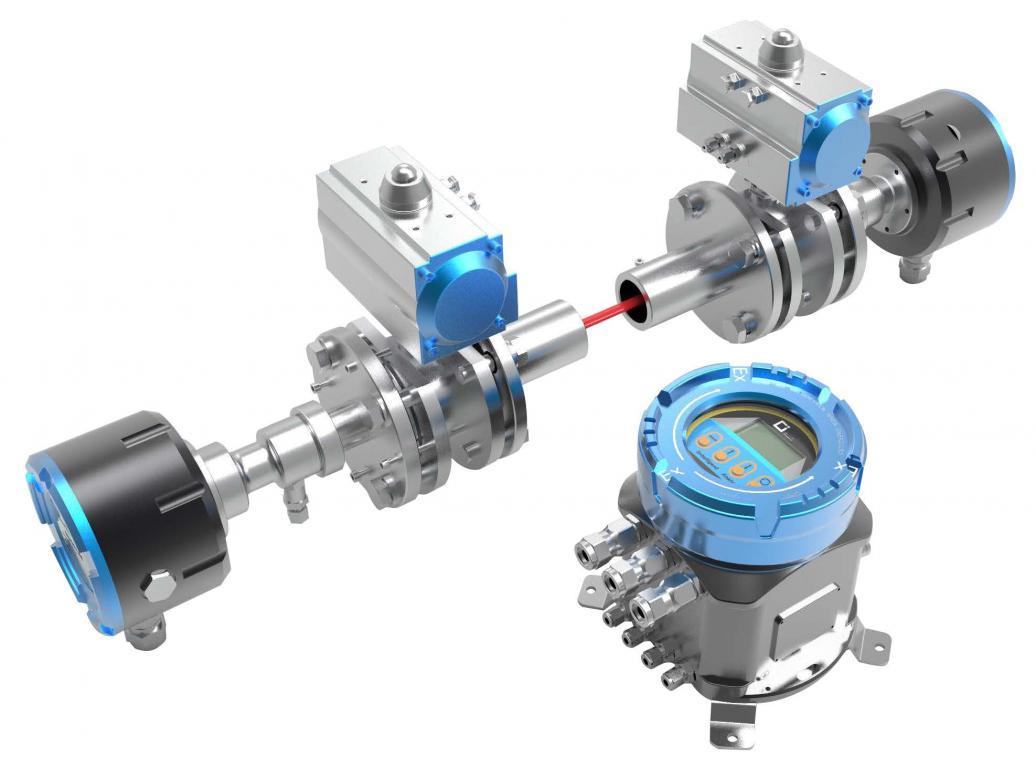
| Industry Category | Instruments & Meters/Analytical Instruments/Other Analytical Instruments |
|---|---|
| Product Category | |
| Brand: | 聚能 |
| Spec: | JNYQ-O-15EX |
| Stock: | 43678 |
| Manufacturer: | 西安聚能仪器 |
| Origin: | 116101 |


