


Cathodic protection of steel pipe piles with aluminum alloy sacrificial anodes
Other Products


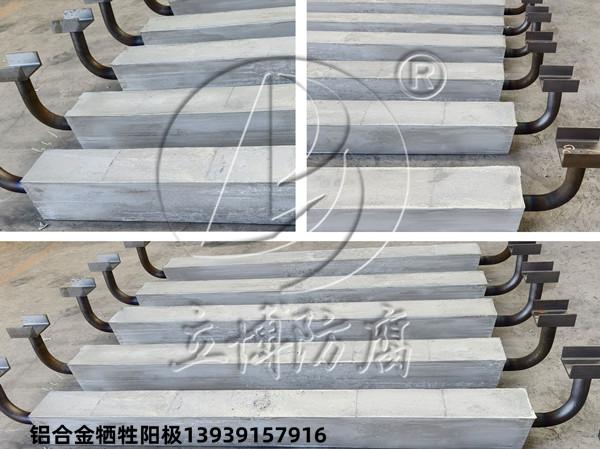
Cathodic Protection Aluminum Alloy Sacrificial Anode for Steel Pipe Piles
Introduction to Aluminum Alloy Sacrificial Anodes for Cathodic Protection of Steel Pipe Piles
The application of aluminum alloy sacrificial anodes in the cathodic protection of steel pipe piles is achieved through electrochemical principles. Aluminum alloy sacrificial anodes utilize their electrochemical activity to preferentially dissolve in electrolyte environments (such as seawater, soil, etc.), releasing electrons and lowering the potential of the protected metal structure (e.g., steel pipe piles), placing it in a cathodic state, thereby inhibiting corrosion1.
Advantages of Aluminum Alloy Sacrificial Anodes
- High Electrochemical Performance: Aluminum alloy sacrificial anodes generate a large amount of electricity per unit weight of anode material, approximately three times that of zinc anodes and twice that of magnesium anodes. They perform well in seawater and other media containing chloride ions, with strong self-regulating current capabilities1.
- Strong Corrosion Resistance: Aluminum alloy sacrificial anodes effectively prevent corrosion of metal structures in seawater and chloride-containing media, providing long-term cathodic protection1.
- Long Service Life: Aluminum alloy sacrificial anodes have a relatively long service life, reducing the frequency of maintenance and replacement, thereby lowering maintenance costs1.
- Easy Installation and Maintenance: Aluminum alloy sacrificial anodes can be directly fixed to the protected structure without the need for fillers, making installation and maintenance relatively convenient1.
Application Scope of Aluminum Alloy Sacrificial Anodes in Cathodic Protection of Steel Pipe Piles
Aluminum alloy sacrificial anodes are widely used in various fields, including:
- Ships and Marine Engineering: Protecting metal components such as hulls, propellers, and rudders, as well as providing cathodic protection for large marine engineering structures like offshore oil platforms and offshore wind power platforms1.
- Storage Tanks and Pipelines: Protecting internal metal surfaces of drinking water storage tanks, chemical storage tanks, etc., from corrosion, and safeguarding subsea oil and gas pipelines from seawater corrosion1.
- Bridges and Infrastructure: Used for cathodic protection of bridge foundations, sluices, and other structures in freshwater environments, as well as for protecting the foundational structures of cross-sea bridges1.
- Port Engineering Facilities: Protecting metal structures such as dock steel piles and mooring posts from seawater corrosion, as well as anti-corrosion engineering for breakwaters1.
Limitations of Aluminum Alloy Sacrificial Anodes
Although aluminum alloy sacrificial anodes have many advantages, they may not perform as expected in certain specific environments.
The application of aluminum alloy sacrificial anodes in the cathodic protection of steel pipe piles is achieved through electrochemical principles. Aluminum alloy sacrificial anodes utilize their electrochemical activity to preferentially dissolve in electrolyte environments (such as seawater, soil, etc.), releasing electrons and lowering the potential of the protected metal structure (e.g., steel pipe piles), placing it in a cathodic state, thereby inhibiting corrosion1.
Advantages of Aluminum Alloy Sacrificial Anodes
- High Electrochemical Performance: Aluminum alloy sacrificial anodes generate a large amount of electricity per unit weight of anode material, approximately three times that of zinc anodes and twice that of magnesium anodes. They perform well in seawater and other media containing chloride ions, with strong self-regulating current capabilities1.
- Strong Corrosion Resistance: Aluminum alloy sacrificial anodes effectively prevent corrosion of metal structures in seawater and chloride-containing media, providing long-term cathodic protection1.
- Long Service Life: Aluminum alloy sacrificial anodes have a relatively long service life, reducing the frequency of maintenance and replacement, thereby lowering maintenance costs1.
- Easy Installation and Maintenance: Aluminum alloy sacrificial anodes can be directly fixed to the protected structure without the need for fillers, making installation and maintenance relatively convenient1.
Application Scope of Aluminum Alloy Sacrificial Anodes in Cathodic Protection of Steel Pipe Piles
Aluminum alloy sacrificial anodes are widely used in various fields, including:
- Ships and Marine Engineering: Protecting metal components such as hulls, propellers, and rudders, as well as providing cathodic protection for large marine engineering structures like offshore oil platforms and offshore wind power platforms1.
- Storage Tanks and Pipelines: Protecting internal metal surfaces of drinking water storage tanks, chemical storage tanks, etc., from corrosion, and safeguarding subsea oil and gas pipelines from seawater corrosion1.
- Bridges and Infrastructure: Used for cathodic protection of bridge foundations, sluices, and other structures in freshwater environments, as well as for protecting the foundational structures of cross-sea bridges1.
- Port Engineering Facilities: Protecting metal structures such as dock steel piles and mooring posts from seawater corrosion, as well as anti-corrosion engineering for breakwaters
| Industry Category | Machinery & Equipment/Pipes & Fittings/Other Pipe Materials |
|---|---|
| Product Category | |
| Brand: | 立博 |
| Spec: | AL-1 |
| Stock: | 50000 |
| Manufacturer: | 焦作立博 |
| Origin: | 114108 |


