


Direct Current Flexible System Solar Photovoltaic Power Station EPC
Contact Info
- Add:No. 68 Zhongxin Road, Baguazhou Subdistrict, Qixia District, Nanjing, Zip: 210043
- Contact: 小芒
- Tel:15951634545
- Email:15951634545@163.com
Other Products


Photovoltaic, Energy Storage, Direct Current, and Flexibility (PEDF) is an acronym for the application of four technologies in the building sector: solar photovoltaics, energy storage, DC power distribution, and flexible interaction. PEDF is an important pillar in the development of zero-carbon energy and facilitates the direct integration of wind and solar power.
"Photovoltaic" refers to solar photovoltaic technology. Solar photovoltaic power generation is one of the main renewable power sources of the future, and the vast exterior surfaces of buildings provide spatial resources for developing distributed photovoltaics. Over the past decade, solar photovoltaic technology has undergone rapid iteration and advancement.
"Energy Storage" refers to energy storage technology. In future power systems, energy storage is an indispensable component. Energy storage facilities in buildings can take various forms in a broad sense. Electrochemical energy storage is one such form and has seen the most rapid technological development in recent years. Battery energy storage technology offers advantages such as fast response, high efficiency, and low requirements for installation and maintenance. Electrochemical energy storage is already widely used in buildings for emergency power supplies and uninterruptible power supplies.
In the future, with the popularization of electric vehicles, bidirectional charging piles can utilize electric vehicles as mobile energy storage for buildings. On July 15, 2021, the National Development and Reform Commission and the National Energy Administration issued the "Guiding Opinions on Accelerating the Development of New Energy Storage" (NDRC Energy Regulation [2021] No. 1051), encouraging the aggregated use of decentralized energy storage facilities such as uninterruptible power supplies, electric vehicles, and user-side energy storage, and actively supporting the diversified development of user-side energy storage.
"Direct Current" refers to DC technology. Compared to alternating current (AC), DC has characteristics such as simplicity, ease of control, and high transmission efficiency, making it widely used in specialized systems like aviation, communications, and naval vessels. However, due to past technological limitations, DC faced challenges in voltage transformation and limited transmission distance, leading to the predominant use of AC in building low-voltage power distribution systems. With advancements in power electronics, DC voltage transformation issues have been gradually resolved, and building DC power supply systems have regained industry attention.
The purpose of adopting DC power supply systems in buildings is to leverage the simplicity and controllability of DC to facilitate the flexible and efficient integration and regulation of distributed power sources like photovoltaics and energy storage, enabling the large-scale application of renewable energy in buildings. At the same time, the inherent safety of low-voltage DC can be utilized to create an intrinsically safe electrical environment. A key feature of DC buildings is the synergy between "photovoltaics, energy storage, DC, and flexibility."
"Flexibility" refers to flexible electricity usage technology. Flexibility means the ability to actively adjust the building's power draw from the municipal grid.
In fact, building equipment flexibility has garnered widespread attention from scholars both domestically and internationally. For example, the IEA EBC's Annex 67 project has conducted a series of studies on building energy flexibility, including user adjustment willingness surveys, control strategy optimization, equipment adjustment benefit analysis, and adjustable capacity evaluation.
Traditional building energy supply primarily addresses the relationship between power supply and building energy consumption. Flexibility, however, addresses the synergy between municipal power supply, distributed photovoltaics, energy storage, and building energy consumption. Developing flexible technology is crucial for addressing current peak power load challenges and future compatibility with high-proportion renewable energy generation.
In PEDF, "flexibility" is the ultimate goal, transforming building electricity consumption from a rigid load to a flexible load, while "photovoltaics," "energy storage," and "DC" are necessary conditions for achieving this ultimate goal.
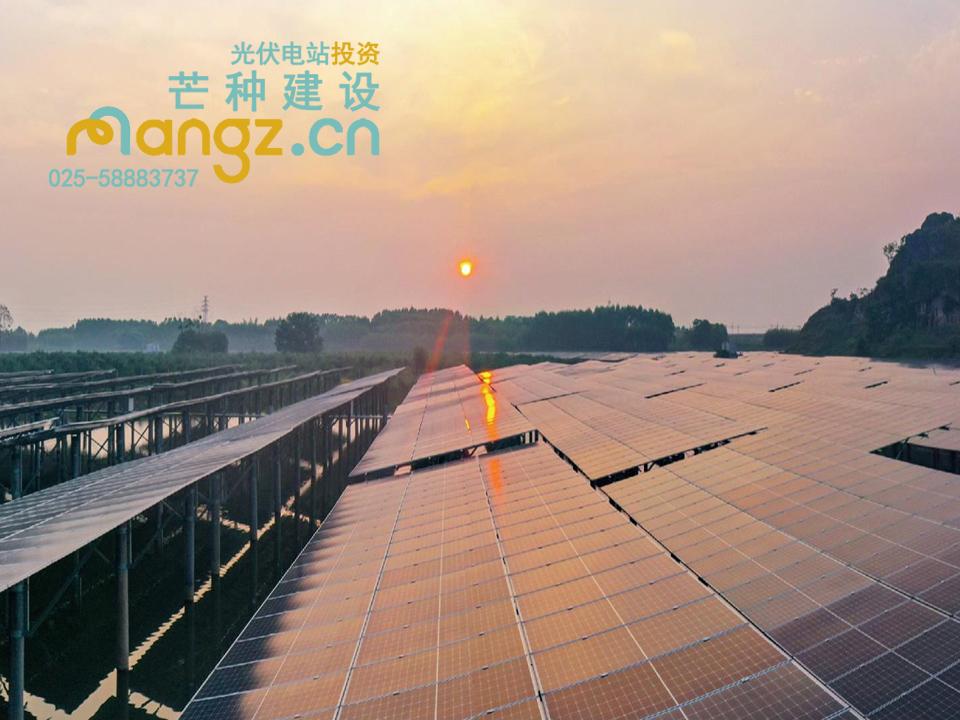
Jiangsu Mangzhong Construction Co., Ltd. is a comprehensive energy service provider specializing in the photovoltaic sector, dedicated to photovoltaic power plant investment, development, design, construction, smart operation and maintenance, professional consulting services, and photovoltaic equipment recycling as a smart energy enterprise.
Company Name: Jiangsu Mangzhong Construction Co., Ltd.
Business Scope: Photovoltaic power plant EPC, solar power plant investment
Company Landline: 025-5888 3737
Mobile Number: 159 5163 4545
Company Website: http://www.mangz.cn
| Industry Category | Others |
|---|---|
| Product Category | |
| Brand: | 芒种 |
| Spec: | 并网 |
| Stock: | 10000 |
| Manufacturer: | 芒种 |
| Origin: | 113201 |


