


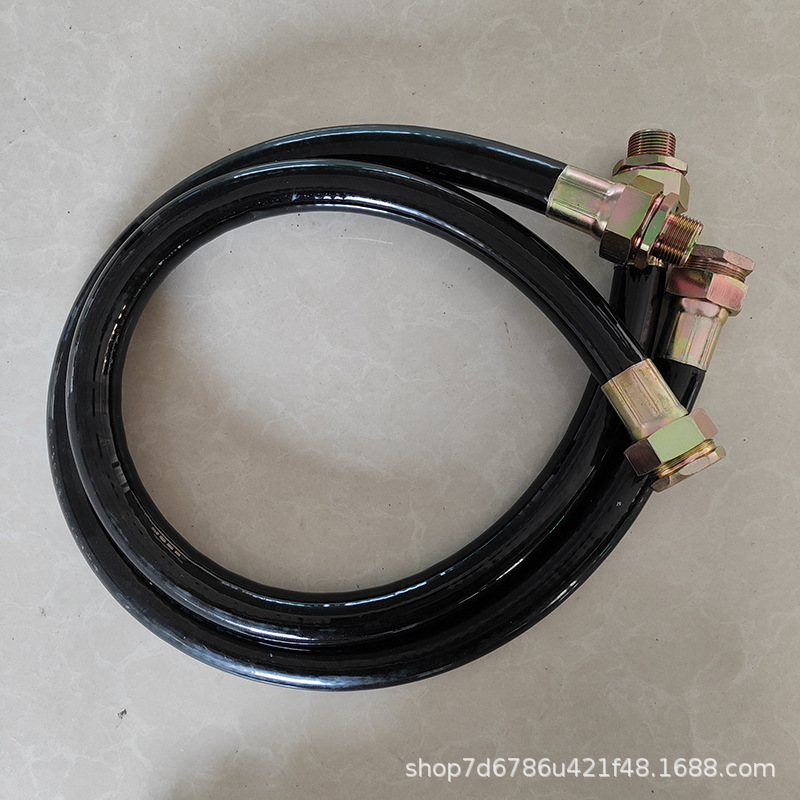
Explosion-proof sealed joint flexible tube
Contact Info
- Add:1st Floor, No. 71 Longtan Road, Houjie Village, Liushi Town, Yueqing City, Wenzhou City, Zhejiang Province, Zip:
- Contact: 邓丽珍
- Tel:0577-61000000
- Email:702096540@qq.com
Other Products


DN20 Rubber Hose Manufacturer of Explosion-Proof Rubber Conduit and Explosion-Proof Sealed Joint Flexible Pipe
After grooving the wall and floor with a non-toothed saw for conduit layout, lay the conduit, using flame-retardant pipes with a diameter not less than 16mm and "86" junction boxes. Then thread the wires through the conduit (when wiring, separate the phase and neutral wires by color; the phase wire (L) should be uniformly colored in the same residence, the neutral wire (W) should preferably be blue, and the protective wire (PE) should preferably be yellow-green). Secondly, when burying power conduits, maintain a distance of at least 500mm from weak current pipelines. The parallel distance between electrical conduits and hot water or gas pipes should be no less than 300mm. Strong and weak currents must not be installed in the same conduit to avoid interference with weak current signals. Third, wire connections inside junction boxes should use the U-shaped winding method with 6.5 turns according to national standards to prevent poor connections that could cause "sparking." For wire joints in junction boxes, apply "tinning" to prevent oxidation and short circuits. Also, wrap the conduit with waterproof tape and high-voltage insulating tape. After threading the wires, use insulating tape and waterproof tape to provide double insulation for power wire connections. Power lines running along the ceiling must pass through conduits, and the wooden framework of the ceiling should be treated for fire and insect resistance to avoid future issues for the homeowner. First, when selecting wires, use copper wires and avoid aluminum wires. Aluminum wires have poor conductivity and can overheat during use, potentially causing fires. Then, always use insulated conduits for wiring. Hiding wires directly in the wall is like having a hidden time bomb at home,随时可能漏电, posing a risk. Of course, different types of线路 should not share the same conduit, such as TV antennas, telephone lines, etc. Minimize wire joints; if splicing is necessary, ensure proper insulation and moisture protection. If conditions allow, "tinning" can be applied. At the end of the renovation, the homeowner must request the circuit diagram, which helps prevent circuit system issues and is useful for future upgrades and modifications. Wires buried in walls must be enclosed in conduits, typically either metal or PVC conduits: metal conduits are more expensive but offer better interference resistance, are fire-resistant, and provide better protection for wires in the long run (e.g., using PVC conduits might lead to accidental punctures when nailing into walls later). PVC conduits are cost-effective, easier to bend than metal pipes, and have good insulation properties. Just choose sturdy ones; a simple method to test PVC conduits is to step on them—if they don’t collapse, they are good.
How to correctly use PVC pipe material, scientifically known as poly, a thermoplastic resin material with excellent mechanical properties, tensile strength around 60MPa. Adding certain additives during the pipe manufacturing process can make PVC pipes flame-retardant, resistant to acids and alkalis, wear-resistant, and most importantly for conduits, insulating. It is these excellent characteristics that have allowed PVC conduits to capture a huge market share. Different application areas require PVC pipes to have different functions, so the use of PVC conduits also varies. Below, the editor will show you how to use PVC conduits effectively in different settings. 1. For conduits暗敷于墙体内, buried in non-combustible materials underground, and for ordinary residential homes like rural buildings, use PVC conduits that meet the Ministry of Construction standard JG3050-199 [1] 8 "Insulated Electrical Conduits and Fittings for Buildings," which have certain flame-retardant properties and meet physical and mechanical performance requirements. Follow local and detailed regulations. 2. For places with high fire risks, such as hotels, restaurants, shopping malls (large supermarkets), libraries, entertainment venues, and other public gathering places, when protecting线路 in吊顶及地板内 with conduits, because there are many combustible and flammable materials in the ceiling and floor, choose PVC conduits with higher flame-retardant performance levels. 3. For electrical lines used in fire protection, such as fire alarm system electrical lines, it is mandatory to use flame-retardant PVC conduits that meet industry standards. 4. For明敷电气线路改造 in cultural relic ancient buildings, indoor decoration and renovation, and secondary renovations of houses, as well as for old buildings where明敷线路 are needed (hidden in ceilings or floors),必须采用燃烧性能B1级以上的阻燃PVC穿线管.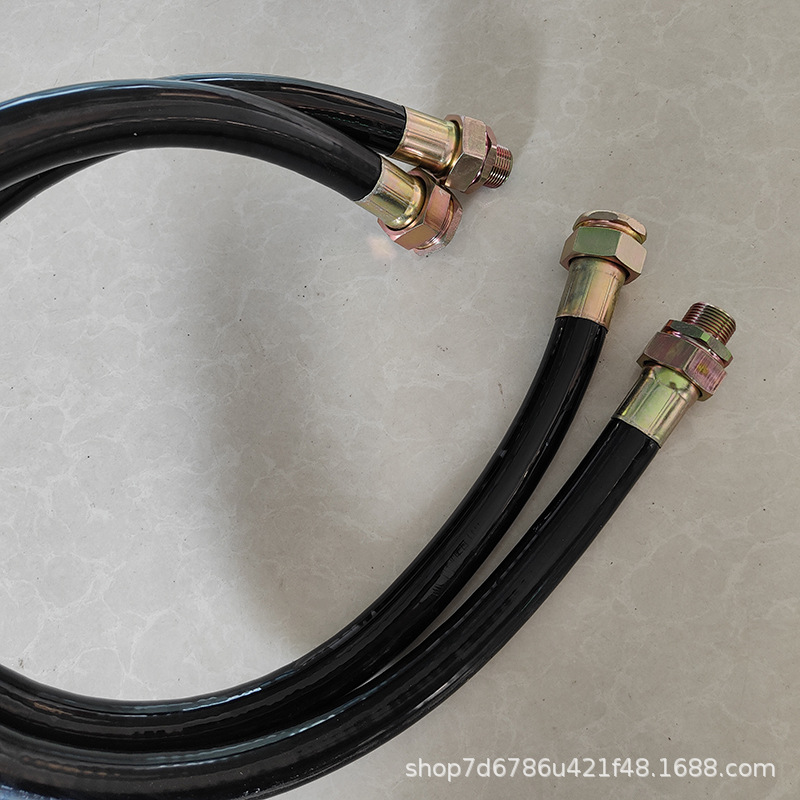
| Industry Category | Lighting/Specialty Lighting/Explosion-Proof Lighting |
|---|---|
| Product Category | |
| Brand: | 振磊防爆 |
| Spec: | BNG |
| Stock: | 45640 |
| Manufacturer: | 振磊防爆 |
| Origin: | 113303 |


