


Third-party testing company for reagent testing, providing one-stop analysis and testing services.
Contact Info
- Add:6th Floor, Building G, No. 22 Tiansheng Road, Liuhe District, Nanjing, Zip: 211500
- Contact: 孙晨
- Tel:025-66156159
- Email:2881760404@qq.com
Other Products


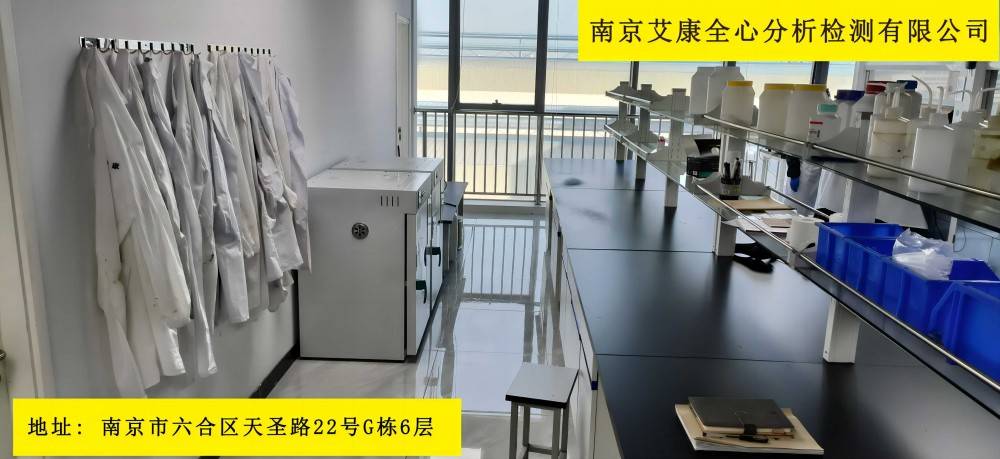
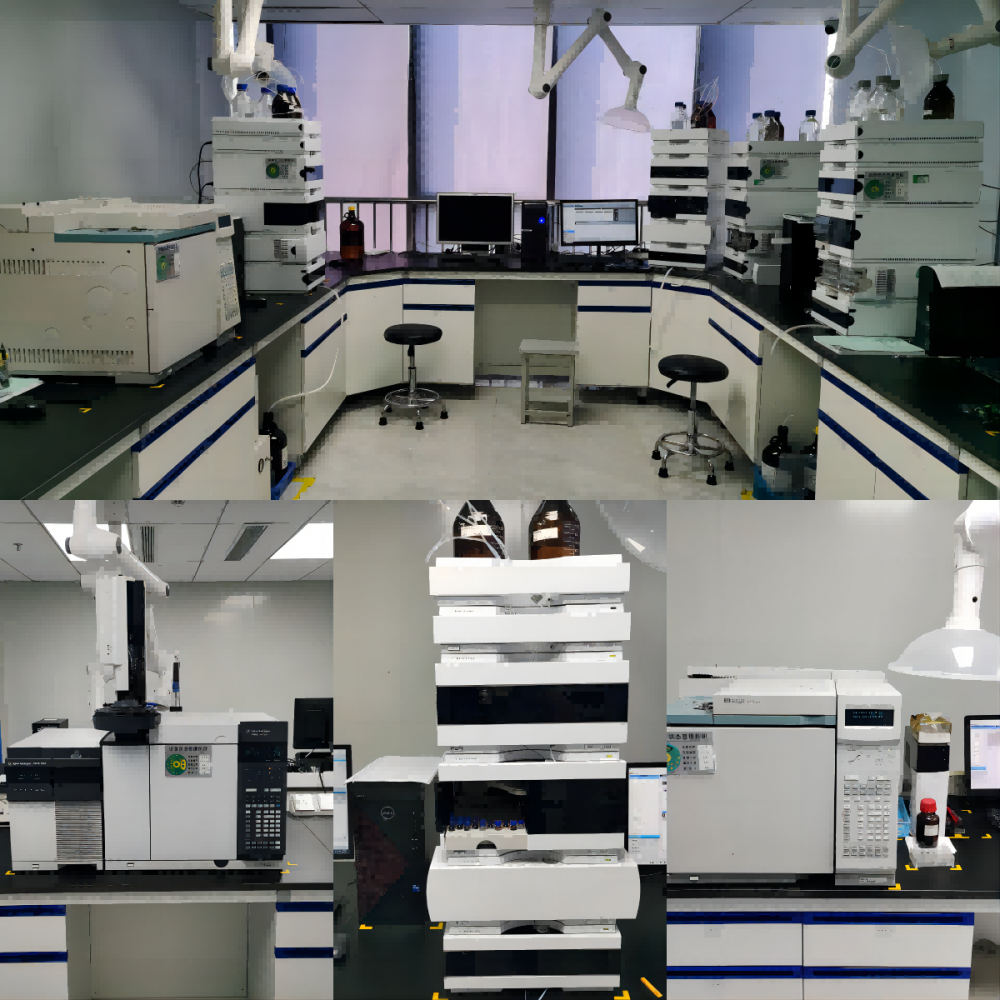
Nanjing Aikon Wholeheart Analysis and Testing Center currently possesses a range of large-scale analytical instruments, including a domestically advanced 400M high-resolution nuclear magnetic resonance spectrometer, a full set of Agilent series liquid chromatography-mass spectrometers, gas chromatography-mass spectrometers, high-performance liquid chromatographs, gas chromatographs, and various physicochemical analyzers.
Here, we have a high-quality management team and an experienced technical team. The testing center will always be guided by meeting customer needs, continuously providing efficient, fast, intuitive, and reliable testing solutions to a wide range of clients with new industry standards and technical means. We are committed to offering personalized and consistent services to both new and existing customers.
How to Ensure the Accuracy of Results in Analytical Testing
Any testing process will produce testing errors, and there are many sources of analytical testing errors, such as the representativeness, uniformity, and stability of samples. The task of quality assurance is to reduce all errors, including systematic and random errors, to an expected level. Quality assurance in analytical testing can be divided into two major aspects: quality assurance in sampling and quality assurance in the analytical testing system.
Two Major Aspects of Quality Assurance
Quality Assurance in Sampling:
A sample is a portion of material selected from a larger quantity;
The test result of a sample is an estimate of the overall characteristic quantity;
Due to the heterogeneity of the overall material, using sample test results to infer the overall material inevitably introduces errors, known as sampling errors;
Sampling errors can be divided into random errors and systematic errors;
1. Random Sampling Errors: Caused by uncontrollable random factors during the sampling process. Increasing the number of samples and the sample size can reduce random sampling errors.
2. Systematic Sampling Errors: Caused by imperfect sampling plans, defective sampling equipment, incorrect operations, environmental factors, etc. These errors can only be avoided or eliminated through strict quality assurance in sampling.
● Sampling errors are always associated with measurement errors. By repeatedly testing multiple laboratory samples and conducting multiple tests on a single laboratory sample, sampling errors can be estimated.
Quality Control in the Analytical Testing Process
The analytical testing process generally includes sample processing, selection of measurement methods and metrological standards, calibration of measuring instruments, testing, statistical analysis of data, and reporting of measurement results. Each of these steps is closely related to the operator's technical skills, theoretical knowledge, and quality awareness.
How Exactly Are They Related?
01 Sample Processing and Recovery Rate
During sample processing, incomplete dissolution, separation, or enrichment may occur, or the target component may volatilize or decompose, leading to negative systematic errors. On the other hand, contamination from utensils, chemical reagents, the environment, or the operator may introduce positive systematic errors. Even if no obvious systematic errors occur during sample processing, significant random errors may still be introduced.
02 Control and Correction of Analytical Blanks
(1)Analytical Blanks and Their Role:
Analytical blanks and their variability play a decisive role in the accuracy, precision, and detection limits of trace and ultra-trace analysis methods.
(2)Control of Analytical Blanks:
Mainly includes the following:
① Eliminate or control contamination of samples by the experimental environment;
② Contamination of the target component in the sample by chemical reagents varies with the purity and quantity of the reagents;
③ Containers used for storing and processing samples may contaminate the sample if the material is impure or not properly cleaned;
④ Avoid contamination of samples by the analyst.
(3)Blank Tests:
Based on the blank test value and its standard deviation, correct the sample measurement values.
03 Applicability of Measurement Methods
(1)Categories and Levels of Measurement Methods:
There are thousands of standard methods, which can generally be divided into three types:
① Popular standard methods for testing product specifications.
② Standard methods developed to enforce regulations, known as official methods. For example, the Association of Official Analytical Chemists (AOAC) has developed standard methods for analyzing food, drugs, fertilizers, pesticides, and cosmetics to ensure compliance with agricultural and public health regulations.
③ Foundational standard methods, such as those developed by the Society for Analytical Chemistry (SAC) in the UK and the American Society for Testing and Materials (ASTM).
(2)Main Technical Parameters and Control Indicators of Measurement Methods:
Include: linear range, accuracy, precision, sensitivity, and detection limit.
04 Calibration of Measurement Methods
The purpose of calibrating measurement methods is to establish a functional relationship between the measurement signal and the quantity of the chemical component being measured, i.e., the quantitative relationship between the physical signal and the chemical component. Creating an accurate and effective calibration curve is an important prerequisite for obtaining accurate and reliable measurement results.
(1)Use accurate and reliable metrological standards.
(2)Eliminate or measure the effects of interference and matrix effects.
(3)Control experimental conditions and design experiments reasonably.
Experiments should be designed according to the following principles:
① To maintain consistency between the experimental conditions of the measured sample and the conditions under which the calibration curve was created, the calibration curve should be created and used within a short time interval;
② It is best to have more than five experimental points on the calibration curve, and the range of values should be as wide as possible to improve the reliability and stability of the calibration curve;
③ It is best to perform repeated measurements at each experimental point and take the average value. At the very least, repeated measurements should be performed at the endpoints of the calibration curve to reduce experimental errors.
05 Standard Analytical Methods and Standardization of Analytical Methods
Standard analytical methods, also known as analytical method standards, are a type of technical standard. There are often multiple methods available for measuring a single item, each with different sensitivities, requirements for instruments and operations, and even different interpretations of results due to differing principles and interference factors.
To ensure the quality of testing data and meet societal demands, laboratories must comprehensively control the various factors affecting testing data, such as personnel, instruments, sample handling, testing methods, reagents, environmental conditions, and traceability. By systematically and coordinately controlling the entire testing process and the interrelationships among these factors, laboratories can ensure the accuracy, fairness, and reliability of testing data, as well as continuous improvement in the quality of analytical testing work.
Detailed explanations are as follows:
(1)Personnel
Personnel are the most valuable resource. The level and quality of a laboratory largely depend on the competence and expertise of its staff.
(2)Instruments and Equipment
Instruments and equipment are essential resources for laboratories to carry out testing work and are the foundation for ensuring the quality of testing work and obtaining reliable measurement data.
(3)Reagents and Chemicals
Reagents and chemicals refer to consumable materials used in testing. With societal development, the demand for testing precision has increased, from macro to micro, trace, and ultra-trace analysis. The content of target elements is very low, even extremely low, requiring high purity and strict quality standards for reagents and chemicals.
The quality of laboratory reagents directly affects the quality of testing work. There are two main scenarios:
One is that impure reagents (containing the target component) can lead to higher results;
The other is that reduced sensitivity or失效 of reagents can affect the accuracy of testing results. Laboratories should establish procurement and acceptance systems for reagents, as well as systems for reagent verification, records of合格 (qualified) and不合格 (unqualified) reagents, and lists of qualified suppliers to ensure that reagents meet technical specifications and provide a basis for proper procurement.
The procurement of chemical reagents and other consumables is an important part of the testing process. Reagents directly affect the quality of testing work, so the quality of external support services and supplies must be strictly controlled to ensure that testing quality is not compromised.
(4)Testing Methods
Testing methods are the basis for laboratories to carry out testing work and are the most important factor in ensuring the quality of analytical data. Different testing methods have different quality levels.
(5)Environment
Environment refers to laboratory facilities and environmental conditions. To ensure the quality of testing work, laboratory facilities and environmental conditions must meet work requirements.
(6)Traceability
Traceability refers to the characteristic that enables measurement results or standard values to be linked to specified reference standards (national measurement standards or international measurement standards) through an unbroken chain of comparisons with defined uncertainties. Traceability is a critical环节 in testing work.
(7)Sample Handling
Sample handling refers to the analysis and testing of submitted samples. Laboratories should develop procedures for sample collection, sealing, transportation,交接 (handover), acceptance, and storage based on national technical specifications or standards. For samples with special testing requirements, equipment and facilities that meet sample storage conditions should be provided to avoid deterioration, damage, or cross-contamination during storage or testing, ensuring the integrity of samples and the validity of testing results. (Source: Experiment and Analysis)
Nanjing Aikon Wholeheart Analysis and Testing Center's high-resolution 400M nuclear magnetic resonance spectrometer is like a super microscope, capable of capturing the smallest changes in biological organisms. Whether for early disease diagnosis or molecular structure analysis in drug development, it provides precise data support. Agilent series liquid chromatography-mass spectrometers, gas chromatography-mass spectrometers, and others are powerful assistants in the field of chemical analysis. They can separate target compounds from complex biological samples and perform precise quantitative analysis. This is undoubtedly a revolutionary technological breakthrough for fields such as environmental monitoring and food safety.
Instruments such as high-performance liquid chromatographs and gas chromatographs are evergreen tools in the laboratory. They play an irreplaceable role in drug analysis, metabolic research, and other fields, providing strong support for the in-depth development of medical research. Our professional team will provide you with one-stop testing services to safeguard your health. Choose Nanjing Aikon Wholeheart for professionalism and trust.
| Industry Category | Chemicals/Chemical Intermediates/Intermediate Compounds |
|---|---|
| Product Category | |
| Brand: | 南京艾康全心分析 |
| Spec: | 件 |
| Manufacturer: | 南京艾康全心分析 |
| Origin: | 113201 |


