


Component Testing - Third-Party Chemical Analysis and Testing Laboratory
Contact Info
- Add:6th Floor, Building G, No. 22 Tiansheng Road, Liuhe District, Nanjing, Zip: 211500
- Contact: 孙晨
- Tel:025-66156159
- Email:2881760404@qq.com
Other Products


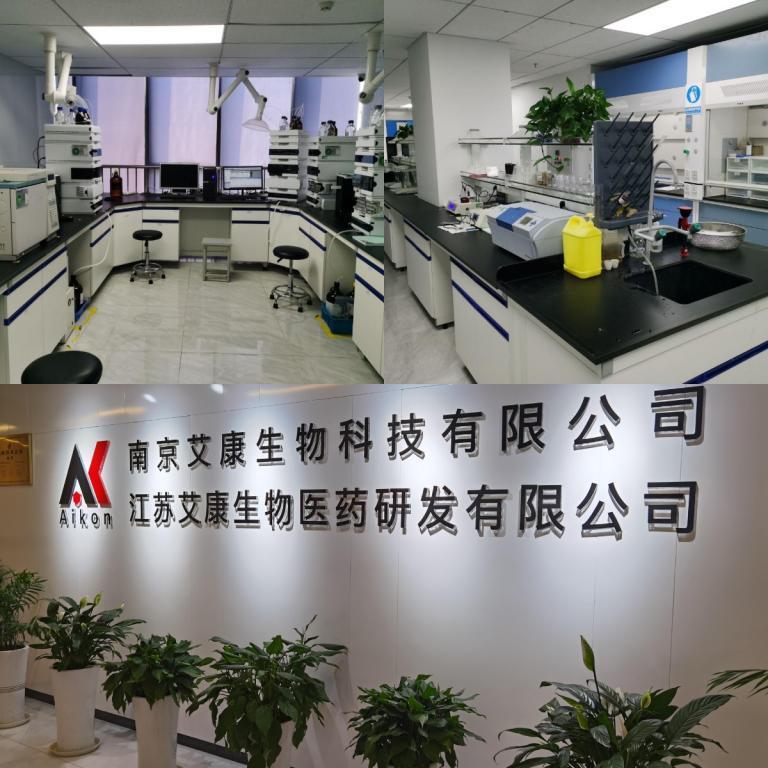
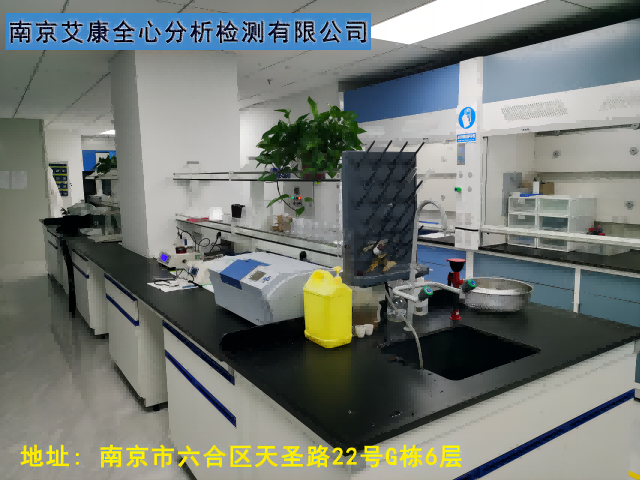
Nanjing Aikon Quanxin Analysis and Testing Center currently possesses a range of large-scale analytical instruments, including domestically advanced high-resolution 400M nuclear magnetic resonance spectrometers, a full set of Agilent series liquid chromatography-mass spectrometers, gas chromatography-mass spectrometers, high-performance liquid chromatographs, gas chromatographs, and various physicochemical analyzers.
Here, we have a high-quality management team and an experienced technical team. The testing center will always be customer demand-oriented, continuously providing efficient, fast, intuitive, and reliable testing solutions to a wide range of clients with new industry standards and technical means. We are committed to offering personalized and consistent services to both new and existing customers.
Liquid chromatography is an instrument that many find easy to use, but even experienced analysts who have used it for years may develop habits of incorrect operations, often leading to instrument malfunctions. While a convenient and fast analysis process is important, neglecting essential steps to process more samples often leads to more losses than gains. What operations should be avoided? What shortcuts should not be taken? What about those low-probability malfunctions that your mentor never taught you? What key factors should be paid attention to during the use of liquid chromatography?
1. Not filtering the mobile phase
Because dust or any other impurity particles can wear down the plunger, seal rings, cylinder, and check valves, any solid particles in the mobile phase should be removed in advance. The mobile phase is best distilled in a glass container, and the common method is filtration, using filters such as Millipore membranes (0.2μm or 0.45μm). A sand filter stick (or disc) should be connected to the pump inlet. The filter of the infusion pump should be cleaned or replaced regularly.
2. Not cleaning the pump promptly after use
The mobile phase should not contain any corrosive substances, and mobile phases containing buffer solutions should not be left in the pump, especially when the pump is stopped overnight or longer. If a buffer-containing mobile phase is left in the pump, due to evaporation or leakage, or even just from the solution sitting, fine salt crystals may precipitate, which can damage the seal rings and plunger just like solid particles.
Therefore, pure water must be pumped to thoroughly clean the pump before switching to a solvent suitable for column preservation and pump maintenance (for reversed-phase bonded silica stationary phases, this can be methanol or methanol-water).
3. Running the mobile phase dry
When the pump is operating, be careful to prevent the mobile phase in the solvent bottle from being used up, as running the pump dry can also wear the plunger, cylinder, or seal rings, eventually causing leaks.
What to do if there is no mobile phase flow and no pressure indication?
There may be a large amount of gas in the pump. In this case, open the pressure relief valve and run the pump at a higher flow rate (e.g., 5 ml/min) to expel the bubbles. A 50 ml syringe can also be used at the pump outlet to help draw out the gas. Another possible cause is worn seal rings, which need to be replaced.
4. Unstable pressure and flow?
The cause may be bubbles, which need to be removed; or there may be foreign matter in the check valve, which can be removed and ultrasonically cleaned in acetone. Sometimes, there may be bubbles in the sand filter stick, or it may be partially clogged by fine salt crystals or microbial growth. In this case, remove the sand filter stick and immerse it in the mobile phase for ultrasonic degassing, or immerse it in dilute acid (e.g., 4 mol/L nitric acid) to quickly remove microorganisms or dissolve salt, then clean immediately.
5. Why is the pressure too high or too low?
The tubing may be clogged and needs to be cleared and cleaned. A pressure drop may be due to leaks in the tubing. Check for clogs or leaks section by section.
During gradient elution, as multiple solvents are mixed and their composition continuously changes, some special issues arise that must be fully addressed:
PS: (In liquid chromatography, gradient elution is used for samples with complex components. In a single analysis cycle, the concentration ratio of the mobile phase is continuously changed according to a certain program, which is called gradient elution. This allows components with widely differing properties in a complex sample to achieve good separation based on their respective suitable capacity factors k.
Advantages of gradient elution: 1. Shortens the analysis cycle; 2. Improves separation capability; 3. Peak shape is improved with little tailing; 4. Increases sensitivity. However, it may sometimes cause baseline drift.)
6. Improper mobile phase selection for gradient elution
Pay attention to solvent miscibility; immiscible solvents cannot be used as the mobile phase for gradient elution. Some solvents are miscible within certain ratios but become immiscible beyond that range, so extra caution is needed when using them.
When organic solvents and buffer solutions are mixed, salt crystals may precipitate, especially when using phosphates, so special care is required.
7. Overlooking blank gradient elution
The solvents used for gradient elution require higher purity to ensure good reproducibility. Before sample analysis, a blank gradient elution must be performed to identify solvent impurity peaks, as impurities in the weak solvent may accumulate at the column head and be eluted by the strong solvent.
Solvents used for gradient elution must be thoroughly degassed to prevent bubble formation during mixing.
8. Ignoring viscosity changes caused by solvent mixing
The viscosity of mixed solvents often changes with composition, leading to pressure variations during gradient elution. For example, both methanol and water have low viscosity, but when mixed in similar proportions, the viscosity increases significantly, and the column pressure at this point is about twice that when using methanol or water as the mobile phase. Therefore, care must be taken to prevent the pressure during gradient elution from exceeding the maximum pressure that the infusion pump or column can withstand.
9. Correct use and maintenance of the six-port valve
① Sample solutions must be filtered through a 0.45μm membrane before injection to reduce wear on the injection valve from particles.
② When turning the valve core, do not do it too slowly, and never leave it in an intermediate position, as this can block the mobile phase, causing a sharp increase in pump pressure, even exceeding the pump’s maximum pressure. When switching to the injection position, the excessively high pressure can damage the column head.
③ To prevent buffer salts and sample residues from remaining in the injection valve, rinse the injection valve after each analysis. This can usually be done with water, or first with a solvent that dissolves the sample, followed by water.
10. Use and maintenance of the chromatography column
Proper use and maintenance of the chromatography column are very important, as carelessness can reduce column efficiency, shorten its lifespan, or even damage it. During chromatographic operations, the following points should be noted to maintain the column.
Adjusting the flow rate too quickly...
Avoid sudden changes in pressure and temperature, as well as any mechanical vibrations. Sudden temperature changes or dropping the column from a height can affect the packing inside the column; sudden increases or decreases in column pressure can also disturb the packing material. Therefore, flow rate adjustments should be made gradually, and when using valve injection, the valve should not be turned too slowly (as mentioned earlier). Source: Experiment and Analysis
Nanjing Aikon Quanxin Laboratory will continue to uphold the operational philosophy of "impartial behavior, scientific methods, accurate data, and efficient service," continuously improving its capabilities and service levels to provide more professional and efficient technical services to more clients. At the same time, the laboratory will actively explore new analytical testing technologies and methods, promoting technological progress and innovative development in the industry, and contributing to the building of a harmonious society.
| Industry Category | Chemicals/Chemical Intermediates/Intermediate Compounds |
|---|---|
| Product Category | |
| Brand: | 南京艾康全心分析 |
| Spec: | |
| Stock: | 10 |
| Origin: | 113201 |


