


Vial Inspection Instrument
Other Products


Vials, also known as borosilicate glass or soda-lime glass tubular (molded) injection bottles, are small bottles sealed with rubber stoppers, typically containing sterile pharmaceuticals in powder or liquid form. They come in brown or transparent varieties and are generally made of low borosilicate glass or neutral borosilicate glass.
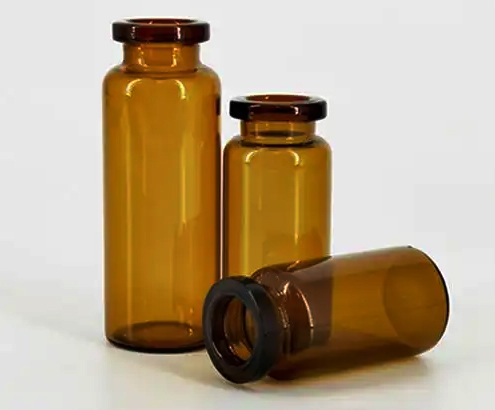
Vials
Vials exhibit excellent chemical stability, heat resistance, mechanical strength, smoothness, transparency, ease of cleaning and sterilization, and reliable sealing performance. These physicochemical properties make them widely used in the pharmaceutical industry for packaging various dosage forms, meeting diverse customer needs for different capacities.
Therefore, testing the physical properties of vials is crucial.
Below, Putron Industrial Technology briefly introduces the testing instruments and equipment for vials.
1. Vial Seal Integrity Tester
The seal integrity of vials is a critical prerequisite for ensuring the shelf life of pharmaceuticals. Putron Industrial Technology has developed and produces the following types of vial seal testers:
(1) Negative Pressure Method Vial Seal Tester
The vial seal integrity tester uses the negative pressure test principle, offering stable and reliable performance. Automatic constant pressure compensation further ensures testing under preset vacuum conditions, making it suitable for vial seal testing in pharmaceuticals.
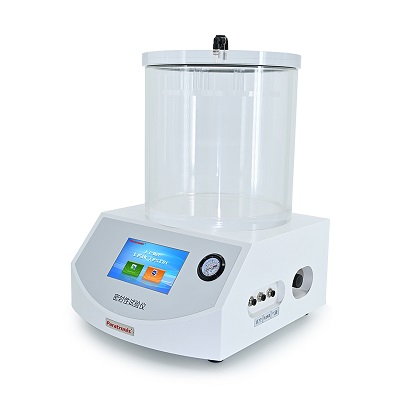
Vial Seal Tester
(2) Vial Vacuum Decay Leak Tester
The vial vacuum decay leak tester employs a non-destructive testing method, using both vacuum decay and pressure decay techniques. It is specifically designed for micro-leak testing and packaging seal integrity testing of vials.

Vial Vacuum Leak Tester
(3) Vial Microbial Ingress Seal Integrity Tester
The vial microbial ingress seal integrity tester is suitable for microbial ingress seal testing and is widely used for vial seal integrity detection.
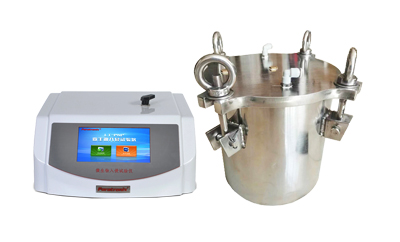
Vial Microbial Ingress Seal Integrity Tester
2. Internal Stress Testing of Pharmaceutical Vials
As is well known, vials may retain residual stress during the annealing process. If stress is overly concentrated at certain points, it can lead to breakage, cracking, or bottom detachment during production.
Putron Industrial Technology’s vial internal stress tester uses the polarized light interference principle to examine stress values in vials. Combined with the vial base and wall thickness measuring instrument, it accurately quantifies the internal stress levels in glass.
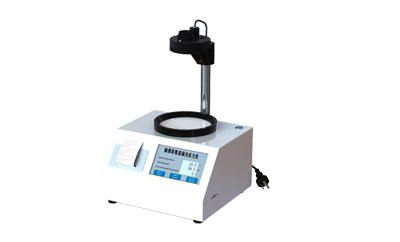
Vial Internal Stress Tester
3. Vial Vertical Axis Deviation Measurement
Vertical axis deviation refers to the horizontal deviation of the bottle mouth's center from the vertical line passing through the center of the bottle base. If the vertical axis deviation of pharmaceutical vials does not meet standards, issues such as bottle tipping, filling deviations, and labeling misalignment may occur during filling and labeling processes.
Putron Industrial Technology’s vertical axis deviation tester is used to detect vial vertical axis deviation. This testing equipment complies with standards such as YBB00192003-2015 "Vertical Axis Deviation Test Method."
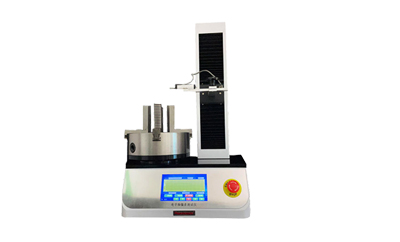
Vial Vertical Axis Deviation Tester
4. Vial Base and Wall Thickness Measurement
The thickness of the vial base and wall not only affects production costs for manufacturers but also impacts safety during storage, transportation, and use. Therefore, testing the uniformity of base and wall thickness is a key concern for manufacturers.
Putron Industrial Technology’s vial base and wall thickness measuring instrument is used to measure the thickness of the base and wall of vials, also referred to as a vial wall thickness gauge.
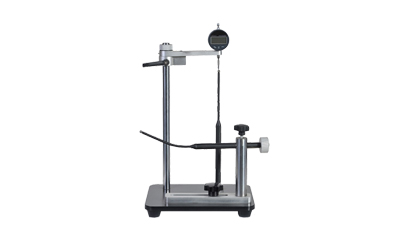
Vial Base and Wall Thickness Measuring Instrument
5. Vial Cap Opening Force Test
The cap opening force of vials significantly impacts usability. If the opening force is too high, it increases difficulty for clinical medical staff. Conversely, if it is too low, it may compromise the quality of the internal medication and affect shelf-life stability.
Putron’s vial cap torque tester measures the tightening and opening torque values of aluminum-plastic combination caps on vials.
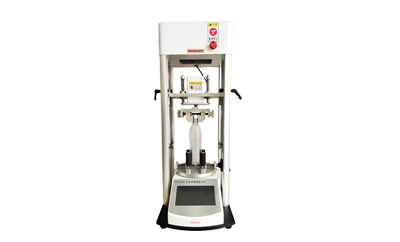
Vial Cap Torque Tester
6. Rubber Stopper Puncture Force Test
YBB00042005 specifies a clear test method for the puncture force of halogenated butyl rubber stoppers for sterile powder injections.
[Puncture Force] Take 10 samples and test according to the first method of the "Puncture Force Test Method for Rubber Stoppers and Seals for Injections" (YBB00332004-2015). The average puncture force must not exceed 75N, and no individual stopper should exceed 80N. During puncture, the rubber stopper should not be pushed into the vial.
Recommended Instrument for Rubber Stopper Puncture Force Testing: Rubber Stopper Puncture Force Tester
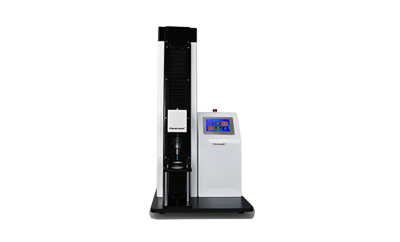
Rubber Stopper Puncture Force Tester
7. Pharmaceutical Vial 121°C Granule Water Resistance Test
The standard for vial granule water resistance testing references the test method for glass granules at 98°C water resistance determination and classification (YBB00362004-2015), which should meet HGB Grade 1. For glass granules at 121°C water resistance determination and classification (YBB00252003-2015), it should meet Grade 1.
This testing requires a specialized 121°C granule water resistance tester. The test setup includes a quenching steel mortar and pestle, and a set of stainless steel sieves (Sieve B: 0.3mm, A: 0.425mm, O: 0.85mm, 0.5mm, one each).
If you would like to learn more about the complete range of vial testing instruments and equipment, please feel free to contact us.
https://www.paratronixcn.com/news/show-265.html
| Industry Category | Others |
|---|---|
| Product Category | |
| Brand: | 普创工业科技 |
| Spec: | 西林瓶检测设备 |
| Origin: | 113701 |


