


European Standard Polyurethane PUR Sensor Cable
Contact Info
- Add:No. 1628 Suzhao Road, Zip: 200000
- Contact: 李工
- Tel:18616280428
- Email:oks-cable@qq.com
Other Products


PUR Sensor Cable, European Standard Polyurethane Data Transmission Cable As a critical component of sensor equipment, the quality of sensor cables directly impacts the stability of industrial automation systems and the accuracy of data transmission. Shanghai Okesen Wire & Cable Co., Ltd. specializes in the research, development, and production of high-performance sensor cables. The PUR sensor cable introduced by the company strictly complies with European standards for polyurethane materials, offering multiple advantages such as wear resistance, oil resistance, and corrosion resistance. This article will provide a detailed analysis from multiple perspectives, including the application scope, installation methods, usage precautions, material composition, and manufacturing processes of sensor cables, aiming to offer valuable information for engineers and procurement personnel in related fields.

1. Application Scope of Sensor Cables
Sensor cables are primarily used to connect sensors and control systems to ensure stable signal transmission. With the development of Industry 4.0 and smart manufacturing, the demand for high-speed data transmission is increasing, making the role of sensor cables even more critical. The PUR sensor cable designed by Shanghai Okesen can be widely applied in:
Industrial automation equipment: Transmission of sensor signals in robots, CNC machine tools, automatic detection devices, and other equipment.
Automotive manufacturing: Engine sensors, automotive electronic components, and other fields to ensure real-time data feedback.
Electronic equipment testing: High-precision sensor connections to improve the stability of testing equipment.
Logistics and warehouse automation: Use in automatic sorting machines and sensor-controlled conveying equipment to ensure operational efficiency.
Medical instruments: Transmission of medical sensor signals to meet strict hygiene and safety requirements.
It is evident that PUR sensor cables are not limited to ordinary industrial settings but extend to fields with extremely high requirements for transmission quality. Their characteristics provide strong environmental adaptability and data stability.
2. Material Advantages of PUR Sensor Cables
PUR, or polyurethane, as an outer sheath material, provides excellent mechanical properties for sensor cables. Compared to traditional PVC materials, PUR offers:
High wear resistance: The polyurethane outer sheath has extremely strong wear resistance, making it suitable for sensor cables used in environments with frequent mechanical movements, such as robot joints and automated production lines.
Excellent oil and chemical corrosion resistance: Common oil stains and lubricants in industrial settings will not damage the cable sheath, extending the cable's service life.
Good flexibility: The cable is less prone to breakage or failure in confined spaces and high-frequency bending applications.
Strong environmental adaptability: Balanced performance in low-temperature and high-temperature resistance, making it suitable for various complex environments, including outdoor applications and high-temperature areas of robotic arms.
The unique material advantages of PUR sensor cables ensure reliable mechanical protection and stable electrical performance, embodying the core standards of European polyurethane data transmission cables.

3. Strict Control of Manufacturing Processes
Shanghai Okesen Wire & Cable Co., Ltd. implements process control throughout the entire production lifecycle to ensure stability and reliability at every stage:
Raw material selection: Use of internationally high-quality polyurethane materials and high-purity copper wire cores to ensure cable conduction performance and mechanical strength.
Wire core production: Multi-strand twisting process to enhance flexibility and break resistance while reducing signal interference.
Insulation layer extrusion: Use of high-precision extrusion equipment to ensure uniform and dense insulation layers, preventing leakage and signal attenuation.
Sheath molding: Tight integration of the polyurethane sheath with the insulation layer to enhance waterproofing, oil resistance, and mechanical damage resistance.
Quality testing: Includes impedance testing, voltage resistance testing, bending life testing, oil resistance, and corrosion resistance testing to ensure compliance with international electronic and electrical standards.
Rigorous manufacturing processes ensure the long-term operational stability of PUR sensor cables, making them particularly suitable for the stringent reliability requirements of industrial automation systems.
4. Installation Methods for Sensor Cables
Proper installation can effectively extend cable life and ensure error-free signal transmission. The following installation methods are recommended:
Avoid excessive bending: Cables should be installed according to the minimum bending radius specification, typically 6-10 times the cable's outer diameter, to prevent internal conductor breakage or open circuits.
Fixation and protection: Use cable clamps or ties to secure cables, preventing wear or twisting due to loosening. Provide protective sleeves or hoses in vulnerable areas.
Avoid high-temperature areas and mechanical impact points: When laying sensor cables, avoid heat sources and equipment prone to mechanical impact to prevent sheath aging or damage.
Proper wiring: Cables should be laid neatly, avoiding close proximity to high-voltage cables to reduce electromagnetic interference.
Handling of humid environments: Implement waterproof sealing measures in special environments to prevent moisture from entering the cable and affecting signal transmission.
Neglecting installation details can easily lead to cable failures, abnormal data transmission, and equipment downtime, resulting in production losses.
5. Precautions During Use
Once sensor cables are installed and put into use, maintenance details determine their service life:
Regular inspection: Visually inspect the cable sheath for cracks or wear, paying special attention to key areas such as connectors and joints.
Avoid overload operation: Ensure cable performance parameters match equipment requirements to prevent damage due to exceeding rated parameters.
Prevent secondary pulling: Avoid forcibly pulling the cable during disassembly or replacement. Operate connectors correctly to extend connection life.
Prevent environmental contamination: Avoid accumulation of dust and oil stains on the cable surface. Clean regularly to prevent accelerated aging.
Monitor environmental temperature: Implement cooling measures in environments exceeding temperature limits to prevent degradation of polyurethane sheath performance.
Details determine equipment lifespan. Good maintenance habits can effectively reduce downtime and improve production efficiency and equipment stability.
6. My Views and Recommendations
In the modern industrial automation field, the importance of sensor cables continues to grow. As the "nerves" of sensor signals, cable quality not only affects data accuracy but also the overall operational safety of equipment. Sensor cables made of PUR materials, combining mechanical strength and electrical performance, are an ideal choice for industrial environments. Moreover, the relevant standards for European polyurethane cables ensure product consistency and reliability.
Based on its technical advantages and strict production management, Shanghai Okesen Wire & Cable Co., Ltd. can provide customized solutions to meet the needs of different industries. Reasonable cable structure designs tailored to application environments ensure optimized service life and performance.
Investing in high-quality sensor cables is a wise choice to ensure the long-term safe and stable operation of industrial automation equipment. Shanghai Okesen looks forward to collaborating with clients across various industries to provide solid cable support for smart manufacturing upgrades.
Enterprises or engineering projects in need are welcome to learn more about Shanghai Okesen's PUR sensor cable products. Our technical team will provide practical cable solutions to help achieve more efficient and stable data transmission.
Applications of PVC Sensor Cables:
Sensor cables are primarily used in control systems, testing instruments, and various industrial sensors for power supply and signal transmission of sensors and instruments.
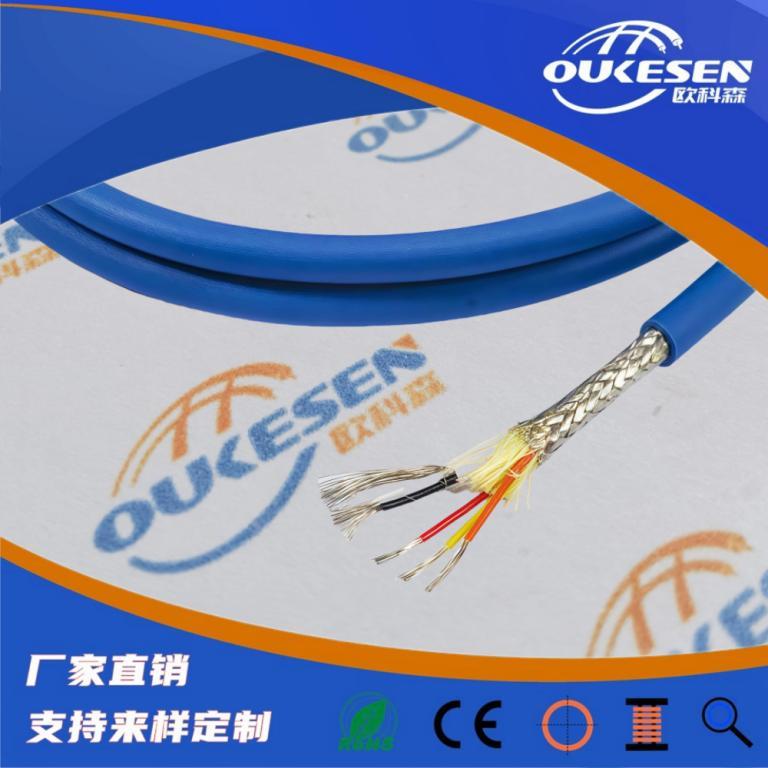
Braided sensor cables are mainly used in control systems, testing instruments, and various industrial sensors for power supply and signal transmission of sensors and instruments. The overall tinned copper braided layer provides excellent performance in complex electromagnetic environments, such as anti-interference and anti-attenuation.
Applications of PUR Polyurethane Sensor Cables:
Polyurethane sensor cables are primarily used in control systems, testing instruments, and various industrial sensors for power supply and signal transmission of sensors and instruments. The PUR outer sheath offers excellent performance in harsh environments, including low-temperature resistance, wear resistance, oil resistance, corrosion resistance, hydrolysis resistance, and UV resistance, making it highly suitable for use in oily and humid environments.
Braided polyurethane sensor cables are mainly used in control systems, testing instruments, and various industrial sensors for power supply and signal transmission of sensors and instruments. The overall tinned copper braided layer provides excellent performance in complex electromagnetic environments, such as anti-interference and anti-attenuation. The PUR outer sheath offers excellent performance in harsh environments, including low-temperature resistance, wear resistance, oil resistance, corrosion resistance, hydrolysis resistance, and UV resistance, making it highly suitable for use in oily and humid environments.
| Industry Category | Chemicals/Hydrocarbons/Other Hydrocarbons |
|---|---|
| Product Category | |
| Brand: | 欧科森 |
| Spec: | LI2YC11Y |
| Stock: | 1000 |
| Manufacturer: | 欧科森 |
| Origin: | 113112 |


