


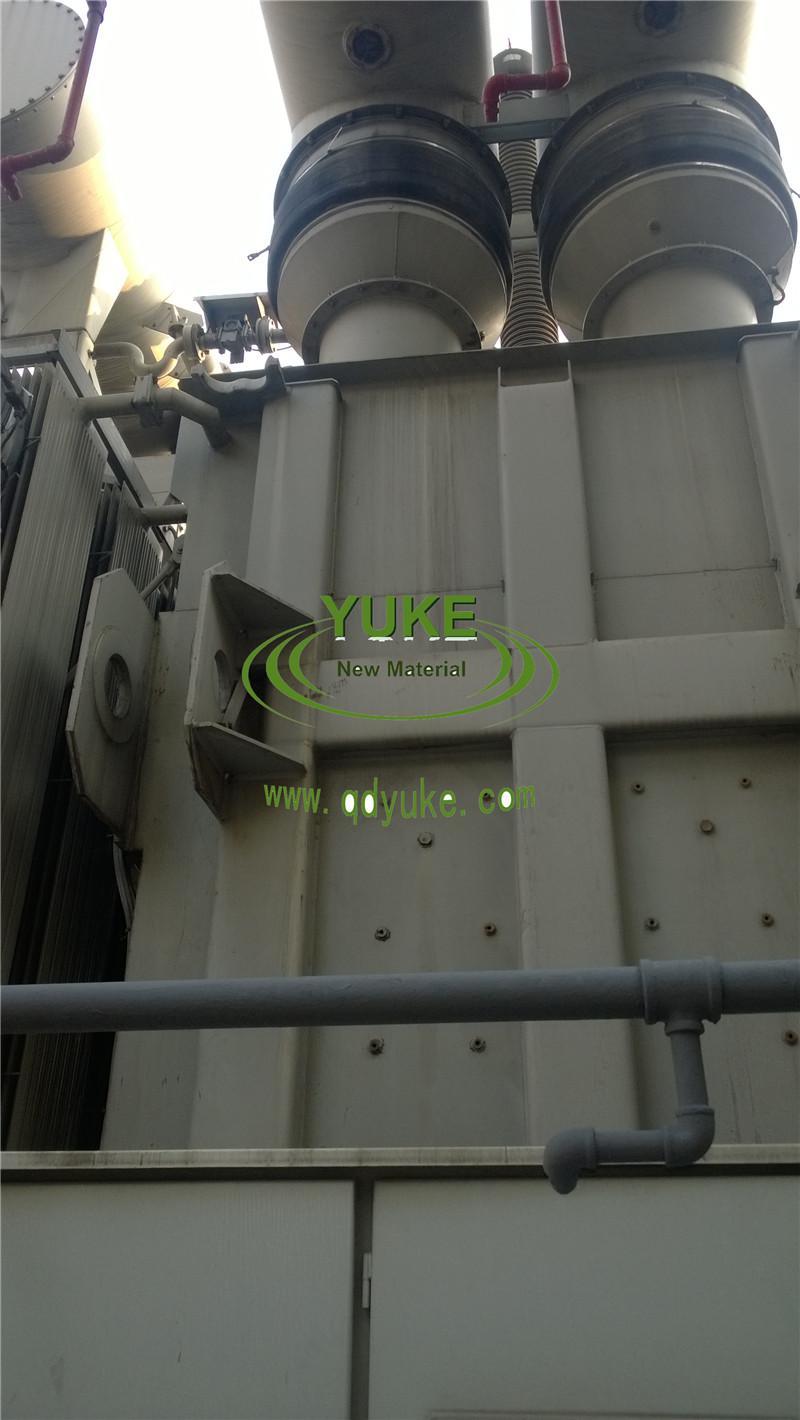
Oil-immersed transformer oil leakage repair
Contact Info
- Add:No. 1 Xiuyuan Road, High-tech Zone, Zip:
- Contact: 岳明
- Tel:0532-81981420
- Email:3283251232@qq.com
Other Products


Keywords: Transformer oil leakage, Transformer oil plugging under oil, Transformer live plugging, Transformer plugging, Transformer oil leakage during power outage, Transformer maintenance manufacturer, Transformer plugging price, Transformer oil leakage repair technology Reasons 1. Inferior materials. The poor quality and defects of sealing components are the main causes of oil leakage at the connection points of transformers. Over 75% of transformer oil leakage occurs at connection points, and more than 95% of these leaks are due to the failure of rubber seals. Oil leaks through the gaps between the rubber seals and the connection interface. When the rubber seals are intact, leakage generally does not occur because the rubber, when compressed, can fill and press against uneven surfaces. The surface quality and geometric shape of the seals also affect oil leakage to some extent, but the key factor remains the material properties of the rubber seals. Rubber seals are typically located on the tank cover, between the upper and lower tank flanges, and around large and small flanges. During transformer operation, these seals are subjected to high temperatures, compression, oil immersion, and localized conditions. In particular, the sealing rubber components on insulating porcelain bushings must withstand temperatures of 115°C and nearly 40 hours of baking in a vacuum tank along with the transformer body. Poor-quality rubber components, especially the flat oval rubber parts inside porcelain bushings, often begin to age and deteriorate after oil immersion. Located in the upper-middle part of the transformer tank, these seals are subjected to uneven oil pressure. Although they may not leak immediately, shaking, vibration, and oil impact during transportation or movement can cause leakage. Clearly, inferior rubber seals are prone to aging, deterioration, cracking, plastic deformation, and eventual failure, making them a primary cause of oil leakage. 2. Influence of welding residual stress. Welding residual stress is another major cause of oil leakage from transformer welds. The tank has numerous weld points, long weld seams, and challenging welding conditions. Factors such as welding materials, standards, processes, and techniques all affect welding quality. Manual arc welding, in particular, is more likely to result in defects such as burn-through, porosity, slag inclusion, cracks, and lack of fusion. Some penetration defects may not be detected during the tank's hydraulic pressure test, which also contributes to oil leakage. www.qdyuke.com Welding is essentially a process of re-melting metal. The solution, at around 1350°C, is rapidly cooled in air, generating residual tensile stress of over 200 MPa in the weld, significantly reducing fatigue strength. In special cases, the peak residual stress may approach the fatigue strength of the weld. When the transformer is subjected to impact and vibration, these external forces combine with the residual stress in the weld. If the combined stress exceeds the fatigue strength, cracks will form in the peak residual stress areas, even in non-penetrating weld defects. According to relevant statistics, weld leakage accounts for 65% of cases. Additionally, during the operation of power transformers, most metal components are subjected to forced vibrations with a frequency of 100 Hz and an amplitude of 6–60 μm. The amplitude of the flat parts of the tank wall can reach 75–440 μm. Due to the latent residual stress in the welds, oil leakage from welds often occurs in the field due to impact and vibration. 3. Numerous weld points and long weld seams. Oil-immersed power transformers are assemblies of various welds and connectors based on a steel welded shell. A 31,500 KVA transformer has approximately 27 connection points using rubber seals, over 30 rubber seals of various shapes, and more than 70 weld points, including those at both ends of the cooling tubes and the tank. The total length of the weld seams is nearly 20 meters, providing multiple potential leakage paths. Direct leakage is caused by the failure of rubber seals and weld defects such as cracks, porosity, and slag inclusion. 4. Other reasons. In addition to leaks from seals and welds, oil leakage often occurs at the copper brazing points of conductive copper rods in small and medium-sized transformers, conductive copper plates in special transformers, and installation bases. Some manufacturers, for various reasons, use cast copper rods or plates instead of rolled ones. Cast copper is prone to porosity, looseness, and slag inclusion, often forming贯通 channels that lead to leakage. The copper brazing between conductive copper plates and supports is very brittle and may crack during installation, wiring, or operation, causing leakage. Nuts at the sealed connection points of transformers are also often loosened by vibration during operation, leading to leakage. Repair methods: www.qdyuke.com Difficulties in traditional repair techniques: 1. Adhesion is required on oily surfaces. 2. Adhesion is required on manually treated surfaces. The key to applied technology lies in: Materials for rough surface treatment technology. Solution: EG repair technology, no shutdown, fast and reliable repair, surface compatibility exceeds that of oily surfaces. Excellent adhesion on wet metal, excellent adhesion on manually treated metal surfaces, adhesion strength suitable for leaking pipelines. Polymer repair process: While the equipment is running, there is some pressure at the leak point. In such cases, the pressure issue should be addressed first. The emergency repair agent can cure rapidly within 3 minutes and, due to its excellent water and oil compatibility, adheres well to surfaces with simple treatment and oil contamination. After curing, check the surrounding area for any remaining leaks, then proceed accordingly and observe for 2 hours. The outer area is completely encapsulated with a high-density repair agent. It has been proven that this repair technology can provide effective sealing under leakage conditions and has a service life of over 10 years, making it an economical and feasible emergency repair method.
| Industry Category | Chemicals/Petrochemicals/Natural Gas |
|---|---|
| Product Category | |
| Brand: | |
| Spec: | |
| Origin: | 11 |


