


Test bench iron floor (cast iron platform)
Other Products


The structural design and load-bearing capacity of the test bench iron floor cannot be overlooked.
As an indispensable foundational equipment in industrial manufacturing, the production process of the test bench iron floor combines traditional casting techniques with modern machining technology. Below, we will unveil the entire process from raw material preparation to final product acceptance in detail, integrating industry practices and technological innovations to present readers with the journey of this workpiece's creation.
1. Raw Material Selection and Smelting Process
The core material of the test bench iron floor is HT200 or HT250 gray cast iron, with carbon content controlled between 2.8% and 3.5%. Pig iron must be combined with 20%-30% recycled scrap steel, along with alloying elements such as ferrosilicon (0.8%-1.2%) and ferromanganese (0.6%-1.0%). The smelting process employs a medium-frequency induction furnace, with temperatures controlled within the range of 1500°C to 1550°C. Notably, modern techniques incorporate 0.02%-0.04% tin to enhance the wear resistance of the cast iron, representing a significant technological breakthrough in recent years.
2. Mold Making and Molding Technology
1. Wooden Pattern Making: Patterns are CNC-carved from pine or teakwood, with dimensions accounting for a 2% shrinkage allowance. Machining allowances for working surfaces are typically 5-8mm, while non-working surfaces require 3-5mm.
2. Sand Casting: The mainstream process uses furan resin sand, with mold hardness required to reach 85-90 (measured by a B-type hardness tester). Large platforms (over 3m) require pit molding, with sandbox strength capable of withstanding pressures exceeding 10t/m². 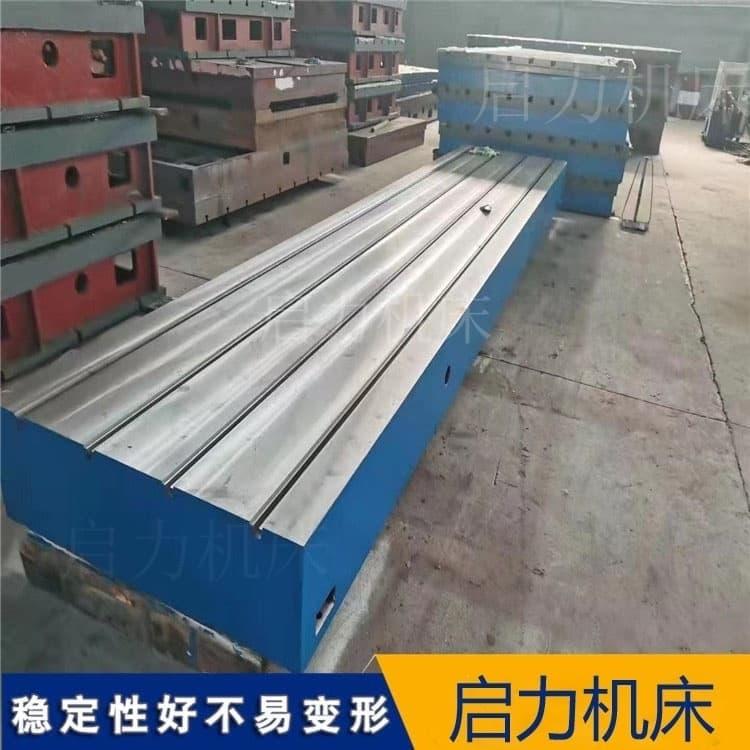
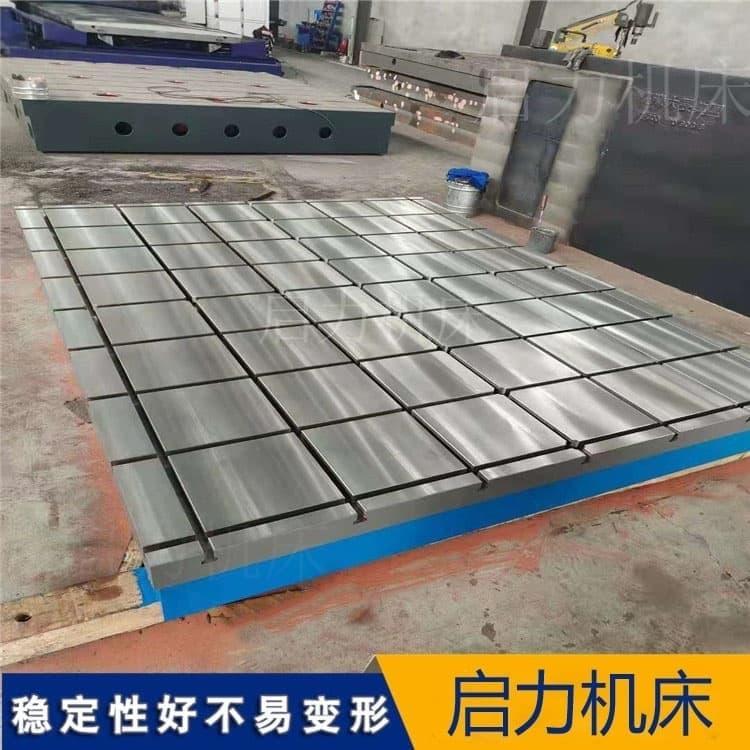
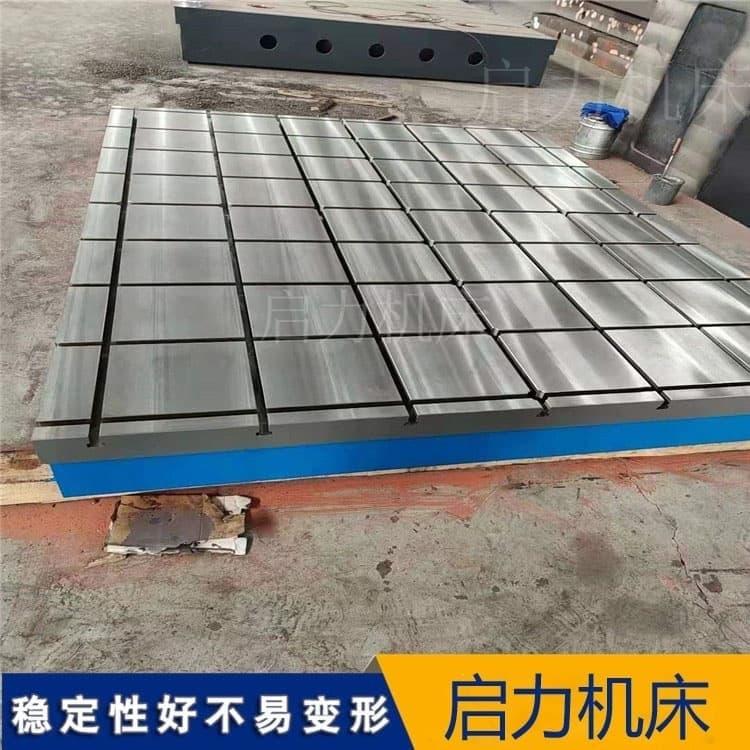
3. Gating System Design: The gating system is designed with a sprue cross-sectional area: runner: ingate ratio of 1.5:1.2:1. Computer simulation technology, such as MAGMA software, is introduced to optimize flow and temperature field distribution.
3. Key Controls in the Casting Process
The pouring process follows the principle of "high-temperature tapping, low-temperature pouring," with the actual pouring temperature controlled at 1380°C ± 20°C. For castings with thicknesses exceeding 100mm, layered pouring techniques are employed, with intervals not exceeding 30 seconds. A stepwise cooling process is implemented: cooling rates above 200°C are controlled at 30°C/h, while cooling below 200°C occurs naturally. Practical data show that this process reduces internal stress by over 40%.
4. Full Machining Process
1. Rough Machining: A gantry milling machine is used to remove the majority of the allowance, leaving a finishing allowance of 1-1.5mm. Initial flatness is controlled within 0.2mm/m.
2. Aging Treatment: A combination of thermal aging and vibration aging is employed. Thermal aging involves holding at 560°C for 6 hours followed by furnace cooling; vibration aging uses excitation forces at 20-50Hz frequencies for no less than 30 minutes.
3. Finishing:
- Surface grinding achieves flatness of 0.01mm/m
- Surface roughness Ra ≤ 1.6μm (as required by the new national standard GB/T22095-2022)
- Full-dimensional inspection is performed using a coordinate measuring machine, with key dimensional tolerances controlled to IT7 grade
Case studies from heavy machinery factories show that test bench iron floors produced under strict adherence to this process can achieve a service life of over 15 years, significantly exceeding the industry average of 8-10 years. Notably, with the application of digital twin technology, modern test bench iron floor manufacturing has begun integrating intelligent monitoring systems, using embedded sensors to monitor platform conditions in real-time, representing the future direction of development for test bench iron floors.
Ms. Xie from Qili Machine Tool 13785751790
| Industry Category | Hardware & Tools/Castings/Iron Castings |
|---|---|
| Product Category | |
| Brand: | 启力 |
| Spec: | 3000*5000 |
| Manufacturer: | 泊头启力机床 |
| Origin: | 111309 |


