


Cast iron assembly platform 2m x 3m, Grade I precision, capable of bearing 5 tons.
Other Products


Master the Secrets of Cast Iron Assembly Platform Debugging with Ease
As a crucial foundational tool in the field of mechanical manufacturing, the debugging precision of cast iron assembly platforms directly impacts product quality and production efficiency. Many operators often feel at a loss when faced with debugging cast iron platforms. In reality, by mastering a few key points, debugging work can become entirely manageable. This article systematically introduces the core techniques for debugging cast iron assembly platforms to help you quickly improve your operational skills.
I. Pre-debugging Preparations Are Crucial
Pre-debugging preparations are often overlooked, yet they form the foundation for ensuring successful debugging. First, clean the platform using a cleaning agent to remove surface rust-proof oil and impurities, paying special attention to the cleaning of T-slots and threaded holes. After cleaning, use a high-precision level to check the platform's foundational levelness, with errors controlled within 0.02mm/m. Simultaneously, inspect the stability of the platform's support points to ensure even force distribution across all supports. When preparing debugging tools, in addition to conventional levels and dial indicators, it is advisable to equip modern measuring devices such as electronic levels and laser alignment instruments, which can significantly enhance debugging efficiency and accuracy.
II. Core Techniques for Levelness Debugging
Levelness debugging is the primary task in cast iron platform debugging. In pr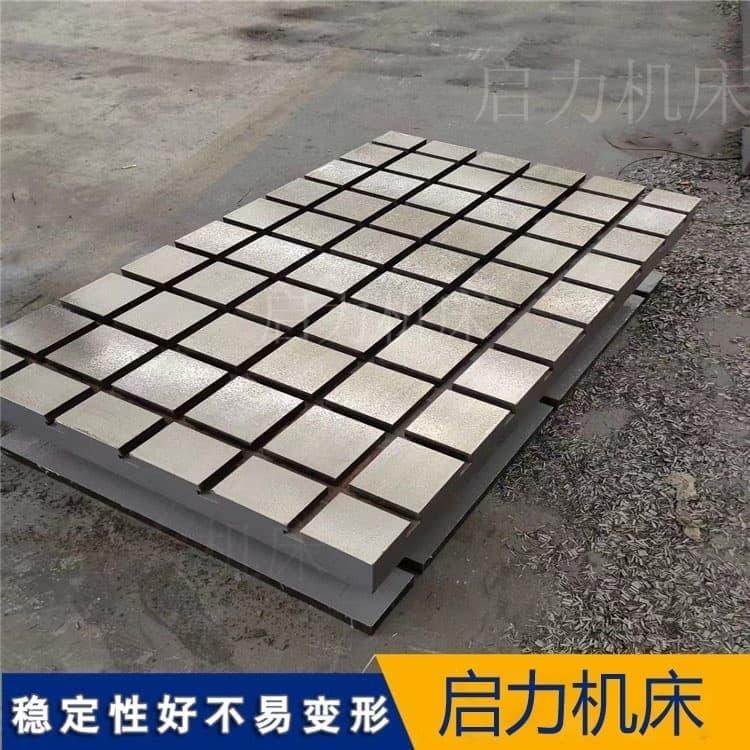
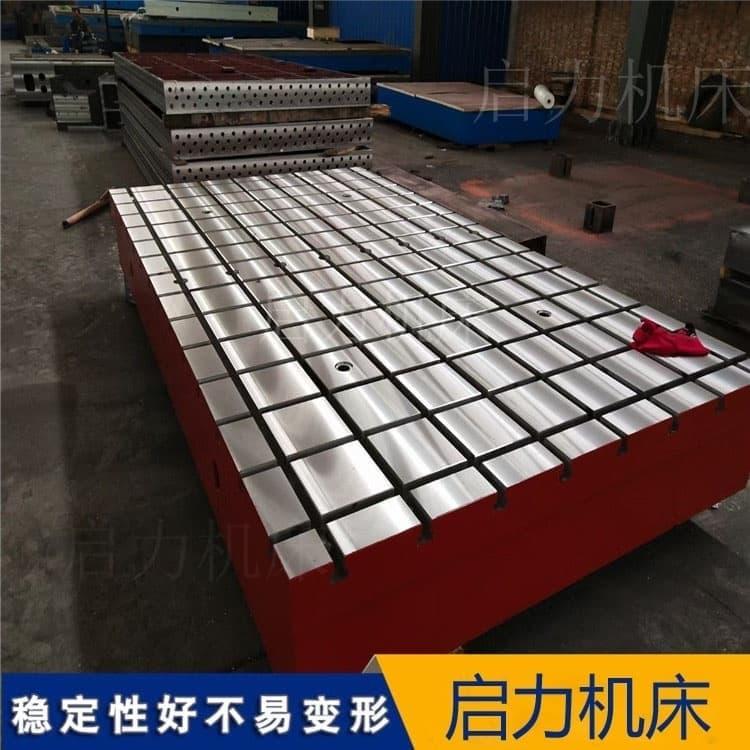 actice, it is recommended to use the "three-point support method" for rough adjustment, selecting three support points along the platform's diagonal as benchmarks and adjusting the support bolts to achieve initial leveling. The fine-tuning phase requires the "multi-point micro-adjustment method," dividing the platform into several measurement areas, using an electronic level for grid-based measurement, recording data points, and analyzing adjustments. It is worth noting that environmental temperature changes can affect debugging results; it is advisable to operate in a constant temperature environment or perform temperature compensation calculations. During debugging, adhere to the principle of "overall first, then local," ensuring overall levelness meets standards before performing fine grinding on local high points.
III. Flatness Inspection and Correction Methods
Flatness is a key indicator for measuring the quality of cast iron platforms. Traditional inspection methods involve using straight edges and feeler gauges, which are simple and intuitive but less efficient. Modern processes utilize instruments or coordinate measuring machines for digital inspection, quickly obtaining complete flatness data cloud maps. When flatness deviations are detected, the "comparative grinding method" can be used for correction: first, determine the reference plane, then use red lead powder to highlight high points, and employ specialized grinding tools for targeted adjustments. For minor errors (within 0.005mm), a low-temperature local stress relief process can be applied, using controlled heating temperature and time to fine-tune platform deformation.
IV. Daily Maintenance and Precision Preservation
Daily maintenance after debugging is equally important. It is recommended to establish a regular inspection system, conducting precision rechecks every three months during use. In daily operations, avoid localized overloads, and ensure workpieces are evenly distributed across the platform surface. When cleaning, use specialized scraping tools to remove chips, and strictly avoid using hard metal objects to scrape the surface. For environmental control, maintain workshop temperature stable at an ideal 20±2°C, with humidity controlled between 40-60%. For long-term non-use, apply specialized rust-proof oil to the surface and cover it with a dust-proof shield.
By following these systematic debugging methods, the debugging of cast iron assembly platforms will become methodical and manageable. In practice, pay attention to detail control and develop the habit of recording debugging parameters, as these data will serve as important references for future maintenance. With accumulated experience, you will find that debugging cast iron platforms is not only a technical task but also an art requiring patience and meticulousness. After mastering these secrets, you will be able to effortlessly tackle various debugging challenges, providing reliable foundational support for production and manufacturing.
Ms. Xie, Qili Machine Tool, 13785751790
| Industry Category | Hardware & Tools/Castings/Iron Castings |
|---|---|
| Product Category | |
| Brand: | 泊头启力机床 |
| Spec: | 2000*5000 |
| Manufacturer: | 泊头启力机床 |
| Origin: | 111309 |


