


Manufacturer Direct Sales of Lightweight Steel Foam Filled Boxes for Cast-in-Place Hollow Floor Slabs
Contact Info
- Add:Opposite the Xigu Township Government in Qingxu County, Zip: 030400
- Contact: 胡志英
- Tel:18703401090
- Email:2952284013@qq.com
Other Products
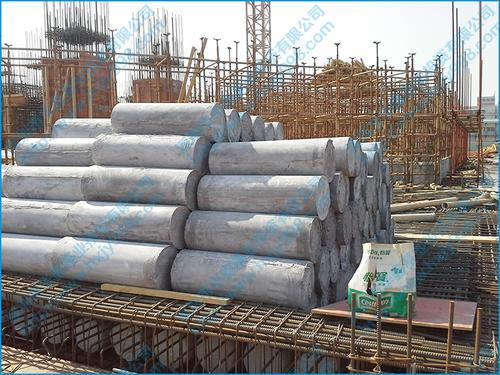

Direct Sales of Lightweight Steel-Reinforced Foam Filling Boxes for Cast-in-Place Hollow Floor Slabs Shanxi Province, Taiyuan City, Qingxu County, Dingwang Building Materials Co., Ltd. Website: http://www.qingxudingwang.com Contact: Mr. Hu Phone: 18703401090 Hollow floor slab technology offers unique advantages, including a wide range of applications, lightweight construction, high stiffness, excellent seismic performance, effective sound insulation, increased floor height clearance, and reduced costs. It has been rapidly adopted in large, medium, and small projects nationwide. Based on past installation experience and adhering to the principles of ensuring quality, accelerating construction progress, and saving raw materials, our company has formulated this construction plan. Construction Process for Filling Box Hollow Floor Slabs: - Measure and set out lines on the completed floor → Install bottom formwork supports and braces → Install floor bottom formwork → Set out lines on the formwork to position filling boxes and pre-embedded electrical and plumbing conduits → Install concealed beam reinforcement and pre-embedded electrical and plumbing conduits and vertical through-slab sleeves → Install bottom-layer reinforcement, spacers, and inspect bottom-layer reinforcement → Arrange filling boxes, anchor boxes at ends to prevent floating → Pre-embed electrical and plumbing pipes, install top-layer reinforcement, and lay架空 walkways → Lay concrete delivery pipes, pour concrete, adjust filling boxes and reinforcement during pouring → Cure floor slab concrete, remove formwork after reaching required strength. II. Formwork Support System 1. Based on the total thickness of the hollow floor slab, the width and specific location of concealed beams, determine permanent load values. Perform vertical and lateral stability calculations, and design formwork, supports, and braces. According to experience, the spacing of vertical supports is generally 70–80 cm, and the spacing of formwork supports is 20–30 cm. 2. Vertical pipes should preferably be full-length rods. If splicing is necessary, verify the load capacity of couplers at splice locations before use. Additionally, add protective couplers at each junction of vertical supports and formwork frames. If required by the design institute, the formwork should be cambered bidirectionally or unidirectionally by 3–5‰. 3. After formwork installation is completed and passes inspection, set out lines to position concealed beams, filling boxes, pre-embedded pipes, and holes. Proceed to the next construction step only after verification. III. Reinforcement Fabrication and Installation 1. The bottom reinforcement is in the tension zone and should be lapped at concealed beams. The top reinforcement is in the tension zone at the mid-span and should be lapped there. The main reinforcement of the floor slab is placed within concealed beams. After installing the bottom reinforcement and concealed beam reinforcement, conduct a preliminary inspection. Only after confirming the integrity and reliability of reinforcement spacers can the installation of filling boxes proceed. 2. If the bottom reinforcement exceeds the design height around columns and beams, adjust it to meet requirements. IV. Installation and Fixing of Prefabricated Filling Boxes During the placement of filling boxes, take technical measures to ensure accurate positioning and straight walls, guaranteeing the geometric dimensions of the hollow slab ribs and the upper and lower concrete layers. 1. Adjust layout lines to ensure the spacing between filling boxes and concealed beams, walls, and columns meets design requirements. Leave 5–10 cm of concrete between filling boxes and beam edges, and 5 cm of concrete at junctions between filling boxes. 2. Fixing method for filling boxes: Place spacers before positioning filling boxes. 3. During installation, protect filling boxes by laying protective boards on top; avoid stepping directly on them. 4. After installation, inspect and approve filling boxes. V. Install and Bind Top Reinforcement, Reinspect, and Record VI. Concrete Pouring 1. Before pouring concrete, moisten the formwork and prefabricated filling boxes. 2. Temporarily insert 1 m long 50 × 100 wooden battens between filling boxes to maintain spacing. During concrete pouring, first use a vibrator to penetrate the central holes of the boxes for compaction, then pour along the beam direction. 3. To ensure dense compaction, use concrete with a slump at the higher end of the allowable range and aggregate with a particle size of 10–20 mm. 4. Install and lay concrete delivery pipes架空 on the hollow floor slab. Avoid placing machinery directly on filling boxes, and prevent workers from stepping on reinforcement or filling boxes. 5. Avoid excessive accumulation of material at the discharge outlet of delivery pipes to prevent overloading; disperse material promptly. 6. Synchronize concrete distribution and vibration, ensuring thorough compaction of each rib. Pour concrete beams first, then slabs. Use 30 mm and 50 mm diameter vibrators for compaction, ensuring filling box bottoms are fully filled. Do not set construction joints during pouring. 7. During concrete pouring, assign an adequate number of carpenters and steelworkers to promptly adjust filling boxes and reinforcement. 8. Use reinforcement as thickness and elevation control markers within a certain area of the floor slab. Use a level to check the elevation of the beamless slab bottom formwork and the top surface of the concrete slab during pouring. 9. Remove formwork only when concrete strength reaches 100%. 10. Concrete construction must comply with the "Code for Construction and Acceptance of Concrete Structures." VII. Related Precautions 1. If filling pipes or filling boxes are damaged on-site, apply temporary emergency remedies: - For minor damage: Paste wet cement bags over the damaged area. - For major damage: First paste wet burlap or cover with formwork to prevent concrete from entering the box. - If both sides of a box are damaged: Wrap with woven bags and secure with #12 iron wire. 2. Handle filling boxes with care during loading, unloading, transportation, and stacking;严禁 throwing. During hoisting and installation, use专用 lifting baskets;严禁 directly tying filling boxes with slings or cables for hoisting. After hoisting to the installation floor, arrange them promptly; avoid multi-layer stacking.
| Industry Category | Others |
|---|---|
| Product Category | |
| Brand: | |
| Spec: |


