


On the Development Direction of BDF Hollow Floor Slabs (Thin-Walled Box Structures) in Changzhi City, Shanxi Province
Contact Info
- Add:Opposite the Xigu Township Government in Qingxu County, Zip: 030400
- Contact: 胡志英
- Tel:18703401090
- Email:2952284013@qq.com
Other Products

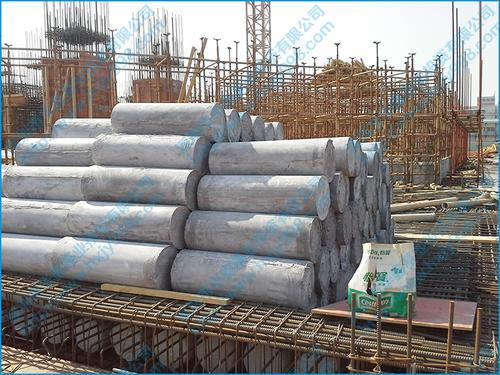

Dingwang Building Materials Co., Ltd., Qingxu County, Taiyuan City, Shanxi Province Website: http://www.qingxudingwang.com Contact: Mr. Hu Phone: 18703401090 **Development Directions of Cast-in-Place Concrete Hollow Floor Slabs** Since the early 1990s, the engineering application and related research on cast-in-place concrete floor slabs have gradually increased in China. Due to concrete savings, reduced structural self-weight, and significant economic benefits, research focused on manufacturing inner molds has developed rapidly, entered the market, and begun engineering applications. Over the past decade, this technology has been applied in more than 20 provinces and cities, covering tens of millions of square meters of buildings. This article discusses the main issues in the application of cast-in-place hollow floor slabs. 1. **Application of Prestressing Technology** When the span and load of cast-in-place hollow floor slabs are large, the use of prestressing is effective for controlling cracks and increasing load-bearing capacity. Currently, the unbonded post-tensioned prestressing technique is widely used in engineering. It allows for reasonable curved reinforcement to enhance the resistance of components. The construction method in actual projects is similar to that of ordinary floor slabs, but it is important to ensure sufficient cross-sectional width, avoid interference with inner molds and the resulting hollow sections during reinforcement placement, and strengthen the prestressed anchorage ends with effective structural measures. 2. **Improvement of Construction Techniques** A major difficulty in constructing cast-in-place hollow floor slabs is the buoyancy of inner molds. As internal formwork for shaping the cross-section, inner molds generate significant buoyancy during concrete pouring. Therefore, securing the position of inner molds is a key technical challenge in the construction of cast-in-place hollow floor slabs. Currently, three methods are employed: fixing inner molds to the bottom formwork with iron wires; positioning and pressing inner molds with steel reinforcement frames or structural steel frames; and a combination of downward pulling and upward pressing. Most methods used in practice are empirical, with varying effectiveness, making evaluation difficult. Since buoyancy-induced displacement of reinforcement and thinning of the concrete compression zone significantly affect structural performance, necessary experimental research should be conducted. For example, calculating buoyancy forces in actual construction and developing effective measures to prevent buoyancy. 3. **Diversification of Inner Molds** Due to substantial profits, much of the research on hollow floor slabs has focused on the development and improvement of inner molds. From initial paper tube cores, inner molds have evolved into various forms with different materials, processes, and shapes. The shapes can generally be categorized into three types: circular tube cores, continuous cylindrical tubes, and rectangular boxes. Some boxes feature holes in the middle, curved tops, or other shapes. In terms of materials, options include thin-walled glass fiber cement bodies, assembled hard plastic thin-walled bodies, polypropylene plastic hollow bodies or poly light solid bodies, as well as solid bodies made of lightweight materials such as perlite.
| Industry Category | Others |
|---|---|
| Product Category | |
| Brand: | |
| Spec: |


