


Infrared Pneumatic Fully Automatic Pressure-Free Air Door
Price:
¥1000
/㎡
Other Products


Description
Additional Information
Infrared pneumatic fully automatic pressure-free air doors are intelligent ventilation control devices that integrate infrared sensing technology, pneumatic drive systems, and pressure-free balance structures. They are widely used in scenarios such as mines, tunnels, and underground engineering where strict control of airflow is required to ensure the safe passage of personnel and equipment. Their core features include automated sensing and drive for hands-free operation, while utilizing a pressure-free structure to balance environmental wind pressure, enhancing device stability and service life.
Core Components
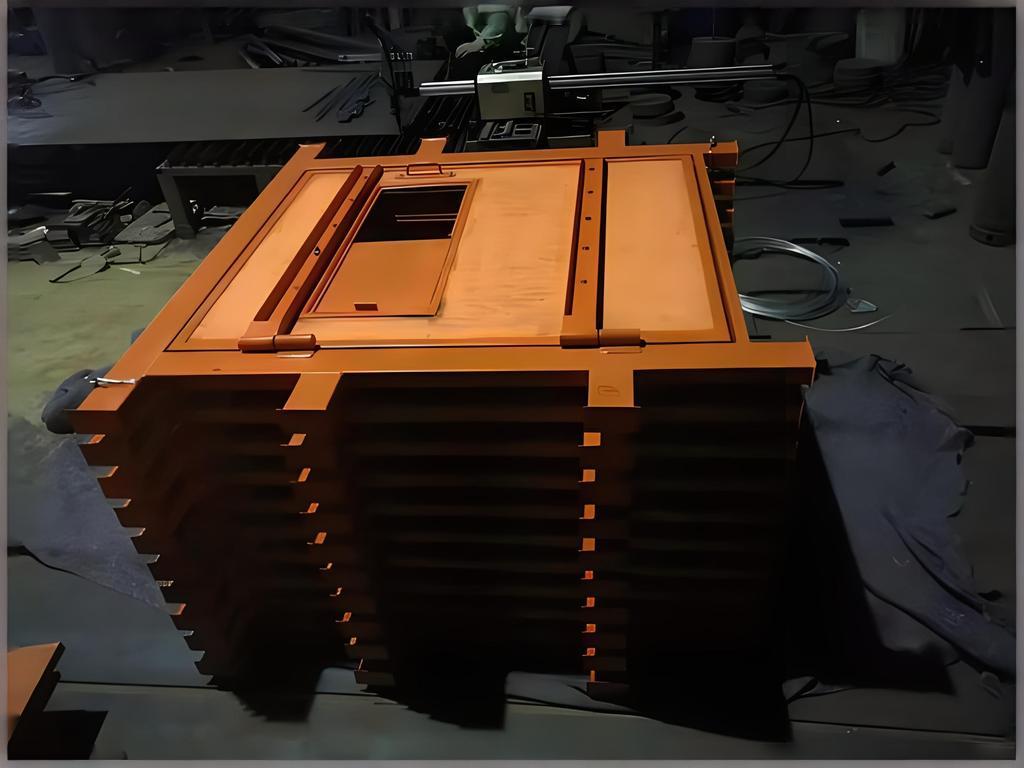
1. Pressure-Free Door Body Structure
- Balanced Design: The door body adopts a dual-leaf symmetrical structure connected to the door frame via hinges. When opened, the two leaves experience opposing forces, counteracting wind pressure (positive or negative) inside mines or tunnels, reducing opening resistance, and preventing wind pressure from damaging the door body.
- Material Selection: The door body is typically made of high-strength steel plates, composite materials, or corrosion-resistant wood, with surface treatments for anti-corrosion and anti-rust properties, adapting to harsh underground environments with high humidity, dust, and corrosive gases.
- Sealing Performance: Rubber sealing strips are installed between the door frame and the door body to ensure a tight fit when closed, preventing airflow short-circuiting and maintaining ventilation system stability.
2. Infrared Sensing System
- Sensing Device: Infrared sensors (through-beam or diffuse reflection type) are installed on both sides of the door body to detect movement of personnel, vehicles, or objects within a certain range (typically 1-5 meters).
- Signal Processing: The sensors transmit detected signals to the control system, which determines whether to trigger the door opening command, avoiding manual operation and reducing human contact.
- Anti-Interference Design: Equipped with dustproof and waterproof functions to resist interference from dust and water mist, ensuring sensing accuracy in complex environments.
3. Pneumatic Drive System
- Power Source: Powered by compressed air, the system drives the door body to open and close via pneumatic valves, cylinders, air tubes, and other components. Compared to electric drives, pneumatic systems produce no sparks, making them suitable for flammable and explosive environments (e.g., coal mine gas areas) with higher safety.
- Motion Control: The cylinder piston rod is connected to the door body, with the extension and retraction of the piston rod controlled by the charging and discharging of compressed air, enabling smooth opening and closing of the door body.
- Speed Regulation Device: The door opening and closing speed can be controlled by adjusting the flow rate of the pneumatic valve (typically 3-5 seconds for opening and 5-8 seconds for closing), preventing impacts from overly fast movements or reduced passage efficiency from overly slow movements.
4. Automatic Control System
- Controller: The core control unit receives signals from infrared sensors and controls the pneumatic valve actions based on preset logic (e.g., opening when an object is detected, delayed closing, bidirectional interlocking, etc.).
- Interlocking Function: Dual-leaf door bodies or multiple sets of air doors feature interlocking logic, meaning when one side door is open, the other side door is forcibly locked to prevent simultaneous opening and airflow short-circuiting.
- Protection Mechanisms: Include overload protection (e.g., automatic stop or reverse operation when the door body encounters resistance, preventing injury to personnel or equipment), delayed closing (adjustable waiting time to accommodate the passage speed of personnel/vehicles), and fault alarms (e.g., audible and visual alarms for insufficient air pressure or sensor malfunctions).
Working Principle
- Sensing Trigger: When personnel or vehicles enter the detection range of the infrared sensor, the sensor sends a signal to the controller.
- Command Execution: After confirming the signal is valid, the controller drives the pneumatic valve to act, allowing compressed air to enter the cylinder. The piston rod extends, pushing the door body to open smoothly.
- Passage Process: The door body opens to its maximum angle (typically 90°) and remains open, waiting for personnel/vehicles to pass through.
- Automatic Closing: After passage is complete, the sensor detects no objects in the area, and the controller initiates a delay program (delay time adjustable, e.g., 5-30 seconds). After the delay, the pneumatic system reverses, the cylinder exhausts air, and the door body slowly closes under gravity or a reset mechanism.
- Safety Locking: After the door body closes, the controller triggers the interlocking mechanism to ensure the same-side or opposite-side air doors do not open erroneously, while the sealing structure ensures effective airflow control.
Main Application Scenarios
- Underground Mines: Used in main transportation roadways, return air roadways, and mining area stone gates in coal mines and metal mines to control airflow direction and volume, preventing gas and dust accumulation, and ensuring underground ventilation safety.
| Industry Category | Electrical Equipment & Supplies/Industrial Control Systems/PLC Controllers |
|---|---|
| Product Category | |
| Brand: | 顺鑫 |
| Spec: | 红外线气动全自动无压风门 |
| Manufacturer: | 山东 |
| Origin: | 113709 |


