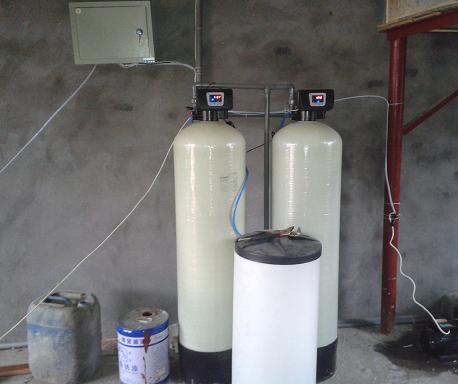
Fully Automatic Water Softening Equipment for Boilers, Central Air Conditioning, Water Softeners, Circulating Water, Cooling Towers, HVAC, Refrigeration, and Descaling
Fully automatic water softening equipment is suitable for: boiler makeup water, central air conditioning, drinking water, industrial cooling water, circulating water, food and dairy industry, beverage and brewing water, textile, printing and dyeing, and other fields requiring water softening treatment.
Commonly used water softening equipment mainly includes manual types, domestic combined types, and imported multi-valve types. Among these, imported multi-valve water softeners are the main products on the market. This type of equipment uses imported multi-valves and controllers as the core, paired with domestically produced resin tanks, salt tanks, pipelines, and cation exchange resins to form fully automatic water softening systems. The tanks are made of different materials such as fiberglass, stainless steel, and carbon steel, resulting in significant price differences.
Major brands of imported multi-valves include Autotrol(GE/Autotrol, also translated as Autotrol) and Fleck(Pentair/Fleck, also translated as Fleck), which can provide treatment capacities ranging from a minimum of 0.5 t/h to a maximum of approximately 200 t/h.
The presence of calcium and magnesium ions in water is the main cause of scale formation when water temperature changes. Ordinary water contains various soluble compounds, some of which exhibit significant changes in solubility with temperature variations. Substances like calcium carbonate and magnesium carbonate have solubility that decreases as temperature increases. When the temperature rises, calcium carbonate and magnesium carbonate originally dissolved in water precipitate, forming deposits. These deposits can appear as flocculent, powdery substances, or accumulate on the surfaces of containers and pipes, forming scale.
Since scale deposition significantly impacts both daily life and industrial production, both process water and domestic water have certain requirements for hardness indicators, especially in boiler water. If hardness salts are present in boiler water, scale can form on the heating surfaces, reducing boiler efficiency, increasing fuel consumption, and even causing component damage due to localized overheating of metal surfaces. Therefore, water softening treatment is necessary for low-pressure boilers; for medium and high-pressure boilers, both softening and desalination treatments are required.