


Laser Cladding Repair Processing for Agricultural Machinery Parts
Contact Info
- Add:西安市国家民用航天产业基地航天基地299号西安建工科技创业基地十号楼4层, Zip:
- Contact: 段纯
- Tel:17392761868
- Email:gsjgkj@163.com
Other Products


I. Preface: Current Status of Agricultural Machinery Parts and the Advantages of Laser Cladding
As a critical support for agricultural production, the performance and service life of agricultural machinery parts directly impact the operational efficiency and economic benefits of agricultural machinery. However, due to long-term operation in harsh environments, these parts are highly susceptible to wear, corrosion, cracks, and other issues. Traditional repair methods such as welding and electroplating suffer from drawbacks like large heat-affected zones, low bonding strength, and environmental pollution. In recent years, laser cladding repair technology has emerged as a favored solution in the field of agricultural machinery part restoration, owing to its high precision, low heat input, and environmental friendliness.
Laser cladding repair technology is an advanced surface engineering technique that uses a high-energy laser beam to melt metal powder or wire, forming a metallurgical bond with the base material to create a high-performance cladding layer on the damaged area. Compared to traditional repair methods, laser cladding offers several significant advantages: First, the heat-affected zone is small, effectively reducing deformation and performance degradation of the base material. Second, the cladding layer forms a metallurgical bond with the base material, resulting in high bonding strength and resistance to detachment. Third, different cladding materials can be selected as needed to achieve customized performance. Finally, the laser cladding process is environmentally friendly, producing almost no harmful gases or waste.
In the field of agricultural machinery part repair, laser cladding technology has been successfully applied to the restoration and strengthening of various critical components. For example, after laser cladding repair, components such as tractor engine crankshafts, gearbox gears, and hydraulic pump plungers exhibit significantly improved wear and corrosion resistance, extending their service life by 2–3 times. Taking a certain model of tractor crankshaft as an example, the average service life after traditional repair methods is about 3,000 hours, whereas crankshafts repaired with laser cladding technology can last over 8,000 hours, delivering substantial economic benefits.
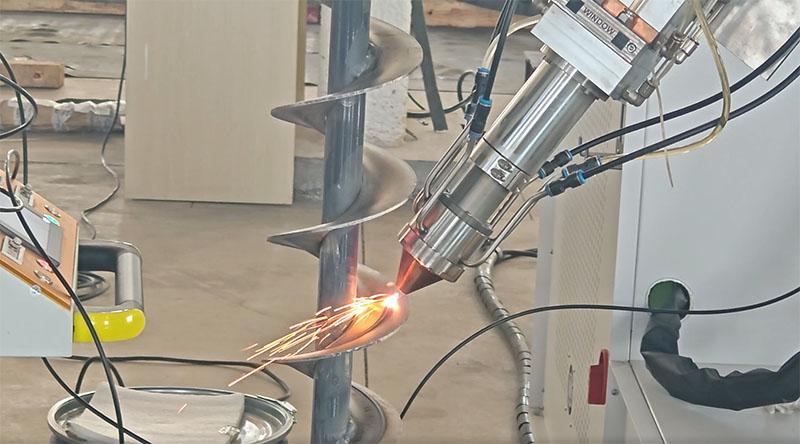
II. The process flow of laser cladding repair technology mainly includes the following steps:
1. Pre-treatment of damaged components: Use non-destructive testing (e.g., magnetic particle inspection, ultrasonic testing) to identify the location and extent of damage, remove surface oil, rust, and fatigue layers, and pre-treat defects such as cracks.
2. Selection of appropriate cladding materials based on the component's material and usage requirements: Commonly used materials include nickel-based alloys, cobalt-based alloys, and iron-based alloys.
3. Optimization of laser cladding parameters: Perform precise cladding on the damaged area according to the part's size and damage condition, controlling parameters such as laser power, scanning speed, and powder feed rate to achieve an ideal cladding layer.
4. Post-treatment of repaired components: Conduct machining, polishing, etc., to ensure dimensional accuracy and surface smoothness meet installation requirements.
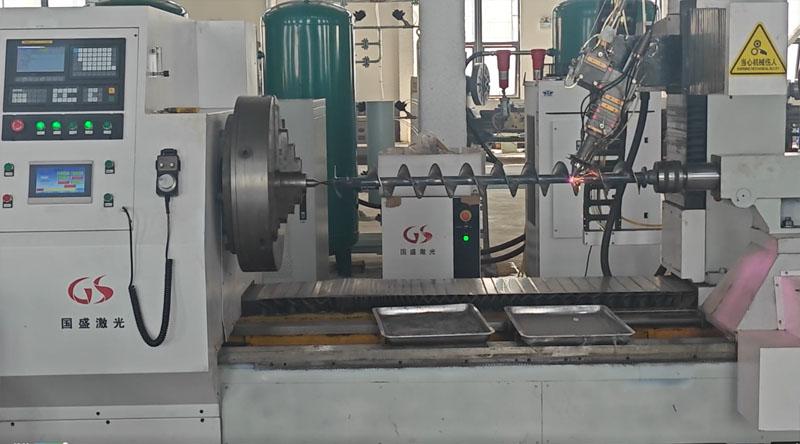
III. Prospects of Laser Cladding Repair for Agricultural Machinery Parts
In practical applications, laser cladding repair technology also faces certain challenges. For instance, for components with complex shapes, the incident angle of the laser beam and the cladding path require precise control; cladding process parameters for different materials need repeated testing and optimization; and controlling residual stress in the cladding layer remains a technical difficulty. To address these issues, researchers are continuously improving laser cladding equipment and processes, such as developing multi-axis laser processing systems and adopting preheating and post-heat treatment processes, to further enhance repair quality and efficiency.
From an economic perspective, although the initial equipment investment for laser cladding repair technology is relatively high, it offers significant cost advantages in the long run. On one hand, the performance of repaired parts is close to or even exceeds that of new parts, while the cost is only 30%–50% of new parts. On the other hand, it reduces the discarding of worn-out parts and the production of new ones, aligning with the principles of green manufacturing and circular economy. According to estimates, using laser cladding technology to repair agricultural machinery parts can save users over 30% in maintenance costs annually.
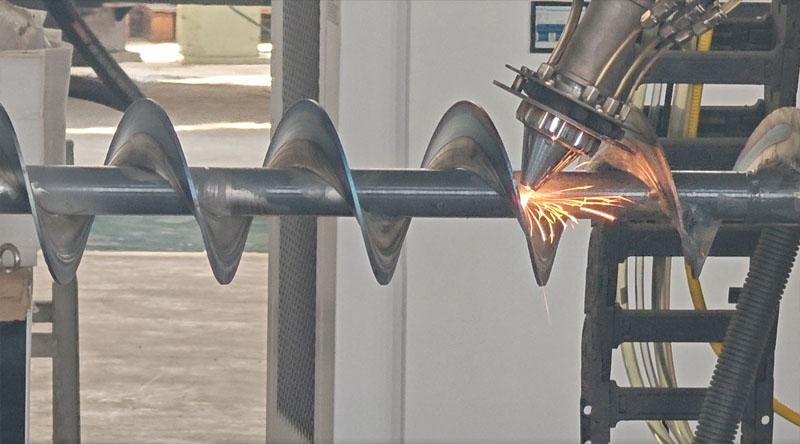
In summary, laser cladding repair technology provides an efficient and environmentally friendly solution for extending the service life and enhancing the performance of agricultural machinery parts. It not only reduces maintenance costs for users and improves the operational efficiency of agricultural machinery but also meets the requirements of sustainable development. With continuous technological improvements and broader application, laser cladding repair is poised to become a key technical method in the field of agricultural machinery maintenance, providing strong support for the modernization of agriculture in China.
| Industry Category | Others |
|---|---|
| Product Category | |
| Brand: | 国盛激光 |
| Spec: | |
| Manufacturer: | 国盛激光 |
| Origin: | 116101 |


