


Titanium Alloy Shaft Laser Cladding Repair Processing
Contact Info
- Add:西安市国家民用航天产业基地航天基地299号西安建工科技创业基地十号楼4层, Zip:
- Contact: 段纯
- Tel:17392761868
- Email:gsjgkj@163.com
Other Products


Titanium alloy shafts, as indispensable key components in modern industry, have their stability and durability directly related to the operational efficiency and safety of the entire equipment. However, due to the high wear resistance, high strength, and tendency to undergo work hardening of titanium alloys, their machining and repair processes are particularly complex. Laser cladding repair technology, as an advanced surface engineering technique, provides a new solution for the repair and strengthening of titanium alloy shafts.
Optimization of Laser Cladding Repair Process for Titanium Alloy Shafts
The laser cladding repair process for titanium alloy shafts involves several key process parameters, including laser power, scanning speed, spot diameter, and powder feed rate. These parameters directly affect the morphology, dilution rate, and metallurgical bonding quality of the cladding layer. Therefore, by optimizing these process parameters, a high-quality cladding layer that is continuous, uniform, and free of cracks and pores can be achieved.
Before laser cladding repair of titanium alloy shafts, thorough cleaning and pretreatment of the damaged area are required to remove oil stains, oxides, and impurities, ensuring a strong bond between the cladding layer and the substrate. At the same time, based on the specific dimensions, shape, and extent of damage of the shaft, a reasonable cladding path and parameters must be designed.
The laser cladding materials for titanium alloy shafts must be carefully selected according to the operating environment and performance requirements. Common cladding materials include Ti/Cr2O3 composite powder, Ni-based alloy powder, etc., which offer excellent wear resistance, corrosion resistance, and high-temperature performance. When preparing the mixture, factors such as the particle size distribution, chemical composition, and compatibility with the substrate must be considered to ensure the quality of the cladding layer.
Through extensive experimentation and data analysis, an optimized combination of process parameters can be determined. For example, when the laser power is set to 1.8 kW and the scanning speed to 6 mm/s, a high-quality cladding layer can be obtained. Additionally, strict control over the stability of the laser beam, uniform powder feeding, and the temperature and humidity of the processing environment is necessary to avoid defects such as thermal stress, pores, and cracks. Simultaneously, liquid cooling and spray devices are used to provide real-time cooling of the processing area, preventing material overheating and deformation.
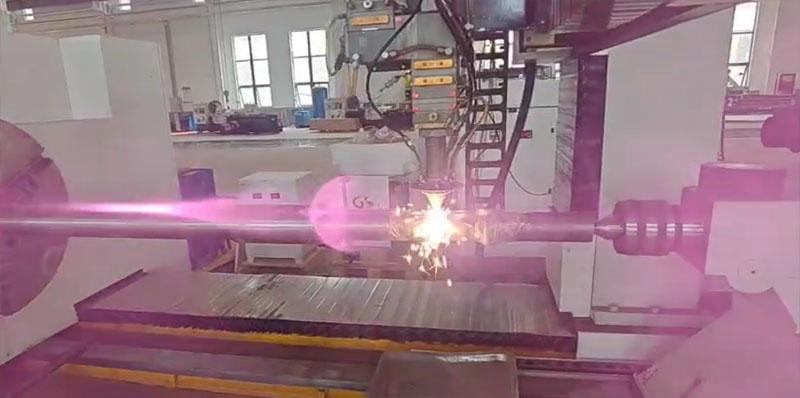
Application Examples of Laser Cladding Repair for Titanium Alloy Shafts
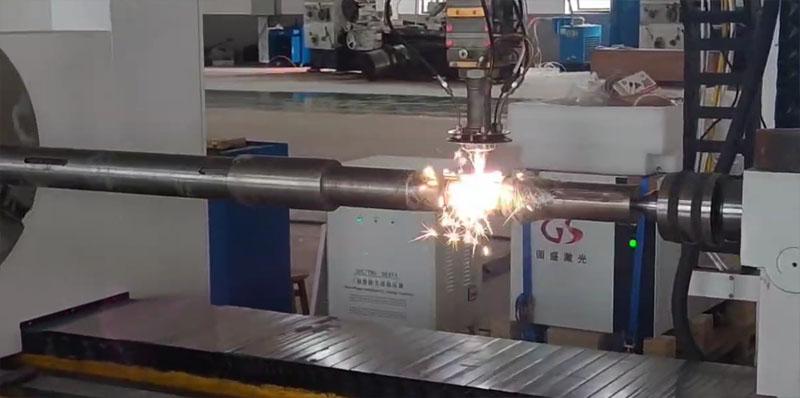
In the aerospace industry, titanium alloy shafts are widely used in critical components such as engines and transmission systems. However, due to prolonged exposure to high temperatures, high pressures, and complex loads, titanium alloy shafts are prone to wear, cracks, and other damage. The application of laser cladding repair technology can successfully restore these damages, recovering the shaft's performance and precision.
For example, a titanium alloy shaft in an aircraft engine exhibited severe wear and crack damage. After thorough cleaning and pretreatment, laser cladding technology was used to apply a continuous, uniform, and defect-free Ti/Cr2O3 composite coating on the shaft's surface. The repaired shaft not only regained its original dimensional accuracy and mechanical properties but also significantly improved its wear resistance and corrosion resistance, extending its service life.
Additionally, in the automotive industry, titanium alloy shafts are also widely used in critical components such as engines and transmission systems. Similarly, laser cladding repair technology can successfully restore damages in these areas, enhancing the shaft's reliability and durability.
Future Development of Laser Cladding Repair for Titanium Alloy Shafts
With the continuous advancement of laser technology and the growing industrial demand, laser cladding repair technology for titanium alloy shafts will have broader development prospects.
1. High Precision and High Automation: By integrating advanced robotics and intelligent control systems, high precision and automation in laser cladding processing can be achieved. This not only improves production efficiency and processing quality but also reduces labor costs and operational complexity.
2. New Materials and New Processes: Explore more new materials and processes suitable for laser cladding of titanium alloys. For example, nano-powders, composite powders, and multi-pass cladding techniques can further enhance the performance and reliability of the cladding layer. At the same time, new cladding methods and process parameter optimization methods can be developed to meet the needs of different fields and applications.
3. Environmental Protection and Green Manufacturing: Focus on environmental issues during the processing, adopting low-energy consumption and low-emission processing methods. Promote the development of green manufacturing to reduce environmental impact and pollution.
4. Intelligence and Remote Monitoring: Combine IoT, big data, and artificial intelligence technologies to achieve intelligent control and remote monitoring of the laser cladding process. This can improve the level and efficiency of production management, promptly identify and resolve potential issues, and ensure the stability and reliability of the processing.
Conclusion
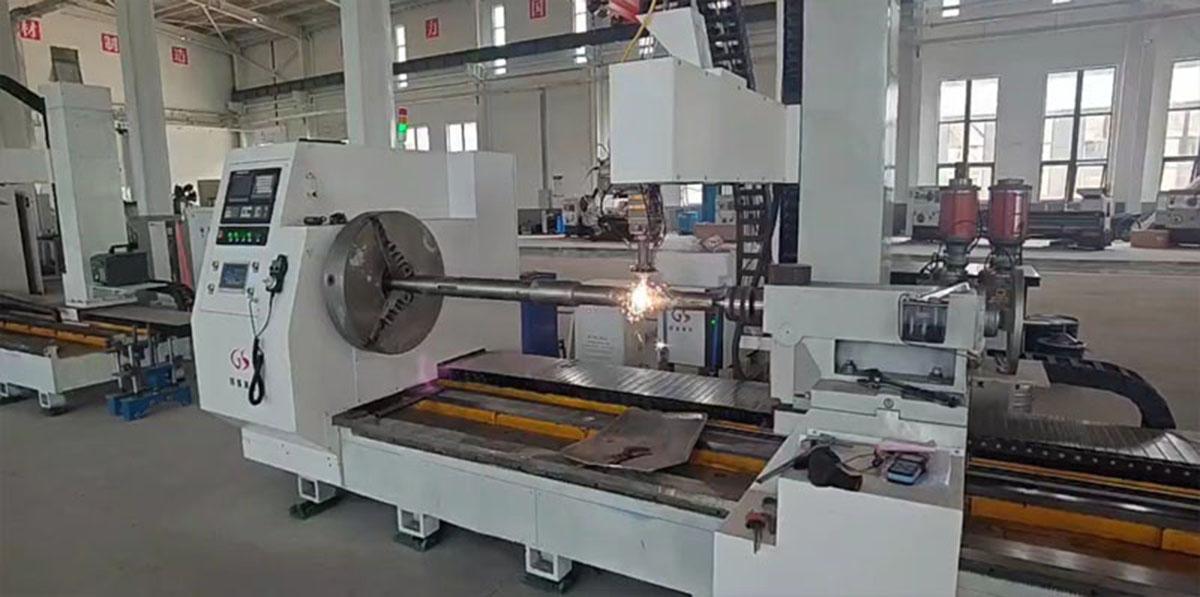
Laser cladding repair technology for titanium alloy shafts, as an important part of modern industrial manufacturing and remanufacturing, is providing strong technical support for the repair and strengthening of high-end equipment with its unique advantages and broad application prospects. By optimizing process parameters, selecting appropriate cladding materials, and continuously innovating and expanding applications, laser cladding repair technology for titanium alloy shafts will play an even more important role in the future.
With continuous technological progress and innovation, it is believed that laser cladding repair technology for titanium alloy shafts will continue to break through existing limitations and challenges, providing more efficient, reliable, and environmentally friendly solutions for equipment repair and strengthening in more fields. At the same time, it will also drive the development and upgrading of related industries, injecting new vitality and momentum into the fields of industrial manufacturing and remanufacturing.
In summary, laser cladding repair technology for titanium alloy shafts is a technology with broad application prospects and enormous potential. In its future development, it will continue to drive progress and innovation in industrial manufacturing and remanufacturing, providing more efficient, reliable, and environmentally friendly solutions for the repair and strengthening of high-end equipment. It will also provide strong support and guarantees for the development and upgrading of related industries.
| Industry Category | Metallurgy & Minerals/Non-Ferrous Alloys/Titanium Alloys |
|---|---|
| Product Category | |
| Brand: | 国盛激光 |
| Spec: | |
| Manufacturer: | 国盛激光 |
| Origin: | 116101 |


