


Advantages of Laser Cladding Processing for Long Shafts of Pulp Pumps
Contact Info
- Add:西安市国家民用航天产业基地航天基地299号西安建工科技创业基地十号楼4层, Zip:
- Contact: 段纯
- Tel:17392761868
- Email:gsjgkj@163.com
Other Products


As an indispensable equipment in industrial fluid handling, the stability and durability of the slurry pump directly affect production efficiency and safety. During long-term operation, the long shaft of the slurry pump often suffers surface damage due to factors such as material wear and corrosion, which in turn affects the overall performance of the pump. The emergence of laser cladding processing technology has solved this problem, making it an ideal choice for repairing and strengthening the long shaft of slurry pumps.
I. Overview of Laser Cladding Processing Technology
Laser cladding processing technology is a technique that uses a high-energy laser beam as a heat source to rapidly melt cladding materials and form a metallurgical bond with the substrate. It can repair, strengthen, and modify surfaces without altering the original dimensions and properties of the substrate. Compared to traditional surface repair technologies such as welding and spraying, laser cladding processing technology offers advantages such as fast heating speed, small heat-affected zone, minimal deformation, and low dilution rate. As a result, it is widely used in aerospace, automotive, mold, and other fields.
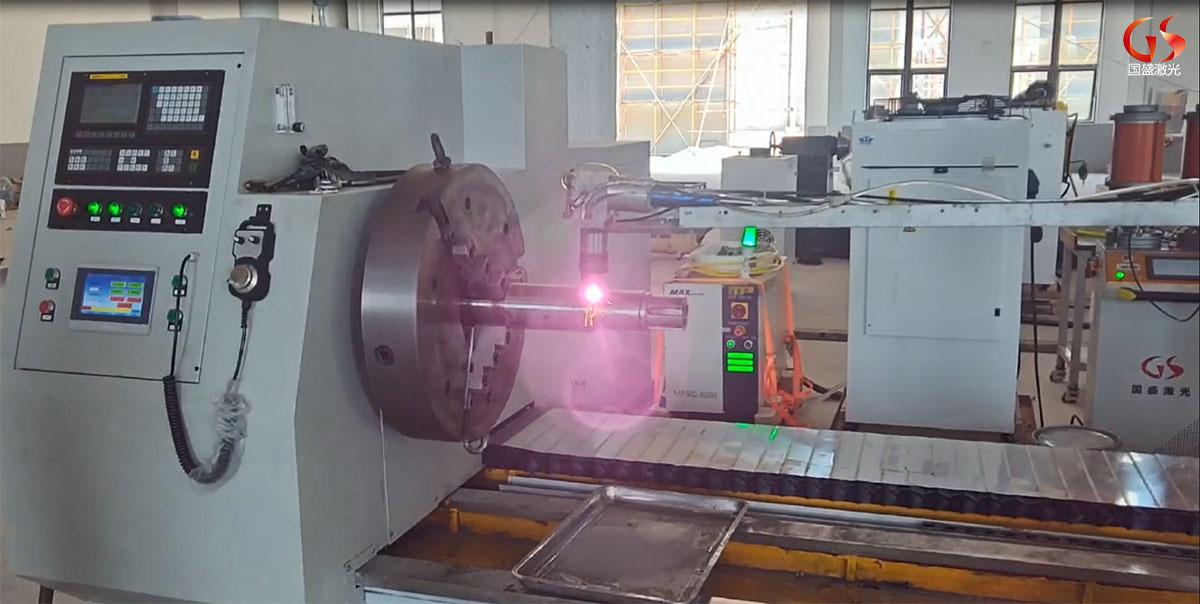
II. Advantages of Laser Cladding Processing for Slurry Pump Long Shafts
1. Precise Control: Laser cladding processing technology enables precise control of the cladding layer, including its thickness, composition, and microstructure. This allows for personalized design based on actual requirements when repairing slurry pump long shafts, ensuring optimal performance after repair.
2. High Efficiency and Energy Savings: During the laser cladding process, the laser beam's concentrated energy and fast heating speed allow the cladding material to melt rapidly and form a metallurgical bond with the substrate in a short time. This efficient processing method significantly reduces repair time and improves production efficiency.
3. Reliable Quality: Due to the high energy density of the laser beam and the small heat-affected zone, the residual stress and deformation generated during the laser cladding process are relatively small. This helps ensure that the repaired slurry pump long shaft has higher reliability and stability.
4. Environmentally Friendly and Pollution-Free: The laser cladding process does not require the addition of any chemical agents or filler materials, so it does not produce harmful gases or waste residues. This environmentally friendly processing method aligns with the requirements of modern industrial sustainable development.
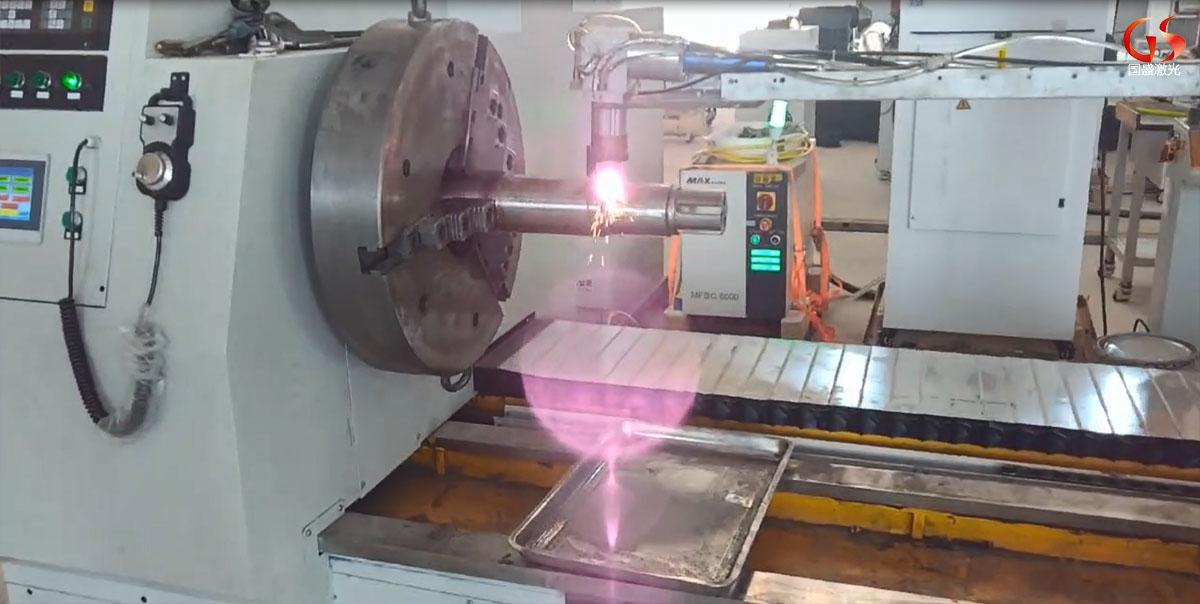
III. Process Flow of Laser Cladding Processing for Slurry Pump Long Shafts
The process flow of laser cladding processing for slurry pump long shafts mainly includes the following steps:
1. Preliminary Preparation: Perform pre-treatment work such as cleaning, rust removal, and polishing on the slurry pump long shaft to ensure the bonding quality between the cladding layer and the substrate. At the same time, select appropriate cladding materials and process parameters based on actual needs.
2. Cladding Layer Design: Design a reasonable cladding layer structure and composition based on the damage condition and performance requirements of the slurry pump long shaft. This includes determining parameters such as the thickness, shape, and distribution of the cladding layer.
3. Laser Cladding Processing: Place the cladding material on the surface of the slurry pump long shaft and use a high-energy laser beam for heating and melting. Under the action of the laser beam, the cladding material rapidly melts and forms a metallurgical bond with the substrate. Precise control of the cladding layer is achieved by adjusting parameters such as the laser beam's moving speed and power.
4. Post-Processing: Perform post-processing work such as cooling, polishing, and inspection on the cladded slurry pump long shaft. This includes removing excess cladding material and defects such as burrs, as well as testing the performance of the cladding layer in terms of hardness, wear resistance, and corrosion resistance.

IV. Application Case of Laser Cladding Processing for Slurry Pump Long Shafts
A chemical plant discovered severe wear and corrosion on the surface of the long shaft of its slurry pump during long-term use. To restore the pump's performance and extend its service life, the plant decided to use laser cladding processing technology to repair the long shaft. After careful design and processing, the repaired long shaft exhibited a smooth surface, high hardness, excellent wear resistance, and strong corrosion resistance. During actual operation, the repaired slurry pump demonstrated stable and reliable performance, effectively improving production efficiency and reducing maintenance costs.
V. Conclusion and Outlook
With the continuous development and advancement of industrial technology, laser cladding processing technology will play an increasingly important role in the field of slurry pump long shaft repair. In the future, with continuous innovation and improvement in laser technology, as well as the emergence and application of new cladding materials, laser cladding processing technology will have broader application prospects and higher performance requirements. At the same time, we must continue to learn and explore new technologies and methods to address increasingly complex industrial environments and challenges.
| Industry Category | Others |
|---|---|
| Product Category | |
| Brand: | 国盛激光 |
| Spec: | |
| Manufacturer: | 西安国盛激光 |
| Origin: | 116101 |


