


Laser Cladding Repair Processing for Wear-Resistant Rolls in Steel Mills
Contact Info
- Add:西安市国家民用航天产业基地航天基地299号西安建工科技创业基地十号楼4层, Zip:
- Contact: 段纯
- Tel:17392761868
- Email:gsjgkj@163.com
Other Products


In the steel industry, rollers, as critical equipment components, undertake important functions such as rolling, conveying, and supporting. However, during use, due to prolonged exposure to harsh conditions like high temperatures, high pressure, and friction, the surface of rollers is highly susceptible to damage such as wear, spalling, and cracks. This not only affects the service life of the rollers but also severely impacts the quality of steel products and production efficiency. Therefore, timely and effective repair processing of rollers is particularly important. In recent years, laser cladding technology, as an advanced surface treatment method, has been widely applied in the repair processing of wear-resistant rollers in steel mills and has achieved remarkable results.
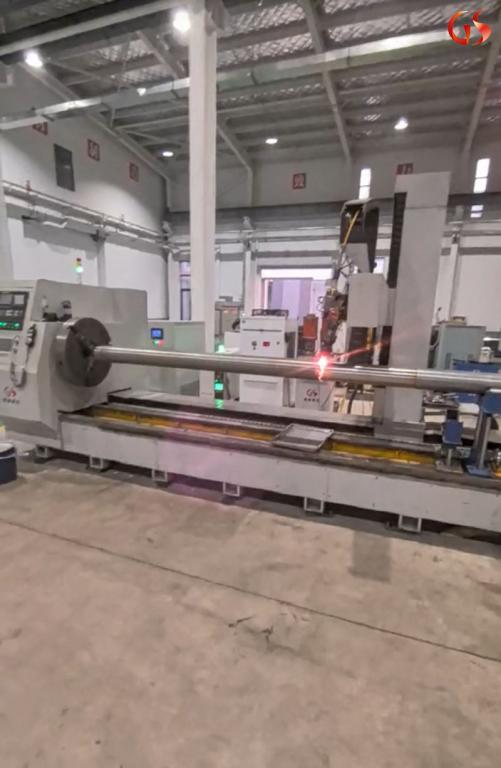
Laser cladding repair processing is a method that uses a high-energy laser beam to rapidly melt cladding material and form a metallurgical bond with the substrate surface. Compared to traditional repair methods such as welding, electroplating, and spraying, laser cladding offers higher repair precision, stronger metallurgical bonding strength, superior surface performance, and lower costs. As a result, laser cladding technology holds unique advantages and broad application prospects in the repair processing of wear-resistant rollers in steel mills.
The process of laser cladding repair mainly includes the following steps: First, surface pretreatment of the wear-resistant roller is necessary to remove impurities such as oil stains, rust, and old coatings, ensuring a good bond between the cladding layer and the substrate. This step is crucial, as the presence of surface impurities can affect the quality and performance of the cladding layer. During pretreatment, methods such as sandblasting, grinding, and cleaning can be used to clean the roller surface.
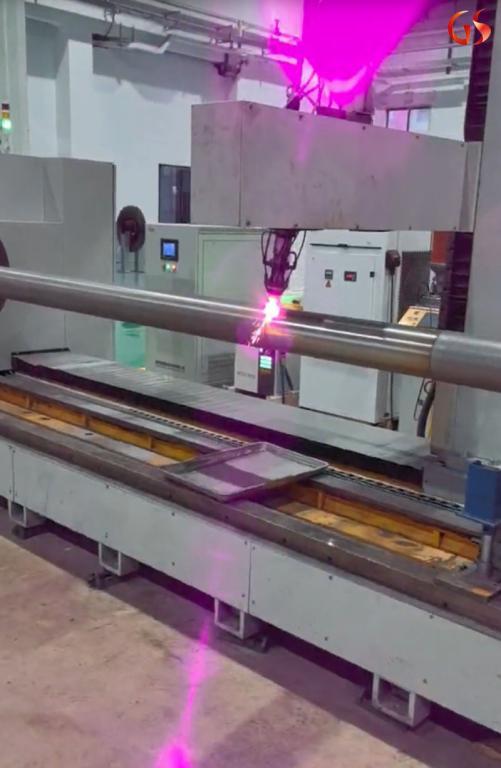
Second, based on the operational requirements and material characteristics of the wear-resistant roller, suitable cladding materials are selected. The choice of cladding material directly affects the performance and service life of the repaired roller. In the steel industry, commonly used cladding materials include nickel-based, cobalt-based, iron-based alloys, as well as ceramic materials. These materials offer excellent wear resistance, corrosion resistance, and heat resistance, meeting the demands of rollers in harsh working environments. When selecting cladding materials, factors such as material performance, cost, and processability must be comprehensively considered to ensure optimal performance and cost-effectiveness of the repaired roller.
Next, laser cladding parameters are set. These include key parameters such as laser power, scanning speed, spot size, and powder feed rate, which collectively determine the microstructure and performance of the cladding layer. Technicians need to determine the optimal combination of cladding parameters through repeated testing and optimization, based on the specific damage condition of the wear-resistant roller and the characteristics of the selected cladding material. This process requires a high degree of professionalism and precision to ensure that the cladding layer not only bonds firmly with the substrate but also achieves the desired hardness and wear resistance.
During the laser cladding process, it is also essential to strictly control the temperature and cooling rate of the molten pool to avoid defects such as pores and cracks, which could compromise the quality of the cladding layer. Additionally, advanced real-time monitoring technologies are employed to dynamically track the temperature and stress fields during cladding, allowing for timely adjustments to process parameters and ensuring stability and controllability throughout the process.
After cladding is completed, subsequent treatments such as grinding and polishing are performed on the repaired area to eliminate surface irregularities and residual stress, further enhancing the surface quality and precision of the roller. Finally, through rigorous performance testing and quality inspection, the repaired wear-resistant roller is ensured to meet usage requirements and can be put back into production, continuing to play its critical role.
In summary, laser cladding repair processing, with its unique advantages and efficient process flow, plays an increasingly important role in the repair of wear-resistant rollers in the steel industry, providing strong support for extending roller service life and improving production efficiency.
| Industry Category | Others |
|---|---|
| Product Category | |
| Brand: | 国盛激光 |
| Spec: | |
| Manufacturer: | 国盛激光 |
| Origin: | 116101 |


