


Large Gear Laser Quenching Repair Processing
Contact Info
- Add:西安市国家民用航天产业基地航天基地299号西安建工科技创业基地十号楼4层, Zip:
- Contact: 段纯
- Tel:17392761868
- Email:gsjgkj@163.com
Other Products


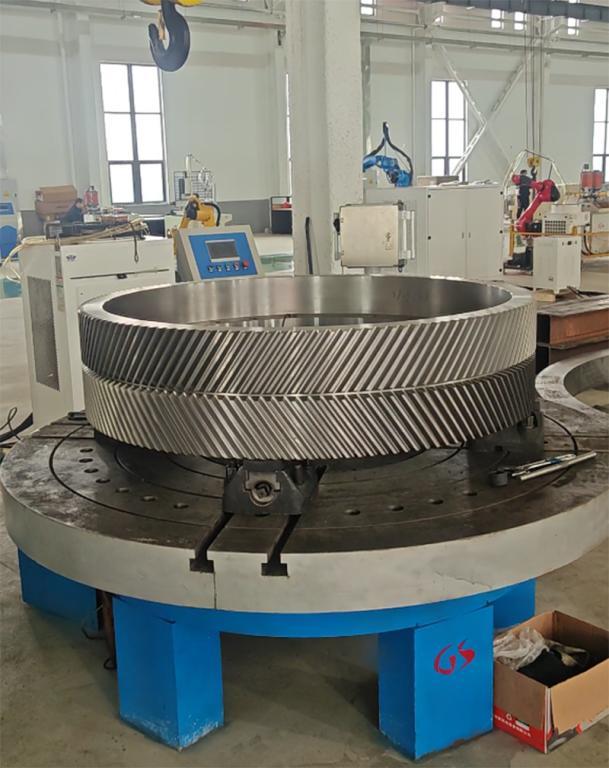
In the modern industrial sector, large gears, as critical transmission components, are widely used in heavy machinery and equipment such as wind power, mining, and ships. During long-term operation, gears are prone to wear, fatigue, and other damages, which can affect the normal operation of the equipment and even lead to safety accidents. The emergence of laser quenching repair processing technology for large gears provides an efficient and precise solution to this challenge.
I. Processing Principle
Laser quenching repair processing for large gears leverages the high energy density characteristics of lasers. Through a specific optical system, the laser beam is focused onto the surface of the gear to be repaired, causing the surface material to absorb a large amount of energy in an extremely short time, rapidly raising the temperature above the phase transformation point. Subsequently, relying on the gear's own thermal conduction, the surface layer quickly cools, achieving self-cooling quenching. This rapid heating-cooling process enables the formation of a refined martensitic structure on the gear surface, significantly enhancing its hardness, wear resistance, and fatigue strength. Additionally, for gears with defects such as wear or cracks, laser repair technology can replenish material and restore performance in the defective areas by filling metal powder during the laser cladding process, allowing the gear to meet usage requirements again.
II. Technical Advantages
1. High Precision and Flexibility
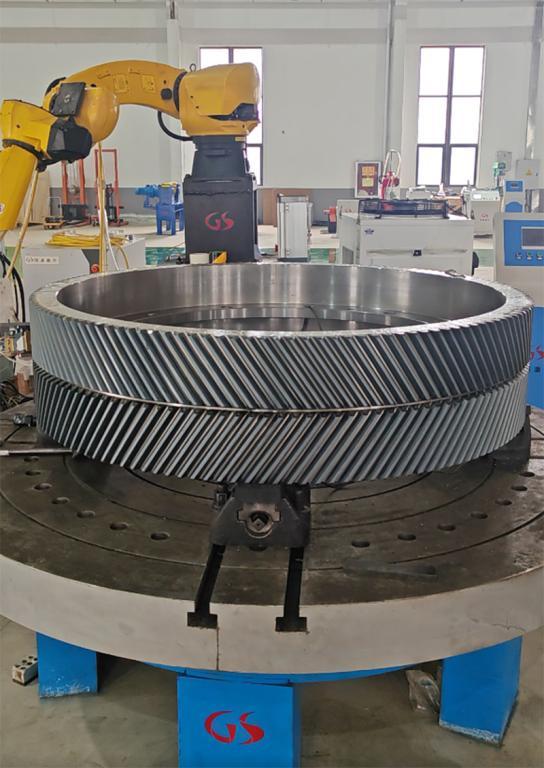
The laser beam's focused spot size is small, with concentrated energy, enabling precise quenching and repair of localized areas of the gear. It allows accurate control over the depth, width, and hardness distribution of the quenching layer. For large gears with complex shapes or special tooth profiles, the high flexibility of laser processing is particularly advantageous. By programming the laser scanning path, it can adapt to the repair needs of different gears, ensuring the precision and performance of the repaired gear.
2. Small Heat-Affected Zone
During the laser quenching repair process, due to the short duration of laser action and highly concentrated energy, heat diffusion to the surrounding areas is limited, resulting in a small heat-affected zone. This effectively avoids the risk of gear scrapping due to excessive thermal deformation and minimizes the impact on the base material properties of the gear, ensuring the stability and reliability of the overall gear structure.
3. High Efficiency and Energy Savings
Compared to traditional quenching and repair processes, laser quenching repair is faster and offers higher production efficiency. Moreover, laser energy utilization is high, significantly reducing energy consumption while achieving the same quenching and repair effects, aligning with the development requirements of green manufacturing in modern industry.
4. Excellent Repair Results
During the laser cladding process, the filled metal and the gear base material achieve a strong metallurgical bond. The repair layer has a dense structure, free from defects such as pores and cracks, with high bonding strength to the base material. The repaired gear surface exhibits uniform hardness, significantly improved wear resistance and fatigue performance, and effectively extended service life.
III. Key Process Points
1. Pre-Treatment
Before laser quenching repair, the surface of the large gear must be thoroughly cleaned to remove impurities such as oil, rust, and scale, ensuring effective interaction between the laser and the material. For areas with wear or cracks, pre-treatment operations such as grinding and grooving are also required to provide favorable conditions for subsequent laser cladding. Additionally, based on the gear's material characteristics and repair requirements, suitable metal filler powder should be selected and dried to prevent defects like pores caused by moisture in the powder during laser cladding.
2. Laser Parameter Optimization
Parameters such as laser power, scanning speed, and spot diameter directly affect the quality of laser quenching repair. During processing, the combination of laser parameters must be optimized through experiments or simulation analysis, considering factors such as gear material, repair area, and filler metal. For example, for high-carbon steel gears, appropriately increasing laser power and reducing scanning speed can achieve a deeper quenching layer, while for alloy steel gears, precise control of laser parameters is necessary to avoid issues like overheating of the structure.
3. Process Control
During the laser quenching repair process, parameters such as temperature and molten pool morphology in the laser processing area must be monitored in real time. Laser parameters and processing techniques should be adjusted promptly to ensure a stable repair process. Simultaneously, inert gas protection should be used to prevent oxidation of the repair layer at high temperatures, ensuring the quality of the repair layer. Furthermore, the clamping method of the gear should be reasonably designed to minimize vibration and deformation during processing, ensuring repair precision.
4. Post-Treatment
After laser quenching repair is completed, necessary post-treatment processes must be carried out on the gear. For example, machining the repaired surface to remove excess repair material, ensuring the gear's dimensional accuracy and surface roughness meet requirements. Additionally, stress relief annealing should be performed to eliminate residual stresses generated during laser processing, improving the gear's comprehensive mechanical properties and service life.
IV. Application Cases
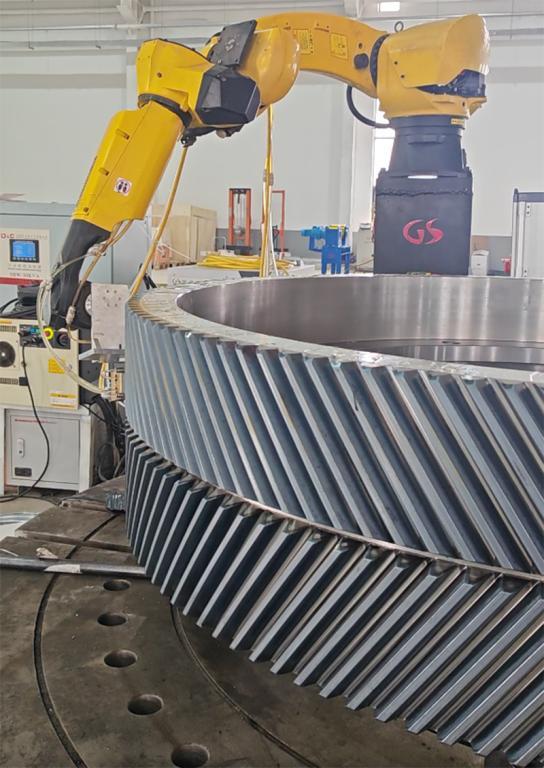
In the wind power industry, gears in large wind turbine gearboxes are subjected to alternating loads over long periods, making them prone to issues such as tooth surface wear and fatigue pitting. A wind power equipment manufacturer used laser quenching repair processing technology to repair worn gears. By precisely controlling laser parameters, a layer of high-performance alloy material was clad onto the gear tooth surface. The hardness of the repaired gear tooth surface increased by 30%–40%, with significantly enhanced wear resistance, successfully extending the gear's service life by 2–3 times. This reduced equipment maintenance costs and downtime while improving the operational reliability of wind power equipment.
In the mining machinery sector, the travel gear of a large mining excavator developed cracks at the tooth root due to long-term operation under harsh conditions. Laser quenching repair technology was employed, first grooving the cracked area and then filling it with specialized high-strength alloy powder for laser cladding repair. By optimizing the laser scanning path and parameters during the repair process, a strong metallurgical bond between the repair layer and the base material was achieved, effectively eliminating the crack. The repaired gear underwent rigorous performance testing and validation under actual operating conditions, with all indicators meeting or exceeding the standards of new gears, saving the mining enterprise significant equipment replacement costs.
V. Development Trends
With the continuous development of laser technology, materials science, and computer control technology, laser quenching repair processing technology for large gears will advance toward intelligence, automation, and integration. On one hand, technologies such as artificial intelligence and machine learning will be utilized to achieve intelligent optimization of laser processing parameters and real-time monitoring and adaptive adjustment of the processing process, improving processing quality and stability. On the other hand, laser quenching repair technology will be combined with other surface treatment technologies (such as ion implantation, thermal spraying, etc.) to develop composite processing techniques, further enhancing the comprehensive performance of gears. Additionally, the research and application of new high-performance repair materials will provide broader prospects for the development of laser quenching repair processing technology for large gears.
| Industry Category | Others |
|---|---|
| Product Category | |
| Brand: | 国盛激光 |
| Spec: | |
| Manufacturer: | 国盛激光 |
| Origin: | 116101 |


