


Steel Mill Rotor Laser Cladding Repair
Contact Info
- Add:西安市国家民用航天产业基地航天基地299号西安建工科技创业基地十号楼4层, Zip:
- Contact: 段纯
- Tel:17392761868
- Email:gsjgkj@163.com
Other Products


In the steel industry, the stable operation of rotors is directly related to production efficiency and equipment lifespan. However, long-term high-load operation can lead to wear, corrosion, and even cracks in critical areas such as rotor journals and sealing surfaces. Traditional repair methods like welding and thermal spraying suffer from large heat-affected zones and insufficient bonding strength. In contrast, laser cladding technology, with its precision, efficiency, and low deformation, is becoming a revolutionary solution for rotor repair in steel mills.
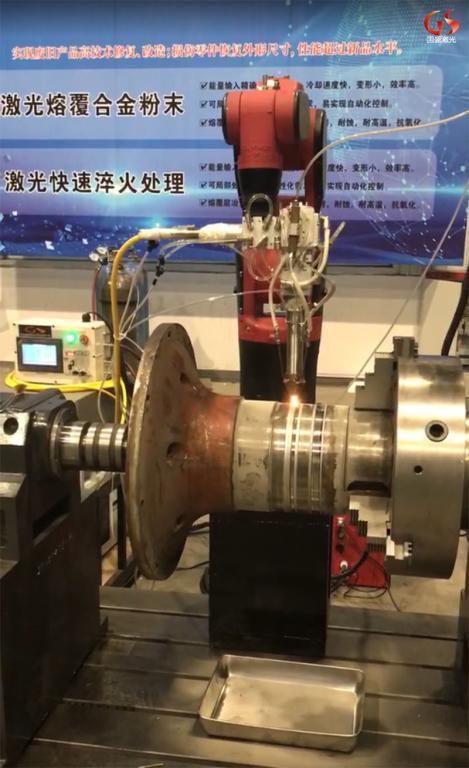
I. Core Principles and Advantages of Laser Cladding Technology
Laser cladding uses a high-energy laser beam to create a micro-molten pool on the substrate surface, while simultaneously feeding alloy powder to achieve metallurgical bonding with the substrate. Compared to traditional processes, its advantages are significant:
1. Precise and controllable heat input: Laser energy density can reach up to 10^6 W/cm², with a heat-affected zone of only 0.1-0.5 mm, avoiding substrate deformation caused by traditional welding (e.g., a steel mill repaired a Φ800 mm rotor journal with a runout of <0.03 mm).
2. Strong material compatibility: Nickel-based alloys (e.g., Inconel 625), cobalt-based alloys (e.g., Stellite 6), or iron-based powders can be used to customize wear-resistant, corrosion-resistant, or fatigue-resistant coatings based on operating conditions.
3. Breakthrough bonding strength: Metallurgical bonding strength reaches over 400 MPa, far exceeding the mechanical bonding of thermal spraying (approx. 50 MPa). One case showed that the cladding layer's service life tripled under 600°C operating conditions.
4. Digital integration: Combined with industrial robots, it enables automated repair of complex surfaces. One project used a 6-axis robot and visual positioning system to increase repair efficiency by 40%.
5. Enhanced composite performance: A steel mill practice showed that laser-clad repaired rolling mill rotors achieved a surface hardness of HRC 58-62, with a service life increase of over 30% compared to new parts.
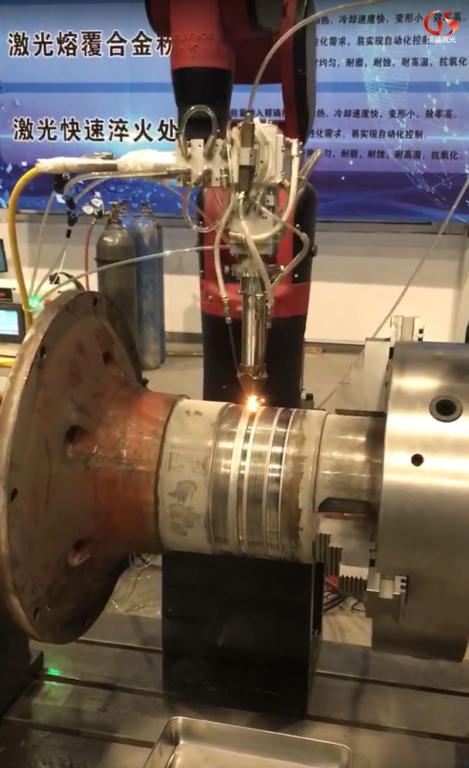
II. Typical Damage and Repair Solutions for Steel Mill Rotors
1. Journal Wear Repair
A large rolling mill rotor journal had 0.8 mm deep scratches due to lubricant contamination. The following process was adopted:
Pre-treatment: Turning to remove the damaged layer, ultrasonic cleaning.
Cladding parameters: IPG 4000W fiber laser, 50% overlap, powder feed rate of 12 g/min (iron-based alloy powder containing Cr18%, Mo2.5%).
Post-treatment: Precision machining with a CNC grinder to Ra 0.4 μm.
The repaired hardness reached HRC 55, with no abnormalities after 18 months of operation, and costs were reduced by 60% compared to traditional chrome plating repair.
2. Impeller End Face Corrosion Repair
High-temperature flue gas corrosion caused honeycomb-like pits on the end face of a sintering fan impeller. The innovative solution included:
Gradient material design: NiCrAlY base layer (to improve bonding) and a CoCrW corrosion-resistant alloy top layer.
Inert gas protection: Dynamic argon chamber to control oxygen content to <50 ppm, avoiding oxide inclusions.
Online monitoring: Pyrometer real-time monitoring of molten pool temperature fluctuations within ±15°C.
The repaired part passed a 720-hour salt spray test, with corrosion rate reduced to 1/7 of the original.
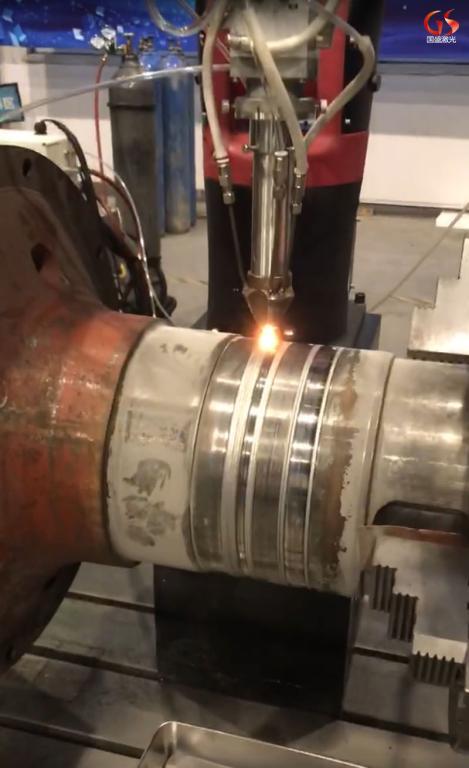
III. Key Technological Breakthroughs and Industry Cases
1. Residual Stress Control
Through finite element simulation to optimize scanning paths, one project used a fractal scanning strategy to reduce residual stress by 38%. Combined with ultrasonic impact post-treatment, fatigue life increased to 90% of new parts.
2. Hybrid Additive Manufacturing
A Baowu Group project integrated laser cladding with CNC machining to simultaneously repair and finish rotor tenon grooves, achieving a full process from "damage identification-3D modeling-cladding processing" within 48 hours, reducing downtime by 70% compared to traditional factory repairs.
3. Intelligent Quality Inspection
Ansteel introduced an online spectral analysis system to monitor cladding layer composition deviations in real-time (e.g., Cr content fluctuation ≤0.8%), combined with X-ray inspection to ensure zero defects, increasing yield from 82% to 99.6%.
4. Lifespan Assessment Model
An algorithm based on fracture mechanics was developed to predict remaining service life by inputting data such as residual stress and hardness gradient of the cladding layer, accurately forecasting the service cycle of repaired components.
IV. Economic Benefits and Industry Application Prospects
Comparative data show:
1. Cost: Laser cladding repair costs are about 20-35% of the price of new parts.
2. Energy efficiency: Power consumption is only 1/5 of that of electroplating processes.
3. Environmental benefits: Eliminates emissions of pollutants such as hexavalent chromium.
Conclusion
Laser cladding technology is reshaping the equipment maintenance system in steel mills. From emergency repairs to preventive remanufacturing, its "minimally invasive repair" concept not only ensures production continuity but also promotes the transition of the steel industry toward green and smart manufacturing. In the future, with the integration of digital twin and AI process optimization technologies, the "repair-on-site" service model will become the new industry standard.
| Industry Category | Others |
|---|---|
| Product Category | |
| Brand: | 国盛激光 |
| Spec: | |
| Manufacturer: | 国盛激光 |
| Origin: | 116101 |


