


Detailed Process of Laser Cladding Repair for Sucker Rods
Contact Info
- Add:西安市国家民用航天产业基地航天基地299号西安建工科技创业基地十号楼4层, Zip:
- Contact: 段纯
- Tel:17392761868
- Email:gsjgkj@163.com
Other Products


I. Preliminary Preparation
Before proceeding with the laser cladding repair of sucker rods, preliminary preparation is crucial. First, comprehensive and meticulous pretreatment of the sucker rods is required, much like laying a solid foundation before building a house. Cleaning is the first step, using professional cleaning equipment and agents to remove oil, sediment, crude oil, and other impurities adhering to the surface of the sucker rods. If these impurities are not thoroughly removed, they will act like stains on a clean canvas, affecting the bonding quality between the cladding layer and the substrate. Rust removal is also a key step. Sucker rods work underground for extended periods, inevitably leading to surface rust. The presence of rust not only reduces the adhesion of the cladding layer but may also cause defects such as pores and slag inclusions during the cladding process. Chemical rust removers or mechanical methods like sandblasting and grinding can be used to completely remove the rust layer, revealing the metallic luster of the sucker rod surface.
Oil removal is equally important. Oil can hinder the transmission of laser energy, affect the melting and spreading of alloy powder, and thereby reduce the quality of the cladding layer. Methods such as organic solvent cleaning or alkaline cleaning ensure that no oil residue remains on the sucker rod surface.
After completing pretreatment steps like cleaning, rust removal, and oil removal, selecting the appropriate laser cladding powder based on the material of the sucker rod and specific usage requirements becomes another critical task. Different materials and usage environments require varying performance characteristics of the cladding layer. For example, in highly corrosive environments, alloy powders with good corrosion resistance, such as those containing nickel, chromium, and other elements, are needed. In high-wear environments, powders with high hardness and excellent wear resistance, such as WC-reinforced alloy powders, should be selected. Additionally, the physical properties of the powder, such as particle size, flowability, and wettability, must be comprehensively considered to ensure uniform delivery and melting during the laser cladding process, achieving a sound metallurgical bond with the substrate.
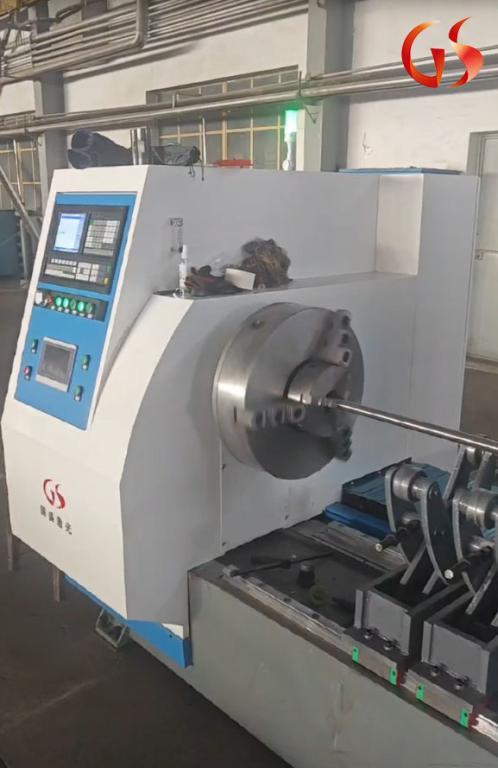
II. Preheating Treatment
After completing the preliminary preparation, the next step is the preheating treatment. Preheating is highly significant for the laser cladding repair of sucker rods, much like an athlete warming up before a competition, allowing the sucker rod to better adapt to the subsequent processing. The primary purpose of preheating is to reduce the temperature gradient between the substrate and the cladding layer during the cladding process, minimizing thermal stress and effectively preventing defects such as cracks and peeling in the cladding layer.
In practice, various tools can be used for preheating, with resistance heating furnaces and flame torches being common. Resistance heating furnaces generate heat by passing an electric current through resistance wires, allowing for precise temperature control and uniform heating of the sucker rod. Flame torches use high-temperature flames produced by combustible gas to heat the sucker rod, offering relatively flexible operation but lower precision in temperature control.
The preheating temperature is generally controlled between 300°C and 450°C. This temperature range, validated through extensive practice, ensures reduced thermal stress while avoiding excessive changes in the substrate structure due to overly high temperatures. The preheating length should be at least 200 mm to ensure a sufficient thermal buffer zone at the starting end of the cladding, reducing stress concentration. The preheating time typically ranges from 0.5 to 2 hours, adjusted based on factors such as the diameter and material of the sucker rod and the heating power of the preheating tool. For example, larger-diameter sucker rods require extended preheating times to ensure uniform internal preheating temperatures.
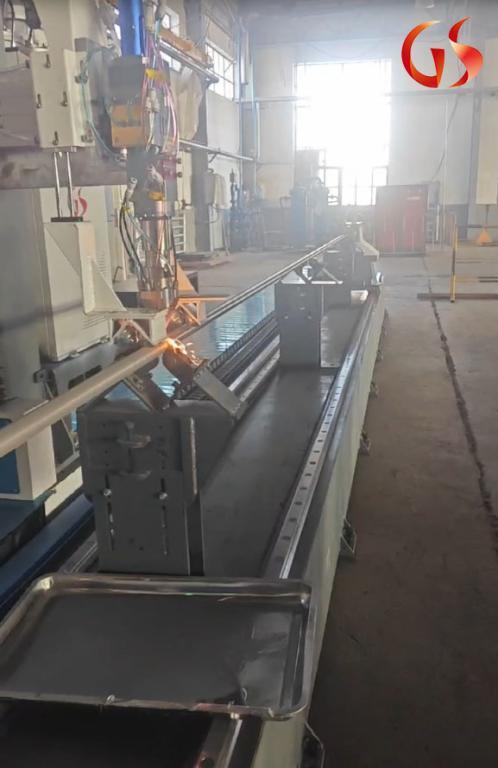
III. Cladding Operation
Once the preheating treatment is complete, the process moves to the core cladding operation stage. At this stage, the laser cladding equipment acts like a skilled craftsman, meticulously crafting the cladding layer on the sucker rod surface. Professional laser cladding equipment is used, with a powder feeding device uniformly delivering the pre-selected metal powder onto the sucker rod surface. The precision and stability of the powder feeding device are critical, as they directly affect the amount and distribution uniformity of the powder, much like a chef precisely controlling the amount of seasoning while cooking.
Simultaneously, a high-energy laser beam is focused on the sucker rod surface, instantly releasing immense energy that rapidly melts the delivered metal powder. Under high temperatures, the molten alloy powder and a thin layer of the sucker rod substrate material diffuse and fuse together, followed by rapid solidification and cooling, gradually forming a tightly bonded cladding layer on the sucker rod surface. This cladding layer acts like a sturdy armor, endowing the sucker rod with excellent performance. The thickness of the cladding layer is generally required to be ≥1.5 mm, ensuring that the repaired sucker rod has sufficient strength and wear resistance while meeting various operational requirements. During the cladding process, parameters such as laser power, scanning speed, and spot diameter must be precisely controlled, as even minor changes in these parameters can significantly impact the quality of the cladding layer. For example, excessively high laser power may cause overheating or burning of the cladding layer, while insufficient power may result in incomplete melting of the powder, affecting bonding strength. Too fast a scanning speed can lead to uneven cladding layer thickness, while too slow a speed reduces production efficiency.
IV. Post-Treatment
After the cladding operation is completed, the repair process is not yet finished. Post-treatment steps are equally indispensable, aimed at further optimizing the performance and precision of the repaired sucker rod to fully meet usage requirements.
Grinding is one of the common post-treatment processes. After cladding, the sucker rod surface may have uneven areas, such as protrusions in the cladding layer or surface oxide scales. Grinding removes these imperfections, making the sucker rod surface smoother and more even, achieving the required dimensional accuracy and surface roughness. During grinding, appropriate tools and process parameters must be selected based on the material of the sucker rod and the characteristics of the cladding layer to avoid damaging the cladding layer.
Inspection is also an essential step. Various testing methods are used to comprehensively inspect the repaired sucker rod, including visual inspection, dimensional measurement, hardness testing, and non-destructive testing. Visual inspection checks for defects such as cracks, pores, or peeling on the cladding layer surface. Dimensional measurement ensures that all dimensions of the sucker rod meet design requirements. Hardness testing evaluates whether the cladding layer's hardness meets expectations, thereby assessing its wear resistance. Non-destructive testing detects potential internal defects, such as lack of fusion or slag inclusions, ensuring the safety and reliability of the sucker rod during use. Only after strict inspection confirms that all indicators of the sucker rod meet requirements can it be put into practical production.
| Industry Category | Others |
|---|---|
| Product Category | |
| Brand: | 国盛激光 |
| Spec: | |
| Manufacturer: | 国盛激光 |
| Origin: | 116101 |


