


Flange Laser Cladding Repair Processing
Contact Info
- Add:西安市国家民用航天产业基地航天基地299号西安建工科技创业基地十号楼4层, Zip:
- Contact: 段纯
- Tel:17392761868
- Email:gsjgkj@163.com
Other Products


As an important connecting component in mechanical equipment, the surface performance of flanges directly affects the operational efficiency and lifespan of the entire equipment. With the continuous development of industrial technology, laser cladding repair processing technology has been widely applied in the field of flange repair due to its unique advantages. This article will provide a detailed introduction to the principles, operational procedures, advantages, and future development trends of laser cladding repair processing for flanges, aiming to offer reference and insights for related industries.
Laser cladding repair technology is an advanced material surface modification technique that utilizes a high-energy-density laser beam to form a thin molten layer on specific areas of the substrate surface. By pre-placing or synchronously adding self-fluxing alloy powders with specific compositions, such as nickel-based, cobalt-based, and iron-based alloys, they are spread uniformly in a molten state over the surface of the part to achieve a predetermined thickness, forming a strong metallurgical bond with the slightly molten substrate metal material. This bonding method not only has low dilution but also results in a dense structure and strong adhesion between the coating and the substrate, significantly improving the wear resistance, corrosion resistance, heat resistance, oxidation resistance, and other properties of the substrate surface.
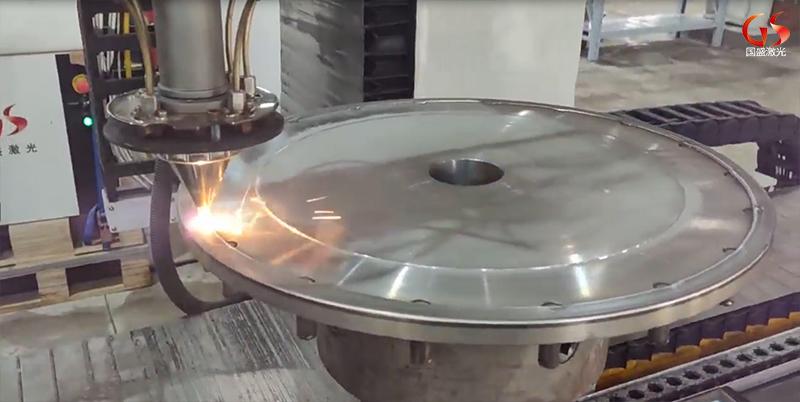
The operational process of laser cladding repair for flanges typically includes four steps: preliminary preparation, equipment debugging, laser cladding repair, and post-processing. During the preliminary preparation stage, the flange must be thoroughly cleaned to remove oil, rust, and other impurities, ensuring the cleanliness of the repair area. Additionally, the extent of wear must be measured and recorded to determine the scope and depth of the repair area, and the cladding layer structure and material formulation must be designed according to actual needs. This stage is fundamental to ensuring repair quality and must be taken seriously.
The equipment debugging stage involves selecting the appropriate laser cladding equipment and adjusting parameters such as laser power, spot size, and powder feed rate according to repair requirements. The selection of laser cladding equipment directly affects the quality of the cladding layer, so it is necessary to comprehensively consider factors such as the material, thickness, and repair requirements of the flange. The accuracy and stability of equipment debugging are crucial for the smooth progress of subsequent repair work.
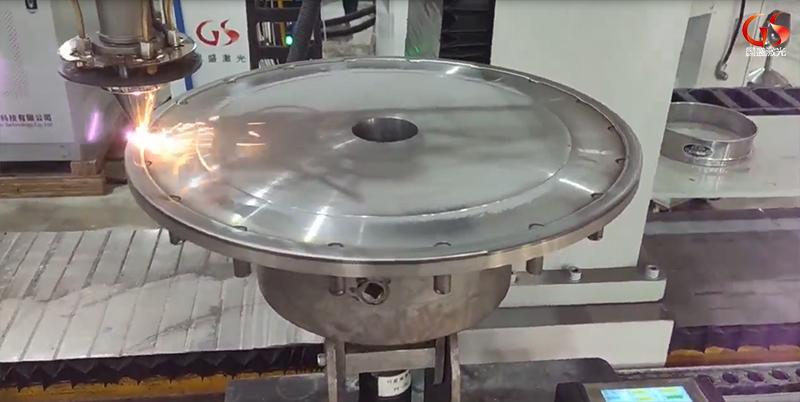
During the laser cladding repair stage, the flange must be fixed on a specialized fixture, and the laser cladding equipment must be activated to perform the repair operation. Throughout the repair process, the quality of the cladding layer must be closely monitored, and parameters must be adjusted in real time to ensure the repair effect. This step requires professional technicians to operate and monitor the process to ensure the smooth progress of the repair work. Additionally, laser cladding technology allows for precise control of the thickness and shape of the cladding layer, significantly improving the surface flatness and smoothness of the flange, which helps enhance the operational efficiency and lifespan of the equipment.
After the laser cladding repair is completed, post-processing steps are required. This includes grinding, polishing, and other treatments to remove surface irregularities and splatter. Additionally, necessary heat treatment is performed to improve the microstructure and properties of the cladding layer. Post-processing is critical for enhancing the surface quality and performance of the repaired component and must be carried out strictly in accordance with relevant specifications.
Compared to traditional methods such as overlay welding, spraying, electroplating, and vapor deposition, laser cladding repair processing technology for flanges offers numerous advantages. First, laser cladding has low dilution, a dense structure, and strong bonding between the coating and the substrate, effectively improving the wear resistance, corrosion resistance, heat resistance, and other properties of the repaired component. Second, laser cladding technology is suitable for a wide range of cladding materials with varying particle sizes and compositions, meeting repair needs under different working conditions. Furthermore, the laser cladding process does not produce pollutants such as exhaust gases, wastewater, or solid waste, making it a green production process that aligns with current trends in environmental protection and energy conservation.
In practical applications, laser cladding repair processing technology for flanges has demonstrated significant potential. For example, in industries such as mining, chemical, metallurgy, power, and cement, components like turbine rotor journals and blades, as well as roller necks, are subjected to long-term exposure to high temperatures, high pressures, and corrosive media, along with mechanical stress caused by volume loads. Damage often starts or occurs on the surface. Applying laser cladding technology to strengthen or repair the surfaces of these components can effectively extend their service life and reduce maintenance costs. Particularly during periodic maintenance, surface remanufacturing technology can be used to repair damaged areas, enabling the reuse of components and further improving economic efficiency.
Additionally, laser cladding technology has been widely adopted in the automotive manufacturing industry. Automotive components are prone to failure due to wear, corrosion, and other factors during use. Strengthening or repairing these components using laser cladding technology can save expensive alloy materials and reduce production costs. At the same time, laser cladding technology can also be used for the repair and remanufacturing of automotive molds, extending their service life and improving production efficiency.
With continuous technological advancements and innovations, laser cladding repair processing technology for flanges will exhibit even broader development prospects. On one hand, integrating advanced technologies such as artificial intelligence and big data can enable intelligent control and optimization of the laser cladding process, improving repair precision and efficiency. On the other hand, developing more new alloy powders with excellent performance will meet repair needs under complex working conditions. Furthermore, further optimizing the laser cladding process to reduce energy consumption and emissions and promote the development of green repair technology will be an important direction for the future.
Of course, certain issues must be addressed during the application of laser cladding repair processing technology for flanges. For instance, due to the fast cooling rate of the cladding layer and uneven stress distribution, which is unfavorable for exhaust slag removal, issues such as porosity and uneven hardness distribution may arise in the cladding layer. Therefore, process parameters and operational procedures must be strictly controlled during repair to ensure quality. Additionally, different substrate materials and cladding materials have varying wavelength absorption capabilities, leading to differences in the absorption efficiency of the laser beam. Thus, when selecting cladding materials and adjusting laser parameters, comprehensive consideration and optimized design based on actual conditions are necessary.
In summary, laser cladding repair processing technology for flanges has demonstrated significant potential in the industrial manufacturing sector due to its unique advantages. By continuously optimizing process flows and technical parameters, improving repair precision and efficiency, reducing costs and energy consumption, and promoting the development of green repair technology, it is believed that laser cladding repair processing technology for flanges will be widely adopted and promoted in more fields in the future. This will not only provide more efficient and environmentally friendly repair solutions for related industries but also make important contributions to promoting the sustainable development of the industrial manufacturing sector.
| Industry Category | Machinery & Equipment/General Mechanical Parts/Flanges |
|---|---|
| Product Category | |
| Brand: | 国盛激光 |
| Spec: | |
| Origin: | 116101 |


