


Application of Laser Cladding Technology on Stamping Dies and Its Process Characteristics
Contact Info
- Add:西安市国家民用航天产业基地航天基地299号西安建工科技创业基地十号楼4层, Zip:
- Contact: 段纯
- Tel:17392761868
- Email:gsjgkj@163.com
Other Products


Laser cladding technology involves adding cladding material to the substrate surface and using a high-energy-density laser beam to fuse it with a thin layer on the substrate surface, forming a metallurgically bonded cladding layer. Laser cladding is a highly economical technology that enables the preparation of high-performance alloys on inexpensive substrates, not only reducing costs but also conserving rare materials.
Application Process of Laser Cladding in the Mold Industry
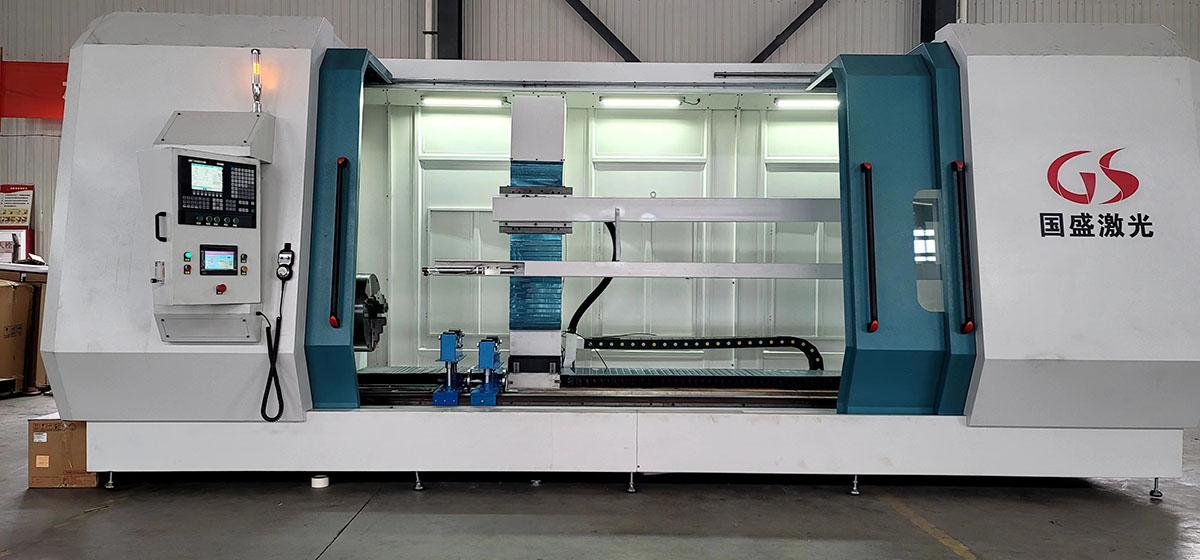
The basic process flow of laser cladding technology in the mold industry is as follows: mold surface inspection and repair plan confirmation → mold surface oil stain cleaning → selection of appropriate coating and processing parameters based on hardness requirements → cladding processing → post-processing surface repair and inspection before delivery. The steps and precautions for each process are:
1. Mold Surface Inspection and Maintenance Plan Confirmation
Check the mold for cracks, scratches, pits, and whether the processing area is flat or has an R-angle. Determine the repair plan based on different issues and appropriately grind the areas that need treatment.
2. Cleaning of Mold Surface Oil Stains
Use cleaning fluid to remove scale, oil stains, grease, paint, etc., to improve the surface cladding effect.
3. Selection of Appropriate Coating and Processing Parameters Based on Hardness Requirements
Choose suitable power, focal length, spot size, and coating (e.g., iron-based powder for cast iron) according to the maintenance plan and customer requirements.
4. Cladding Processing
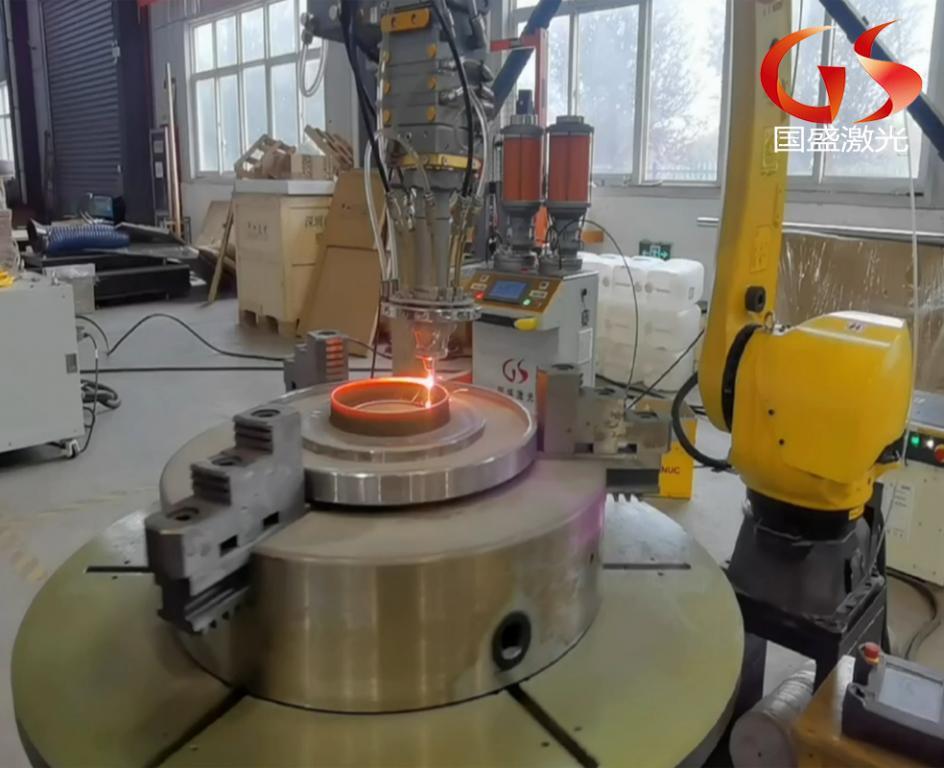
The coating is evenly spread by the equipment, and the laser emits a laser beam that is refracted through internal lenses to act on the processing surface, forming a complete metallurgical bond between the coating layer and the substrate surface.
5. Post-Processing Mold Surface Repair
Fitters grind and polish the cladded surface to ensure the mold gap and surface roughness meet requirements.
6. Inspection Before Delivery
Check whether the post-processing hardness and surface roughness meet customer requirements. If they do not, the process must be redone.
Characteristics of Laser Cladding Technology:
1. Uniform and refined coating structure with low defect rate;
2. High coating hardness, up to 50~62 HRC, with excellent wear and corrosion resistance;
3. Metallurgical bond between the coating and the substrate, ensuring high bonding strength;
4. Coating thickness can range from 0 to 10 mm depending on the situation;
5. Coating materials can be metals, alloys, or metal-ceramics;
6. Substrates can be various steels and cast iron, as well as other metal and alloy materials;
7. Can form gradient coatings with composition and hardness layers consisting of base, intermediate, and outer layers;
8. Small heat-affected zone and minimal thermal deformation of the substrate;
Advantages of Laser Cladding Technology:
1. Low dilution rate; small heat-affected zone on the substrate;
2. Forms a metallurgical bond with the substrate, with bonding strength exceeding 95%;
3. Uniform cladding layer and substrate, without coarse casting structures;
4. Fine cladding layer and interface structure with small grains;
5. No defects such as voids, inclusions, or cracks;
6. The substrate surface only slightly melts during laser processing, with no thermal deformation after processing;
7. Good wettability between the cladding layer and the substrate, high bonding strength, and easy automation;
Laser cladding technology optimizes resource allocation, conserves valuable and rare metal materials, reduces energy consumption, and saves costs. Laser cladding repair technology is pollution-free, non-hazardous, and plays a strong role in environmental protection, belonging to green remanufacturing engineering. Guosheng Laser is a high-tech enterprise specializing in the research, development, manufacturing, and sales of automated laser cladding equipment, high-speed laser cladding equipment, laser quenching equipment, laser welding equipment, and 3D printing equipment.
The power density of the high-speed laser cladding developed by Guosheng Laser is 5-10 times that of conventional laser cladding. The newly developed mobile laser cladding equipment eliminates the need for disassembly, transportation, repair, and installation at different locations, reducing labor intensity and repair time for workers, minimizing enterprise downtime, and avoiding the costs of replacing new parts and transportation. The developed eight-axis linkage laser cladding equipment can be configured with robots of different specifications based on customer application scenarios, and can be equipped with positioners, rotary tables, and sliding tables to adapt to laser cladding processing and surface treatment of workpieces of various types.
| Industry Category | Others |
|---|---|
| Product Category | |
| Brand: | 国盛激光 |
| Spec: | |
| Manufacturer: | 西安国盛激光 |
| Origin: | 116101 |


