


Application of Laser Cladding Technology in Rotor Blade Repair
Contact Info
- Add:西安市国家民用航天产业基地航天基地299号西安建工科技创业基地十号楼4层, Zip:
- Contact: 段纯
- Tel:17392761868
- Email:gsjgkj@163.com
Other Products


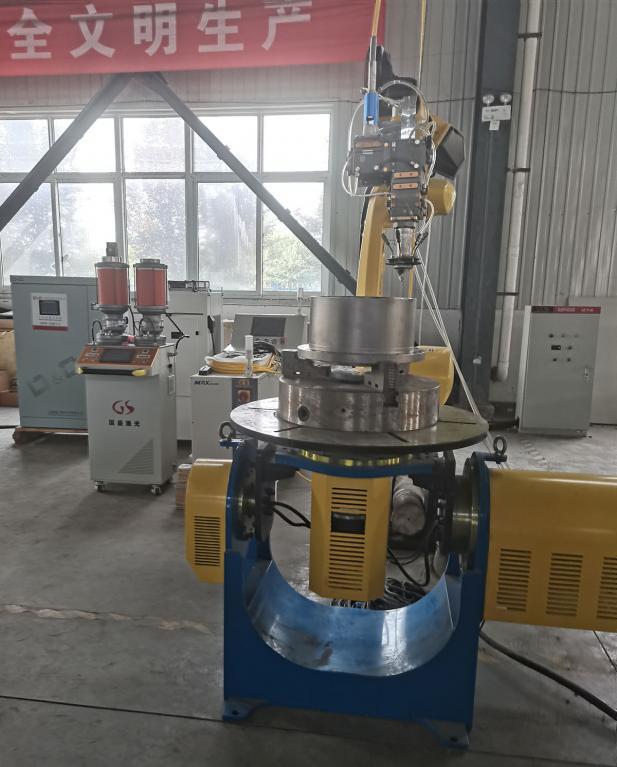
The method for repairing parts can be accomplished using laser cladding technology. Based on the working conditions of the workpiece, laser cladding is applied to various metal components to endow them with properties such as heat resistance, corrosion resistance, wear resistance, oxidation resistance, fatigue resistance, or lightweight characteristics. The surface repair layer also possesses electrical and magnetic properties. Laser cladding repair is a rapid cooling process. During cladding, the heat input to the repaired workpiece is minimal, the heat-affected zone is small, and the cladding layer has a fine microstructure, making it easy to automate. Therefore, laser cladding repair offers significant advantages for components such as rotors. Laser cladding technology not only addresses a series of technical challenges inherent in traditional electric welding, such as unavoidable thermal deformation and thermal fatigue damage, as well as heat treatment processes like argon arc welding, but it also resolves the inconsistency of poor bonding strength between the coating and the substrate in traditional cold treatment processes like electroplating and spraying. This provides an excellent approach for surface repair.
Repair of Rotor Blades
Rotor blades, also known as moving blades, are blades that rotate at high speeds along with the rotor. Energy conversion between the airflow and the rotor is achieved through the high-speed rotation of the blades. Rotor blades endure significant mass inertial forces, substantial aerodynamic forces, and vibrational loads. They are also subjected to corrosion and oxidation from environmental media, as well as erosion from high-speed particles. However, their processing is challenging, and turbine rotor blades must withstand high temperatures. During operation, rotor blades are critical components that directly impact engine performance, reliability, and lifespan. Their working conditions are extremely harsh, making them prone to damage. Consequently, the requirements for material properties are significantly heightened, leading to increased economic costs for materials. This also creates a broad market for their repair. The application of laser cladding technology on rotor blades has been extensively studied, providing a favorable premise for its use in repair.
1. Repair of Aeroengine Blades
Currently, most aeroengine blades are made of cast nickel-based superalloys and directionally solidified nickel-based superalloys. Cast nickel-based high-temperature blades and directionally solidified blades may have local defects during production, such as shrinkage cavities and porosity.
Laser cladding offers the advantages of localized heating and low heat input. Additionally, the ultra-high temperature gradient in laser cladding facilitates the directional solidification growth of materials. As a result, extensive research has been conducted domestically and internationally on using laser cladding technology to repair high-value-added blades, and it has been successfully applied in industry. For laser cladding repair of blades, the laser cladding layer has a smaller heat-affected zone and dilution rate compared to tungsten inert gas (TIG) welding coatings, along with a fine microstructure, high hardness, and low porosity. The hardness of the laser cladding layer is higher than that of plasma cladding layers, and it is free of cracks and pores, with excellent bonding at the interface.
2. Repair of Turbine Blades
In the power industry, turbine blades convert the linear motion of high-temperature, high-pressure gas into the rotation of the turbine shaft. There are two main failure modes for turbine blades: one is blade fracture, which primarily occurs at the blade root and is irreparable. The other failure mode is cavitation erosion, which mainly occurs on the top surface or root of the blade. Blades damaged by cavitation erosion can be repaired and reused.
| Industry Category | Others |
|---|---|
| Product Category | |
| Brand: | 国盛激光 |
| Spec: | |
| Manufacturer: | 西安国盛激光 |
| Origin: | 116101 |


