


Advantages and Processing Flow of Laser Cladding Repair for Hubang Piston Rods
Contact Info
- Add:西安市国家民用航天产业基地航天基地299号西安建工科技创业基地十号楼4层, Zip:
- Contact: 段纯
- Tel:17392761868
- Email:gsjgkj@163.com
Other Products


In industrial production, piston rods, as key components of numerous mechanical equipment, have their performance and reliability directly affecting the overall operational efficiency and stability of the equipment. During long-term use, Hubang piston rods inevitably suffer from surface damage and performance degradation due to factors such as wear, corrosion, and fatigue. Traditional repair methods often suffer from poor repair effectiveness, long repair cycles, and high costs, making it difficult to meet the demands of modern industry for efficient and high-quality repairs. The emergence of laser cladding repair technology provides a new and efficient solution for the repair of Hubang piston rods.
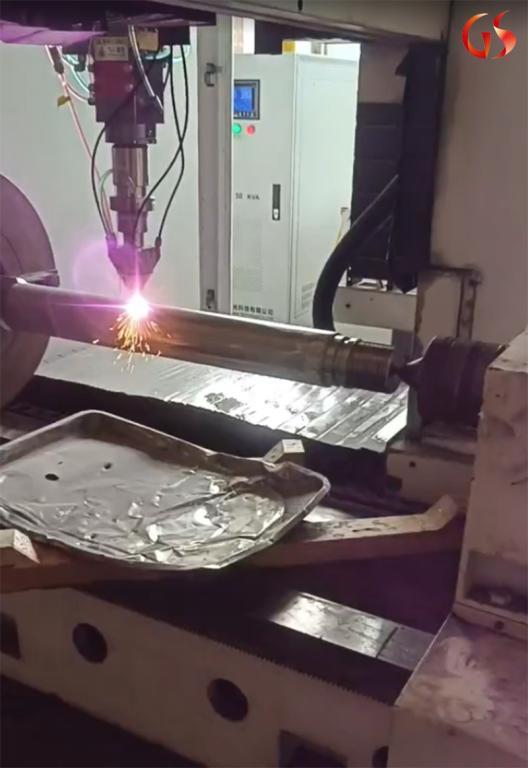
I. Advantages of Laser Cladding Repair for Hubang Piston Rods
Significantly Enhanced Wear and Corrosion Resistance: To address the common wear and corrosion issues faced by Hubang piston rods, laser cladding can utilize alloy powders containing high-hardness carbide particles (such as WC-reinforced nickel-based alloy powders) to improve wear resistance. In corrosive environments, stainless steel-based alloy powders or nickel-based corrosion-resistant alloy powders can be selected to greatly enhance the piston rod's corrosion resistance, significantly extending its service life under harsh working conditions.
1. Minimal Heat-Affected Zone: During the laser cladding process, the laser beam's energy is highly concentrated and its action time is extremely short. The heat-affected zone of the base material is typically controlled within a very small range, generally between 0.1 - 0.5mm. This effectively avoids changes in the microstructure and properties of the base material due to high temperatures, as well as issues such as deformation, thereby preserving the original performance and dimensional accuracy of the piston rod base to the greatest extent.
2. High-Precision Repair: The laser beam has extremely high energy density and precise focusing control, enabling repair operations at millimeter or even smaller scales. For complex-shaped damaged areas or fine structural parts on the surface of Hubang piston rods, precise repairs can be achieved, meeting high-precision repair requirements.
3. Environmental Friendliness and Energy Efficiency: Compared to traditional repair methods, laser cladding technology does not require the use of large amounts of chemicals and solvents, reducing environmental pollution and waste emissions. Additionally, due to its high energy utilization rate, the repair process consumes less energy, aligning with the principles of green manufacturing and sustainable development.
4. High Repair Efficiency: Laser cladding repair is fast, allowing for the completion of repairs on Hubang piston rods in a relatively short time. This significantly reduces equipment downtime, lowers production losses caused by equipment maintenance, and improves the production efficiency of enterprises.
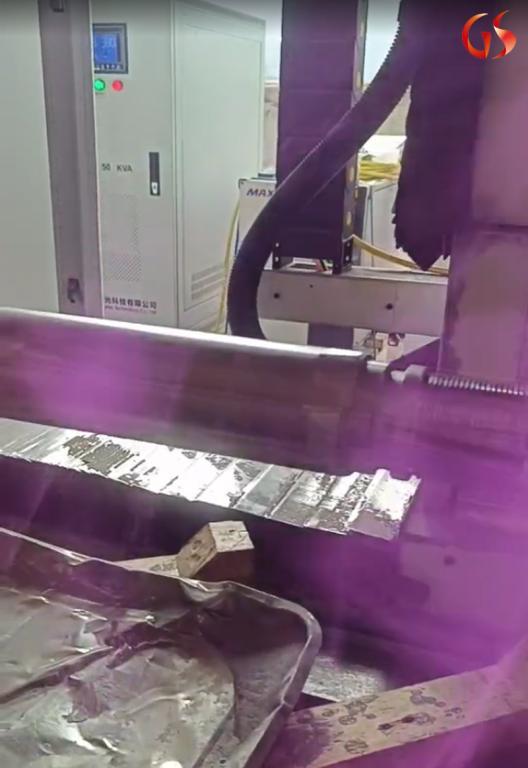
II. Laser Cladding Repair Process for Hubang Piston Rods
1. Workpiece Inspection and Preprocessing
Comprehensive Inspection: Conduct a detailed surface inspection of the damaged Hubang piston rod, including the use of non-destructive testing techniques such as ultrasonic testing and magnetic particle testing, to determine the type (e.g., wear, scratches, corrosion pits), extent, and scope of surface damage. Simultaneously, measure dimensional parameters such as the deformation of the piston rod to provide accurate data for formulating the subsequent repair plan.
Surface Cleaning: Use chemical cleaning, ultrasonic cleaning, and other methods to thoroughly remove oil stains, rust, impurities, etc., from the surface of the piston rod to be repaired, ensuring surface cleanliness and providing a good foundation for subsequent laser cladding.
Preprocessing: If the piston rod is deformed, it needs to be corrected using straightening equipment. Remove existing plating layers, oxide layers, etc., from the cladding area, typically through machining methods such as turning or grinding, to achieve a certain level of flatness and surface roughness on the surface to be repaired. This ensures uniform energy absorption during the laser cladding process and the quality of the cladding layer.
2. Laser Cladding Repair Processing
Equipment Calibration: Based on the material, dimensions, and selected alloy powder characteristics of the Hubang piston rod, finely calibrate the laser cladding equipment. This includes optimizing key parameters such as laser power, scanning speed, powder feed rate, and spot diameter to ensure stable equipment operation and meet the stringent requirements of the repair process for energy input, powder delivery, and cladding quality.
Alloy Powder Selection: Precisely select the appropriate alloy powder based on the specific working environment and performance requirements of the piston rod. For example, in high-wear environments, choose alloy powders reinforced with high-hardness carbides; in environments with corrosive media, select corrosion-resistant alloy powders.
Cladding Process Control: Accurately install the preprocessed piston rod on the worktable of the laser cladding equipment. Use the CNC system to precisely control the scanning path and speed of the laser beam while activating the powder feeder to uniformly deliver the alloy powder into the laser melt pool. During the cladding process, use sensors to monitor the state of the melt pool in real time, such as temperature and shape, and adjust process parameters promptly based on feedback to ensure the cladding layer is uniform, dense, and free from defects such as pores and cracks.
3. Post-Processing Steps After Laser Cladding Repair
Surface Finishing: The surface of the piston rod after laser cladding has a relatively high roughness and requires finishing. Typically, an external cylindrical grinder is used to grind the surface of the cladding layer, precisely controlling dimensional accuracy and surface roughness to meet the original usage requirements of the piston rod and restore its fit accuracy and surface quality with other components.
Quality Inspection: Use various advanced inspection methods to conduct a comprehensive quality inspection of the repaired piston rod. Perform hardness testing to check if the hardness of the cladding layer meets design requirements; use metallographic analysis to observe the microstructure and metallurgical bonding of the cladding layer; employ non-destructive testing to check for internal defects in the cladding layer; and conduct performance tests such as wear resistance and corrosion resistance to ensure the repaired piston rod meets performance requirements under actual working conditions.
Protective Treatment: Apply protective measures to the qualified piston rod, such as coating with anti-rust paint or installing protective sleeves, to prevent corrosion and damage during transportation, storage, and use, further extending the service life of the piston rod.
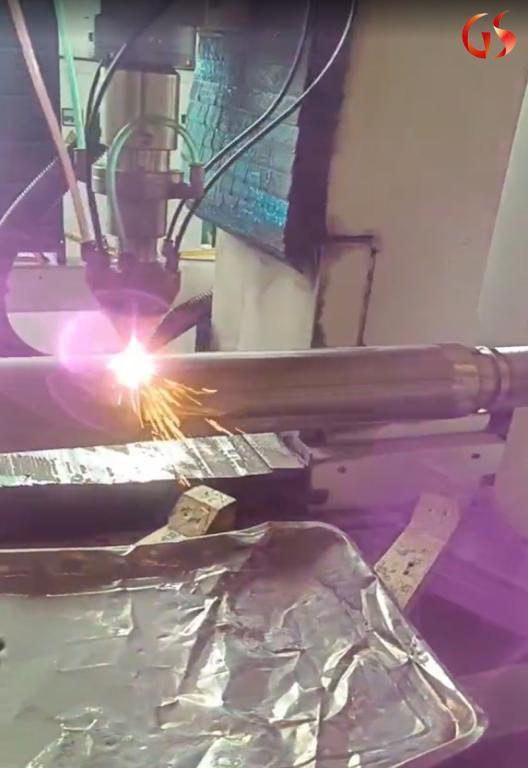
III. Practical Application Results
Hubang piston rods repaired using laser cladding technology have demonstrated outstanding performance improvements in practical applications. The dense and high-performance cladding layer formed on the surface not only exhibits excellent wear and corrosion resistance, effectively resisting wear and corrosive media during operation, but also possesses high microhardness and shear strength, enabling it to withstand greater working loads and complex stresses.
Numerous practical cases show that the service life of repaired Hubang piston rods under the same working conditions has been significantly extended, greatly reducing the frequency of equipment maintenance and replacement, and lowering equipment maintenance and production costs for enterprises. Additionally, due to the short repair cycle, equipment can be quickly put back into operation, improving production efficiency and economic benefits, and providing strong support for stable production and sustainable development of enterprises.
In summary, laser cladding repair technology has significant technical advantages and broad application prospects in the field of Hubang piston rod repair. With the continuous development and refinement of laser technology, it is believed that this technology will be promoted and applied in more areas, making greater contributions to the efficient operation and sustainable development of industrial production.
| Industry Category | Others |
|---|---|
| Product Category | |
| Brand: | 国盛激光 |
| Spec: | |
| Manufacturer: | 国盛激光 |
| Origin: | 116101 |


