


Laser Quenching Repair for Core Wear Parts of Large Equipment
Contact Info
- Add:西安市国家民用航天产业基地航天基地299号西安建工科技创业基地十号楼4层, Zip:
- Contact: 段纯
- Tel:17392761868
- Email:gsjgkj@163.com
Other Products


In industrial production, key wear-resistant components of large equipment such as rollers, gears, and molds often experience performance degradation or even failure due to long-term exposure to high-intensity, high-frequency friction and wear. To enhance the service life and performance of these wear-resistant parts, laser quenching repair technology has emerged.
The principle of laser quenching repair technology is similar to conventional heat treatment, both involving rapid austenitization of the material surface through heating, followed by rapid cooling for quenching and strengthening. However, the advantage of laser quenching lies in its extremely short heating time, small area, and fast cooling speed, enabling precise temperature control and thermal penetration depth control. This characteristic allows laser quenching to form a uniform and dense hardened layer when repairing key wear-resistant components of large equipment, significantly improving the material's hardness and wear resistance.
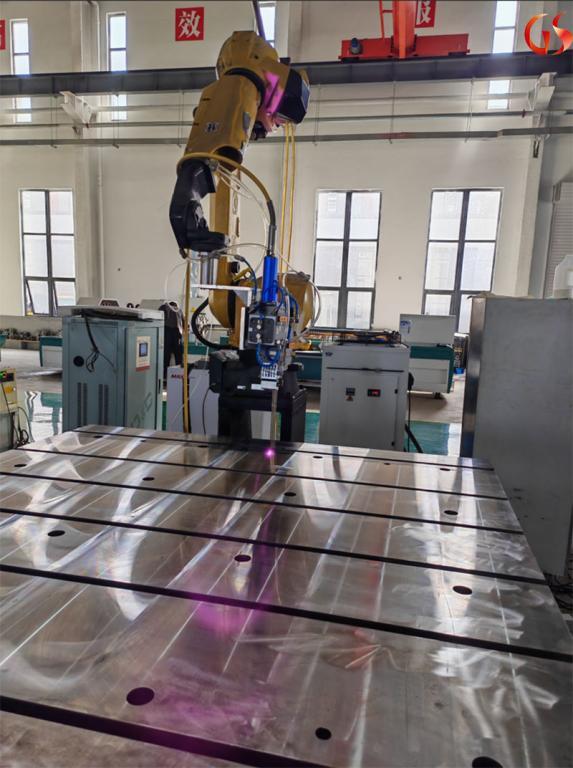
In the laser quenching repair process for key wear-resistant components of large equipment, pretreatment is a crucial step. Pretreatment includes cleaning oil stains and impurities, ensuring surface smoothness, and applying laser-absorbing coatings to improve laser absorption. This step ensures effective heat transfer and uniform heating of the material during the laser quenching process.
Next is the surface preheating step. Preheating reduces thermal stress during laser quenching, preventing crack formation. Modern laser quenching equipment is typically equipped with preheating temperature-controlled worktables, which preheat the surface of wear-resistant parts using nano-infrared ring heating coils. The preheating temperature is generally controlled within a specific range to ensure the effectiveness of laser quenching and the stability of the material.
Laser quenching is the core step of the process. The laser quenching device transmits high-power laser beams to scan the surface of the wear-resistant part. Parameters such as laser spot size, shape, and scanning speed can be adjusted based on the material of the wear-resistant part and repair requirements. During laser quenching, precise control of laser output power and quenching range is necessary to achieve the desired hardened layer depth and hardness. By adjusting laser parameters, hardened layers with varying hardness and depth can be achieved to meet the needs of different wear-resistant parts.
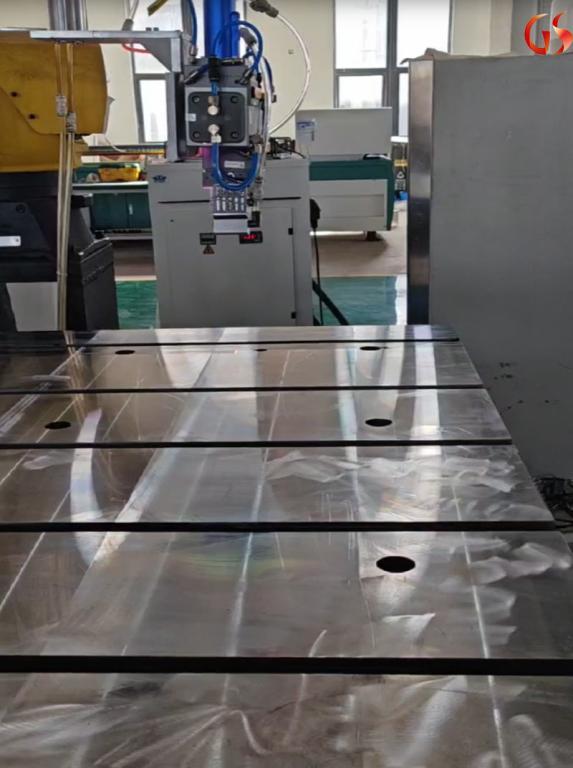
After completing laser quenching, post-treatment steps are equally important. Post-treatment includes cooling, cleaning, and inspection. During cooling, drastic temperature changes must be avoided to prevent thermal stress. After cleaning, testing equipment such as microhardness testers can be used to inspect the hardness, depth, and microstructure of the hardened layer to ensure repair quality. This step ensures that the repaired wear-resistant parts meet usage requirements and have an extended service life.
Laser quenching repair technology for key wear-resistant components of large equipment offers significant advantages over traditional surface treatment technologies. First, laser quenching technology can form a uniform hardened layer through precise control of laser output power and scanning speed, significantly improving the hardness and wear resistance of wear-resistant parts. Second, during laser quenching, there is no need for extensive movement of the wear-resistant parts, reducing deformation and errors during the repair process. Additionally, laser quenching repair technology is efficient and environmentally friendly, helping to reduce production costs and environmental pollution.
In practical applications, laser quenching repair technology for key wear-resistant components of large equipment has achieved remarkable results. For example, in roller repair, laser quenching technology can significantly improve the hardness and wear resistance of rollers, extending their service life. In gear repair, laser quenching technology can repair wear and cracks on gear tooth surfaces, enhancing their load-bearing capacity and transmission efficiency. In mold repair, laser quenching technology can repair surface wear and deformation of molds, improving their service life and product quality.

It is worth mentioning that the application of laser quenching repair technology for key wear-resistant components of large equipment is continuously expanding and innovating. With the ongoing development and refinement of laser technology, laser quenching repair technology will become more efficient, precise, and environmentally friendly. For instance, by optimizing laser parameters and process workflows, the quality and stability of hardened layers can be further improved. By introducing advanced detection technologies and intelligent control systems, the automation and intelligence of the laser quenching repair process can be achieved. These innovations will promote broader and deeper applications of laser quenching repair technology for key wear-resistant components of large equipment.
Additionally, laser quenching repair technology still faces some challenges and issues. For example, how to further improve laser absorption and utilization rates to reduce energy consumption and costs; how to optimize thermal stress and deformation control during laser quenching to enhance repair quality and stability; and how to expand the application fields and scope of laser quenching repair technology to meet the repair needs of more types of key wear-resistant components in large equipment. These challenges and issues require continuous exploration and innovation by researchers and technicians to drive the ongoing progress and development of laser quenching repair technology.
In summary, laser quenching repair technology for key wear-resistant components of large equipment is an efficient, precise, and environmentally friendly surface treatment technology. Through proper pretreatment, precise control, and post-treatment, the hardness and wear resistance of wear-resistant parts can be significantly improved, extending their service life. With the continuous development and refinement of laser technology, it is believed that the application of laser quenching repair technology for key wear-resistant components of large equipment will become increasingly widespread. For professionals in related industries, mastering the principles and operational methods of laser quenching repair technology will help improve product quality and production efficiency, injecting new vitality into enterprise development. At the same time, researchers and technicians should continue to explore and innovate to drive the ongoing progress and development of laser quenching repair technology, providing more efficient and reliable surface treatment technology solutions for industrial production.
| Industry Category | Others |
|---|---|
| Product Category | |
| Brand: | 国盛激光 |
| Spec: | |
| Manufacturer: | 国盛激光 |
| Origin: | 116101 |


