


Laser Cladding Repair Processing for Inner Holes of Metallurgical Core Components
Contact Info
- Add:西安市国家民用航天产业基地航天基地299号西安建工科技创业基地十号楼4层, Zip:
- Contact: 段纯
- Tel:17392761868
- Email:gsjgkj@163.com
Other Products


Laser cladding repair processing for the inner holes of metallurgical core components is an important technology in modern industry, especially in the metallurgical sector, where it is widely applied and yields significant results.
I. Steps of Laser Cladding Repair for Inner Holes of Metallurgical Core Components
Laser cladding repair processing for the inner holes of metallurgical core components is a complex process, typically involving the following key steps:
1. Workpiece Inspection and Pre-processing
Before repair, a detailed inspection of the workpiece is necessary to determine the extent of damage on the inner hole surface and the cladding area. This includes checking for damage to the plating layer, deformation, and whether corrective treatment is needed. If the workpiece is deformed, it can be corrected using a four-column hydraulic press in conjunction with a laser pointer. After removing the plating layer from the cladding area, turning is also required to ensure surface quality before cladding.
2. Pre-cladding Preparation
Pre-cladding preparations include clamping the workpiece, removing rust and oil from the surface, and cleaning the laser lens. The workpiece must be clamped onto a rotating device using specialized fixtures to ensure uniform heating during the cladding process. Surface cleaning prevents impurities from affecting cladding quality, while cleaning the laser lens ensures precise focusing of the laser beam.
3. Laser Cladding Process
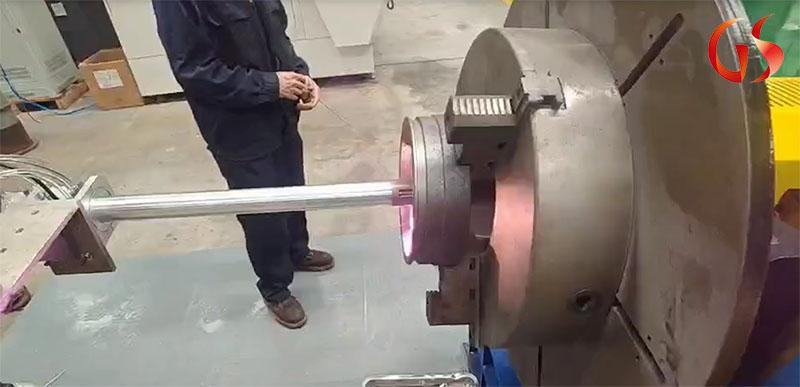
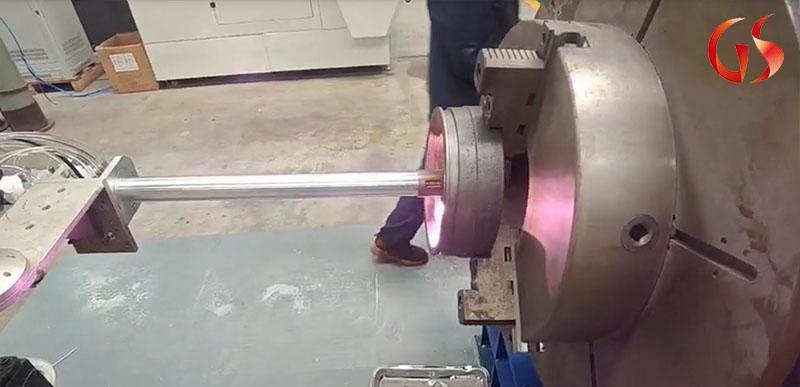
The laser cladding process is the core of the entire repair technology. Through the coordinated operation of three-axis motion equipment and rotating devices, parameters such as scanning speed, overlap amount, and other settings are configured. Simultaneously, by adjusting the powder feed rate of the powder feeder, the predetermined cladding thickness is achieved. During cladding, the laser beam forms a molten pool on the workpiece surface, where the powder material rapidly melts and bonds with the substrate, forming a metallurgically bonded coating. To ensure cladding quality, circulating water cooling is applied to the inner hole to reduce deformation caused by heat accumulation.
4. Post-processing and Testing
After cladding, the workpiece surface is often rough and requires finishing. External cylindrical grinding is typically used to achieve the required surface roughness and restore the original dimensions. The repaired components must also undergo assembly, pressure testing, and other evaluations to ensure their performance meets usage requirements.
II. Application Examples
Laser cladding repair technology for the inner holes of metallurgical core components is widely used in various fields. Below are some typical examples:
1. Roll Repair
In the metallurgical industry, rolls are critical components of hot rolling machinery, and their surfaces often fail due to wear and corrosion. Using laser cladding technology to repair rolls can restore their surface hardness and wear resistance, extending their service life.
2. Journal Repair
Journals are important components in mechanical equipment but are highly prone to wear. Laser cladding repair can restore the original dimensions of journals, improve their surface hardness and wear resistance, and thereby extend their service life.
3. Fan Shaft Laser Repair
Fan shafts are prone to failure due to fatigue and wear during long-term operation. Laser cladding technology enables localized repair of fan shafts, restoring their strength and wear resistance, reducing downtime, and improving production efficiency.
4. Cylinder Inner Hole Laser Repair
The inner holes of cylinders are susceptible to wear due to long-term exposure to high pressure and friction. Laser cladding technology can repair cylinder inner holes, restoring their original dimensions and surface quality, improving sealing performance, and extending service life.
5. Gear Surface Repair
Gear components are critical parts in mechanical systems for transmitting loads and motion. Under cyclic loading and long-term wear conditions, gear surfaces often fail due to damage. Laser cladding technology enables targeted repair of damaged gear surfaces, restoring their shape and strength, and improving the operational stability of mechanical systems.
III. Conclusion
Laser cladding repair processing for the inner holes of metallurgical core components is an efficient, environmentally friendly, and low-cost repair technology. It not only restores the original dimensions and performance of components but also extends their service life, reducing the cost and time required for replacing new components. With the continuous development and refinement of laser technology, the application prospects of laser cladding repair technology in the metallurgical industry will become even broader. In the future, we can expect this technology to play a significant role in more fields, contributing further to industrial production and economic development.
| Industry Category | Others |
|---|---|
| Product Category | |
| Brand: | 国盛激光 |
| Spec: | |
| Manufacturer: | 国盛激光 |
| Origin: | 116101 |


