


Glass fiber for friction material reinforcement
Other Products


Glass Fiber for Friction Material Reinforcement
Glass fiber is a type of inorganic non-metallic material with excellent performance. It comes in various types and offers advantages such as good insulation, strong heat resistance, excellent corrosion resistance, and high mechanical strength. However, its drawbacks include brittleness and poor wear resistance. It is manufactured from six types of ores, including pyrophyllite, quartz sand, limestone, dolomite, borocalcite, and boromagnesite, through processes such as high-temperature melting, wire drawing, spooling, and weaving. The diameter of a single filament ranges from a few micrometers to over twenty micrometers, equivalent to 1/20 to 1/5 of a human hair strand. Each bundle of fiber filaments consists of hundreds or even thousands of single filaments. Glass fiber is commonly used as a reinforcing material in composites, electrical insulation materials, thermal insulation materials, circuit substrates, and various other fields in the national economy.
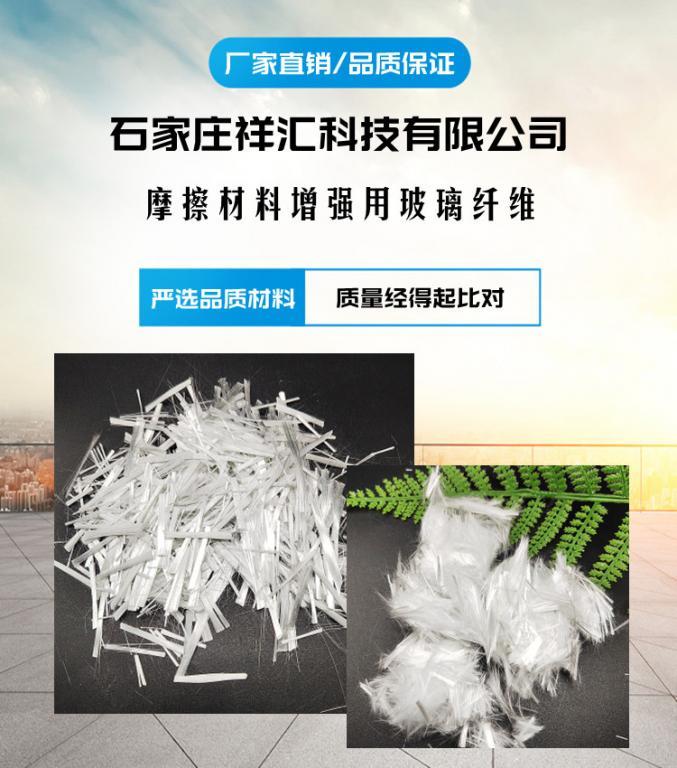
Properties of Glass Fiber Material
Melting Point: Glass is an amorphous material with no fixed melting point. Its softening point is generally considered to be between 500°C and 750°C.
Boiling Point: Approximately 1000°C
Density: 2.4–2.76 g/cm³
When used as a reinforcing material in reinforced plastics, glass fiber is characterized by high tensile strength. Under standard conditions, its tensile strength ranges from 6.3 to 6.9 g/d, and under moist conditions, it ranges from 5.4 to 5.8 g/d. It exhibits excellent heat resistance, with no significant impact on strength at temperatures up to 300°C. It also possesses outstanding electrical insulation properties, making it an excellent material for electrical insulation, thermal insulation, and fireproofing.
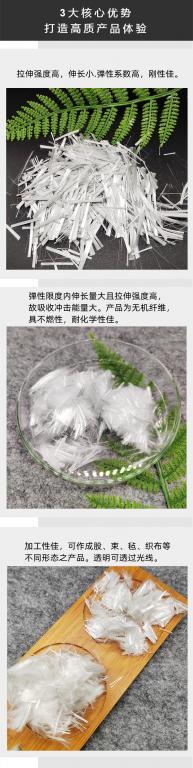
Functions of Glass Fiber:
1. Enhance rigidity and hardness: The addition of glass fiber increases the strength and rigidity of plastics but reduces their toughness. Example: Flexural modulus.
2. Improve heat resistance and heat deflection temperature: For instance, glass fiber-reinforced nylon exhibits a heat deflection temperature at least twice that of unreinforced nylon. Generally, glass fiber-reinforced nylon can withstand temperatures above 220°C.
3. Improve dimensional stability and reduce shrinkage.
4. Reduce warping and deformation.
5. Reduce creep.
6. Affect flame retardancy: Due to the wick effect, it may interfere with flame retardant systems and reduce flame retardant effectiveness.
7. Reduce surface gloss.
8. Increase moisture absorption.
9. Glass fiber treatment: The length of glass fiber directly affects the brittleness of the material. Poorly treated short fibers may reduce impact strength, while well-treated long fibers can improve impact strength.
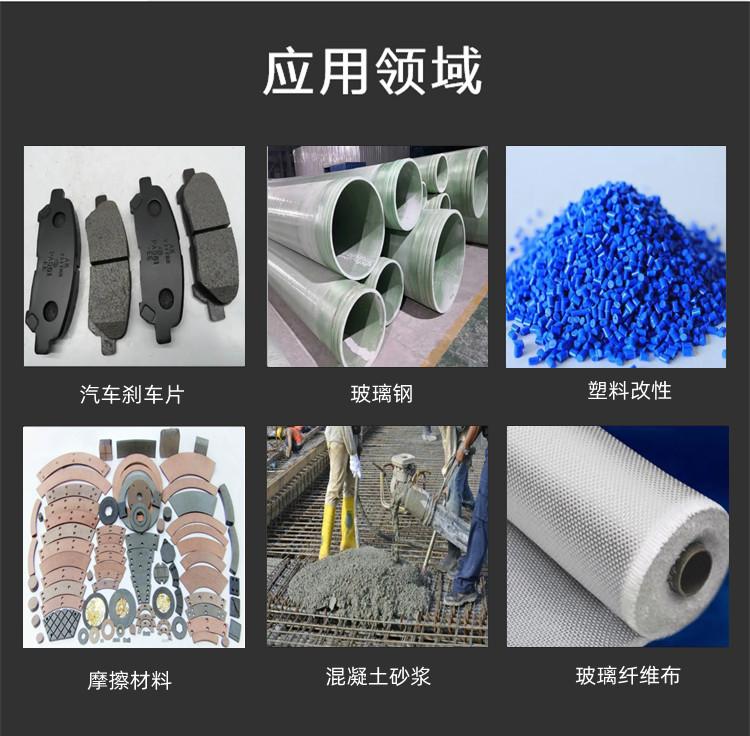
| Industry Category | Construction & Building Materials/Thermal Insulation Materials/Other Insulation Materials |
|---|---|
| Product Category | |
| Brand: | 祥汇科技 |
| Spec: | 3-10mm |
| Stock: | 9999 |
| Manufacturer: | 祥汇科技 |
| Origin: | 111301 |


