


Alkali-free glass fiber for friction materials
Other Products


Alkali-Free Glass Fiber for Friction Materials
Melting Point: Glass is an amorphous material with no fixed melting point. Its softening point is generally considered to be between 500~750°C.
Boiling Point: Approximately 1000°C
Density: 2.4~2.76 g/cm³
When used as a reinforcement material in reinforced plastics, glass fiber is characterized by high tensile strength. Under standard conditions, its tensile strength ranges from 6.3 to 6.9 g/d, and under wet conditions, it ranges from 5.4 to 5.8 g/d. It exhibits excellent heat resistance, with no effect on strength at temperatures up to 300°C. It has superior electrical insulation properties, making it an excellent electrical insulating material. It is also used in thermal insulation and fireproof materials. 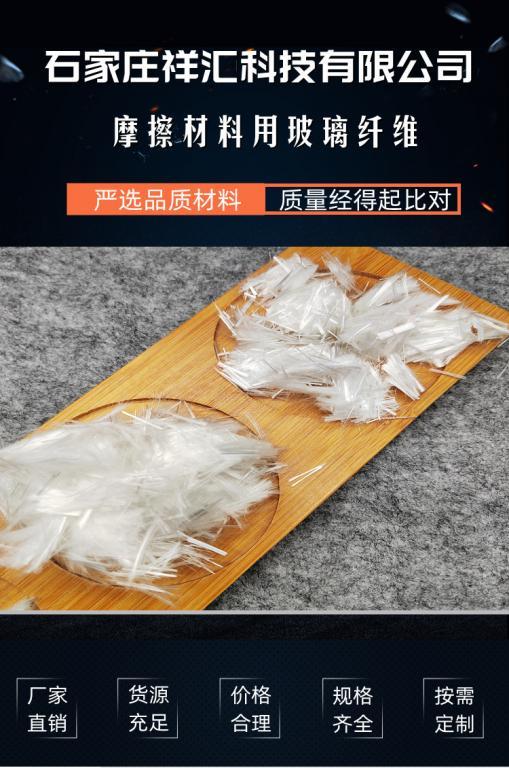
Main Characteristics of Glass Fiber
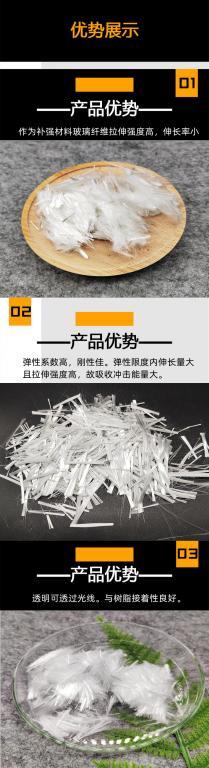
Raw Materials and Applications: Glass fiber has higher temperature resistance than organic fibers, is non-combustible, corrosion-resistant, offers good thermal and acoustic insulation, high tensile strength, and excellent electrical insulation. It is used to manufacture reinforced plastics or reinforced rubber. As a reinforcement material, glass fiber has the following characteristics:
(1) High tensile strength, low elongation (3%).
(2) High elastic modulus and excellent rigidity.
(3) Large elongation within the elastic limit and high tensile strength, resulting in high impact energy absorption.
(4) As an inorganic fiber, it is non-combustible and has good chemical resistance.
(5) Low water absorption.
(6) Excellent heat resistance.
(7) Good processability, can be made into various forms such as strands, bundles, mats, and fabrics.
(8) Transparent, allowing light transmission.
(9) Good adhesion with resins.
(10) Cost-effective.
(11) Difficult to burn, can melt into glass beads at high temperatures.
Functions of Glass Fiber:
1. Enhance rigidity and hardness: The addition of glass fiber can improve the strength and rigidity of plastics, but it also reduces toughness. Example: Flexural modulus.
2. Improve heat resistance and heat deflection temperature: For example, in nylon, the addition of glass fiber increases the heat deflection temperature by at least two times. Generally, glass fiber-reinforced nylon can withstand temperatures above 220°C.
3. Improve dimensional stability and reduce shrinkage.
4. Reduce warping and deformation.
5. Reduce creep.
6. For flame retardancy, the wick effect may interfere with the flame retardant system and affect flame retardant performance.
7. Reduce surface gloss.
8. Increase moisture absorption.
9. Glass fiber treatment: The length of glass fiber directly affects the brittleness of the material. Improperly treated short fibers may reduce impact strength, while well-treated long fibers can improve impact strength. 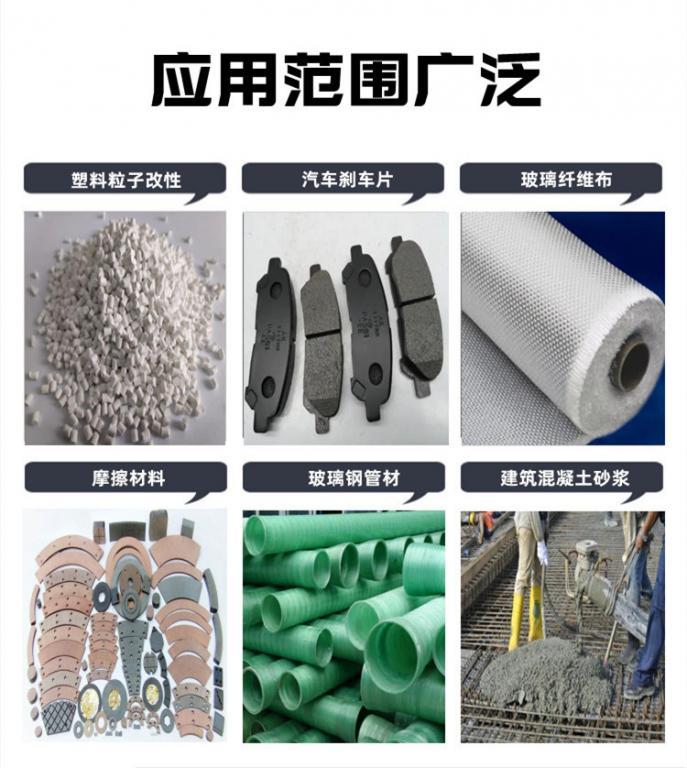
| Industry Category | Construction & Building Materials/Thermal Insulation Materials/Other Insulation Materials |
|---|---|
| Product Category | |
| Brand: | 祥汇科技 |
| Spec: | 3-10mm |
| Stock: | 9999 |
| Manufacturer: | 河北石家庄 |
| Origin: | 111301 |


