


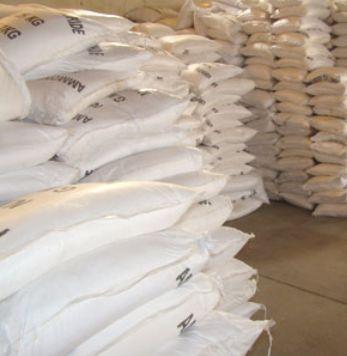
Industrial Ammonium Chloride Packaging
Contact Info
- Add:中国江苏灌云县燕尾临港产业园区, Zip: 222000
- Contact: 乔乃柱 李凤荣
- Tel:0518-85405768 13805135170
- Email:qiaonaizhu@163.com
Other Products
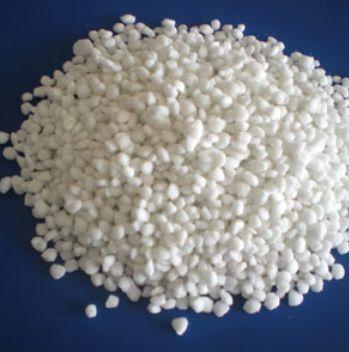


Ammonium chloride is a colorless crystal or white crystalline powder; odorless, with a salty and cool taste; hygroscopic. It is readily soluble in water and slightly soluble in ethanol.
Generic Name:
Ammonium Chloride
English Name:
Ammonium Chloride
Molecular Weight:
53.49
Chemical Formula:
NH4Cl
Alias:
Commonly known as electric salt; electrical powder; salt essence
Properties:
Colorless cubic crystals or white crystalline powder. Salty, cool, and slightly bitter taste, acidic when dissolved in water, with a pH generally around 5.6. Relative density 1.527. Readily soluble in water, slightly soluble in ethanol, soluble in liquid ammonia, insoluble in acetone and ether. Begins to volatilize significantly at 100°C, dissociates into ammonia and hydrogen chloride at 337.8°C, and recombines upon cooling to form extremely fine particles of ammonium chloride, appearing as a dense white smoke that does not settle easily and is very difficult to redissolve in water. Sublimes at 350°C, boiling point 520°C. Low hygroscopicity, but can absorb moisture and cake in damp, rainy weather. Powdered ammonium chloride is highly hygroscopic, especially when wet, with a moisture absorption point generally around 76%. When the relative humidity in the air exceeds the moisture absorption point, ammonium chloride absorbs moisture and tends to cake.
The aqueous solution is weakly acidic, and the acidity increases when heated. Corrosive to ferrous and other metals, particularly copper, but not corrosive to cast iron.
Currently, there are two main production processes for this product: one is the Hou's alkali process invented by the renowned Chinese scientist Hou Debang, which simultaneously produces soda ash and ammonium chloride; the other is as a by-product of potassium salt production, such as potassium carbonate. Ammonium chloride is prone to caking, and anti-caking agents are typically added to prevent product caking.
Solubility of Ammonium Chloride in Water:
0°C: 29.4g 10°C: 33.3g 20°C: 37.2g 30°C: 41.4g 40°C: 45.8g 50°C: 50.4g 60°C: 55.2g 70°C: 60.2g 80°C: 65.6g 90°C: 71.3g 100°C: 77.3g
Ionic Compound
Ammonium chloride is an ionic compound, readily soluble in water, dissociating into ammonium and chloride ions. In the molten state, it forms freely moving ammonium and chloride ions, enabling conductivity. Due to the radius of the ammonium ion (143 pm) being close to that of potassium (133 pm) and rubidium (149 pm) ions, ammonium salts exhibit properties similar to alkali metal salts and often form isomorphous crystals with potassium and rubidium salts, with similar solubility. The unit cell type of ammonium chloride is the cesium chloride type, where chloride ions form a simple cubic lattice, and ammonium ions occupy all the cubic voids, belonging to the cubic crystal system with a simple cubic unit cell.
Uses
Mainly used in dry batteries, storage batteries, ammonium salts, tanning, electroplating, precision casting, medicine, photography, electrodes, adhesives, nutrient for yeast, and dough improvers.
Protection
Highly corrosive; avoid skin contact. The permissible concentration of ammonium chloride fumes in the air is 10 g/m³. Operators should wear work clothes, masks, latex gloves, etc. Equipment should be sealed, and workshop ventilation should be adequate.
Storage and Transportation
Store in a cool, ventilated, and dry warehouse, protecting against moisture. Avoid storage and transportation with acids and alkalis. Protect from rain and direct sunlight during transportation. Handle with care during loading and unloading to prevent packaging damage. In case of fire, use water, sand, or carbon dioxide fire extinguishers.
Technical conditions: Comply with the National Standard of the People's Republic of China. GB/T2946-2008 (effective from August 1, 2009). The product is divided into industrial-grade ammonium chloride and agricultural-grade ammonium chloride. The quality standards for first-grade industrial ammonium chloride are as follows:
(1) Appearance: White crystals
(2) Ammonium chloride content (on a dry basis) ≥ 99.3%
(3) Moisture content ≤ 0.7%
(4) Ignition residue ≤ 0.4%
(5) Iron content ≤ 0.001%
(6) Heavy metal content (as Pb) ≤ 0.0005%
(7) Sulfate content (as SO₄²⁻) ≤ 0.05%
(8) pH value: 4.0–5.8
| Industry Category | Chemicals/Inorganic Salts/Chlorides |
|---|---|
| Product Category | |
| Brand: | |
| Spec: |


