


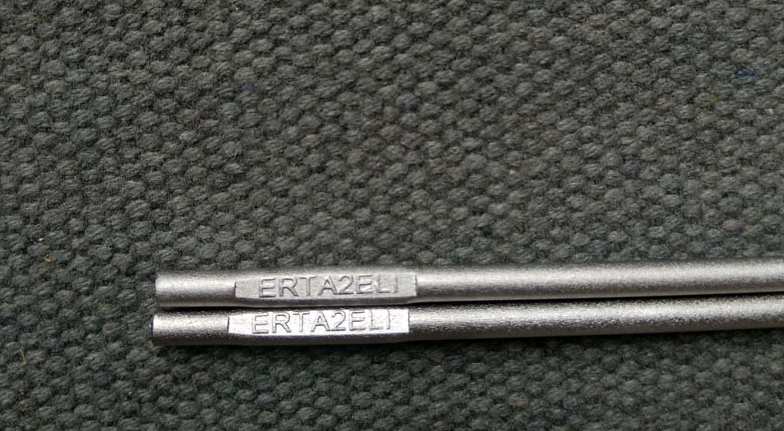
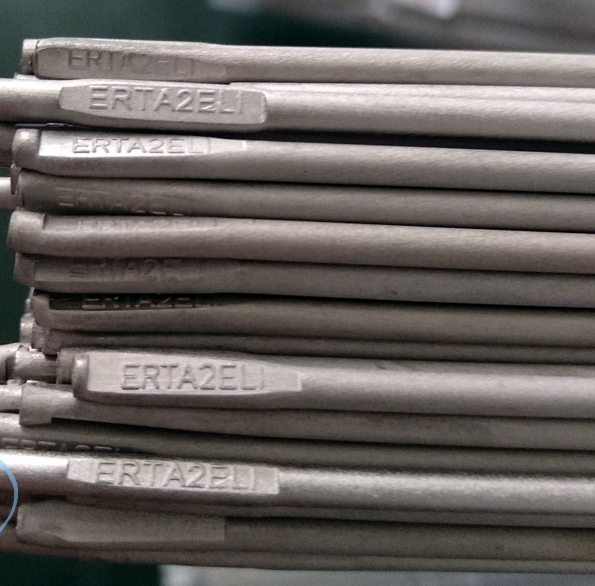
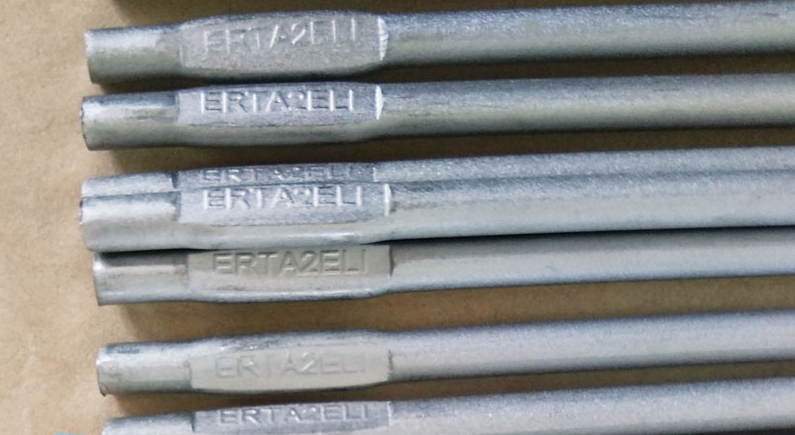
ERTA2 ELI Titanium Welding Wire for Pressure Vessels
Contact Info
- Add:261 Xinxing East Street, Juye Building, Zip:
- Contact: 董经理
- Tel:15832920400
- Email:1037882998@qq.com
Other Products


Grade:ER TA1 ELI ER TA2 ELIER TA3 ELI ER TA4 ELI ER TA9 ERTA10
Common Specifications: Φ0.8 Φ1.0 Φ1.5 Φ2.0 Φ2.4 Φ3.0 Φ3.2
Surface Condition: Pickled, Polished.
Application: Titanium welding wire is used for welding titanium reaction kettles, storage tanks for acidic or alkaline substances, titanium pipes, and titanium equipment.
Ingots used for producing welding wire and filler wire should be melted in a vacuum consumable arc furnace, with no fewer than two melting cycles.
Precautions for Using Titanium Welding Wire
1. Operators and welders should wear clean white fine gauze gloves (cotton gloves are strictly prohibited).
2. The treated welding area must not be touched by hand or come into contact with iron objects.
3. Welding should be performed indoors as much as possible, with an ambient wind speed ≤0.5m/s, avoiding drafts.
4. Use short arc welding whenever possible, with low heat input, and maintain a nozzle-to-workpiece angle of 70–80 degrees.
5. For butt joint tack welding, the gap should generally be around 0.5mm.
6. Each weld should ideally be completed in one pass. If welding must be resumed, the interface should be cleaned beforehand, with an overlap length of 10–15mm.
7. During welding, the torch should not swing side to side, and the melting end of the wire must not leave the gas protection zone.
8. When initiating the arc, gas should be supplied in advance. When extinguishing the arc, do not lift the torch immediately; delay gas cutoff until the temperature drops below 250°C.
9. The distance between the gas protection trailing shield and the torch should be as short as possible, and the gap contacting the pipe wall should be minimized. For pipe butt welding, to achieve single-sided welding with double-sided formation, welding is performed in two steps: one for root welding (which may not require filler material), and another for formation welding. In multi-pass welding, each pass must cool completely before proceeding to the next.
Metallographic Inspection
Transverse metallographic examination (macrostructure) of welding and filler wires should show no cracks, folds, pores, delamination, pipe, metal or non-metallic inclusions, or other defects affecting usability.
Surface and Macroscopic Quality
Welding and filler wire surfaces should be clean and smooth, free of burrs, dents, scratches, scale, folds, or other defects affecting use. There should be no contamination from lubricants or foreign substances.
Longitudinal Bend Properties of Deposited Metal
After bending a longitudinal bend specimen of deposited metal to the specified angle, there should be no open defects in the deposited metal on the tension side exceeding 3mm in length in any direction. Corner defects in the deposited metal of the specimen may be disregarded, but those caused by lack of fusion, slag inclusions, or other internal defects are not acceptable.


| Industry Category | Hardware & Tools/Welding Materials & Accessories/Other Welding Materials |
|---|---|
| Product Category | |
| Brand: | 源铸 |
| Spec: | ERTA2 ELI 3.0mm |
| Stock: | 5000 |
| Manufacturer: | 源铸商贸有限公司 |
| Origin: | 111305 |


