


Silicone Food Grade Sealing Ring O-Ring SIL Waterproof Ring USP Silicone Products
Contact Info
- Add:苏州市工业园区科能路80号, Zip:
- Contact: 任勇刚
- Tel:1505103097
- Email:yongxinkeji001@126.com
Other Products


Food-grade silicone sealing ring O-ring SIL waterproof ring USP silicone
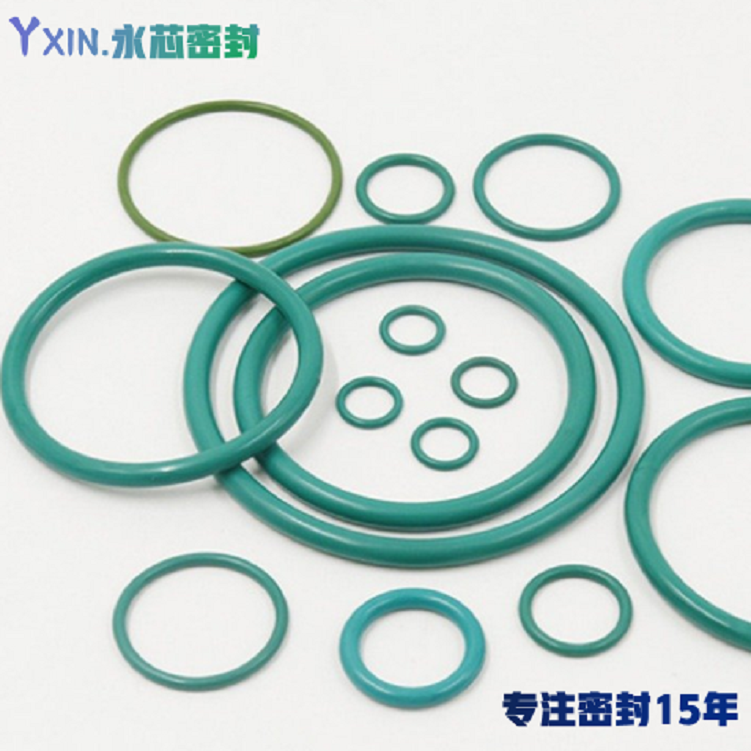
Suzhou Yongxin Technology Co., Ltd. is a supplier of sealing components in motion and control systems, providing sealing solutions for transmission control, automation equipment, and aviation. It sells various seals, hydraulic, pneumatic, and fluid control products and components. In terms of seals, Yongxin offers hydraulic and pneumatic sealing products, including dynamic seals, static seals, sealing rings, oil seals, gaskets, packing, etc.
Silicone rubber is divided into heat-cured and room-temperature-cured types. Heat-cured types include methyl silicone rubber (MQ), methyl vinyl silicone rubber (VMQ, the most widely used with numerous product grades), methyl vinyl phenyl silicone rubber (PVMQ, resistant to low temperatures and radiation), as well as nitrile silicone rubber, fluorosilicone rubber, etc. MQ is a colorless, transparent, highly viscous, plastic linear polymer compound with a backbone composed of silicon and oxygen atoms, methyl side groups attached to silicon, and a molecular weight between 500,000 and 800,000. VMQ is a colorless, transparent, highly viscous, plastic linear polymer compound with a backbone composed of silicon and oxygen atoms, methyl and vinyl side groups attached to silicon, and a molecular weight between 500,000 and 800,000. PVMQ is obtained by introducing diphenyl siloxane segments or methylphenyl siloxane segments into the molecular chain of vinyl silicone rubber.
Temperature range: -60°C (special down to -115°C) to 204°C (special up to 260°C)
O-ring material selection: Silicone rubber
Properties
1. Physical and mechanical properties. At room temperature, the physical and mechanical properties of silicone rubber are inferior to those of general-purpose rubber, but at high temperatures of 150°C and low temperatures of -50°C, its physical and mechanical properties surpass those of general-purpose rubber.
2. Oil and chemical resistance. Ordinary silicone rubber has moderate resistance to oil and solvents.
3. Gas permeability. At room temperature, the permeability of silicone rubber to gases such as air, nitrogen, oxygen, and carbon dioxide is 30-50 times higher than that of natural rubber.
4. Physiological inertness. Silicone rubber is non-toxic, odorless, and tasteless, does not adhere to human tissue, has anticoagulant properties, and causes minimal reaction in body tissues. It is particularly suitable for medical materials.
5. Low-temperature performance. The glass transition temperature of silicone rubber is generally between -70°C and -50°C, with special formulations reaching -100°C, indicating excellent low-temperature performance. This is highly significant for the aerospace and aviation industries.
6. Weather resistance. The Si-O-Si bonds in silicone rubber are highly stable against oxygen, ozone, and ultraviolet light, providing excellent weather resistance without the need for additives.
7. Electrical properties.
Silicone rubber is divided into heat-cured and room-temperature-cured types. Heat-cured types include methyl silicone rubber (MQ), methyl vinyl silicone rubber (VMQ, the most widely used with numerous product grades), methyl vinyl phenyl silicone rubber (PVMQ, resistant to low temperatures and radiation), as well as nitrile silicone rubber, fluorosilicone rubber, etc. MQ is a colorless, transparent, highly viscous, plastic linear polymer compound with a backbone composed of silicon and oxygen atoms, methyl side groups attached to silicon, and a molecular weight between 500,000 and 800,000. VMQ is a colorless, transparent, highly viscous, plastic linear polymer compound with a backbone composed of silicon and oxygen atoms, methyl and vinyl side groups attached to silicon, and a molecular weight between 500,000 and 800,000. PVMQ is obtained by introducing diphenyl siloxane segments or methylphenyl siloxane segments into the molecular chain of vinyl silicone rubber.
Temperature range: -60°C (special down to -115°C) to 204°C (special up to 260°C)
O-ring material selection: Silicone rubber
Silicone rubber has excellent insulation properties, with good corona and arc resistance.
- Fluororubber O-ring seals refer to synthetic high polymers where fluorine atoms are attached to carbon atoms in the main or side chains. The introduction of fluorine atoms imparts excellent heat resistance, oxidation resistance, oil resistance, corrosion resistance, and atmospheric aging resistance to the rubber. They are widely used in aerospace, aviation, automotive, petroleum, and household appliances, and are irreplaceable key materials in the defense industry. Since 1943, various types have been developed, including polyolefin fluororubber, nitroso fluororubber, tetrafluoroethylene-propylene rubber, phosphonitrile fluororubber, and perfluoroether rubber.
Selection can be based on different fluids: including nitrile rubber (NBR), fluororubber (FKM), silicone rubber (VMQ), ethylene-propylene rubber (EPDM), chloroprene rubber (CR), butyl rubber (BU), polytetrafluoroethylene (PTFE), natural rubber (NR), etc.
Fluororubber O-ring seals have high chemical stability and are currently the best among elastomers in terms of media resistance. Type 26 fluororubber is resistant to petroleum-based oils, diester oils, silicone ether oils, silicone oils, inorganic acids, and most organic and inorganic solvents and chemicals, but is not resistant to low molecular weight ketones, ethers, esters, amines, ammonia, hydrofluoric acid, and phosphate-based hydraulic oils. Type 23 fluororubber has similar media resistance to Type 26, with unique advantages: it resists strong oxidizing inorganic acids like nitric acid and concentrated sulfuric acid better than Type 26. After immersion in 98% HNO3 at room temperature for 27 days, its volume swelling is only 13%~15%.
The high-temperature resistance of fluororubber O-ring seals is comparable to that of silicone rubber, making it among the best elastomers. Type 26-41 fluororubber can be used long-term at 250°C and short-term at 300°C; Type 246 fluororubber has even better heat resistance than 26-41. After 100 hours of air heat aging at 300°C, the physical properties of Type 26-41 O-ring seals are comparable to those of Type 246 after the same aging, with elongation at break maintained at around 100% and hardness at 90~95 degrees. Type 246 maintains good elasticity after 16 hours of heat aging at 350°C, and O-ring seals remain elastic after 110 minutes at 400°C. After 110 minutes at 400°C, compounds containing spray carbon black, thermal carbon black, or carbon fibers show an increase in elongation of about 1/2 to 1/3 and a decrease in strength of about 1/2, while still maintaining good elasticity. Type 23-11 fluororubber can be used long-term at 200°C and short-term at 250°C.
Fluororubber O-ring seals have excellent weather aging resistance and ozone resistance. According to reports, DuPont's Viton A performed satisfactorily after ten years of natural storage, and fluororubber O-ring seals showed no significant cracking after 45 days in air with an ozone concentration of 0.01%. Type 23 fluororubber also has good weather and ozone resistance.
Fluororubber O-ring seals have excellent physical and mechanical properties. Type 26 fluororubber typically has a tensile strength between 10~20 MPa, elongation at break between 150~350%, and tear strength between 3~4 KN/m. Type 23 fluororubber has a tensile strength between 15.0~25 MPa, elongation at break between 200%~600%, and tear strength between 2~7 MPa. Generally, fluororubber has high compression set at high temperatures, but under the same conditions, such as compression set after the same time at 150°C, butyl and chloroprene rubber have higher compression set than Type 26 fluororubber. The compression set of fluororubber O-ring seals after 24 hours at 200°C is equivalent to that of butyl rubber after 24 hours at 150°C.
Fluororubber O-ring seals have high gas solubility but low diffusion rates, resulting in low overall permeability. According to reports, the permeability of Type 26 fluororubber to oxygen, nitrogen, helium, and carbon dioxide gases at 30°C is comparable to that of butyl and nitrile rubber, and better than chloroprene and natural rubber.
The low-temperature performance of fluororubber O-ring seals is poor due to their chemical structure, such as the Tg of Type 23-11 being >0°C. The low-temperature performance of practical fluororubber is usually indicated by brittle temperature and compression cold resistance coefficient. The formulation of fluororubber O-ring seal compounds and the shape of the product (e.g., thickness) significantly affect the brittle temperature. For example, increasing the filler content in the formulation sensitively worsens the brittle temperature, and increasing the thickness of the product also sensitively worsens the brittle temperature.
The radiation resistance of fluororubber O-ring seals is among the poorest of elastomers. Type 26 rubber shows cross-linking effects after radiation, while Type 23 fluororubber shows degradation effects. Type 246 fluororubber undergoes severe changes in properties after radiation at room temperature in air at a dose of 5×10^7 rads. At 1×10^7 rads, hardness increases by 1~3 degrees, strength decreases by less than 20%, and elongation decreases by 30%~50%. Therefore, it is generally considered that Type 246 fluororubber can withstand 1×10^7 rads, with a limit of 5×10^7 rads.
Fluororubber has excellent chemical resistance, acid and alkali resistance, and heat resistance, with long-term use temperatures up to 200°C and above. Chemically, fluororubber has high fluorine content, strong C-F bonds, and no unsaturated bonds, resulting in good heat resistance and excellent wear resistance. According to ASTM D1418, fluororubber is referred to as FKM, so FKM is used to represent fluororubber. According to SAE J200/ASTM D2000 classification of plastics, fluororubber is categorized as "HK" material. The first fluororubber was a copolymer of hexafluoropropylene and vinylidene fluoride, developed by DuPont in 1957 for aerospace applications such as fuel tank seals, gas seals, and hydraulic system seals. Fluororubber is now widely used in industrial sectors as O-rings, U-rings, V-rings, Y-rings, gaskets, and other types of static and dynamic seals, as well as some other components in fuel and braking systems.
Yongxin Seals produces O-rings made from various materials including rubber O-rings, carboxylated nitrile O-rings, fluororubber O-rings, EPDM O-rings, hydrogenated nitrile O-rings, silicone rubber O-rings, chloroprene rubber O-rings, fluorosilicone rubber O-rings, polyurethane O-rings, chlorohydrin rubber O-rings, styrene-butadiene rubber O-rings, and butyl rubber O-rings.
Main products include: O-rings, X-rings, ED rings (pipe joint seals), combination washers, rubber flat gaskets, V-type fabric oil seals, pneumatic seals, oil seals, skeletonless oil seals, rubber special-shaped parts, metal-rubber combined parts, etc. Products are widely used in hydraulics, pneumatics, machinery, electronics, automotive, marine, photovoltaic industry, air conditioning, vacuum pumps, solenoid valves, oil valves, hydraulic cylinders, pneumatic cylinders, gearboxes, gear pumps, reducers, food machinery, printing and dyeing machinery, refrigeration equipment, boilers, pressure vessels, diaphragm pumps, sanitary ware, etc.
With strong technical capabilities, we can provide rational suggestions based on customers' different working condition requirements and offer targeted product selection. Additionally, we can professionally provide products with special performance requirements such as high wear resistance, high and low temperature resistance, chemical resistance, corrosion resistance, vacuum resistance, steam resistance, UV resistance, aging resistance, refrigerant resistance, natural gas resistance, etc.
| Industry Category | Chemicals/Organosilicon/Silanes |
|---|---|
| Product Category | |
| Brand: | 永芯密封 |
| Spec: | YX11D |
| Stock: | 5000 |
| Manufacturer: | 苏州永芯 |
| Origin: | 113205 |


