


FDA Food Grade FKM Fluororubber ORING Sealing Ring EPDM
Contact Info
- Add:苏州市工业园区科能路80号, Zip:
- Contact: 任勇刚
- Tel:1505103097
- Email:yongxinkeji001@126.com
Other Products


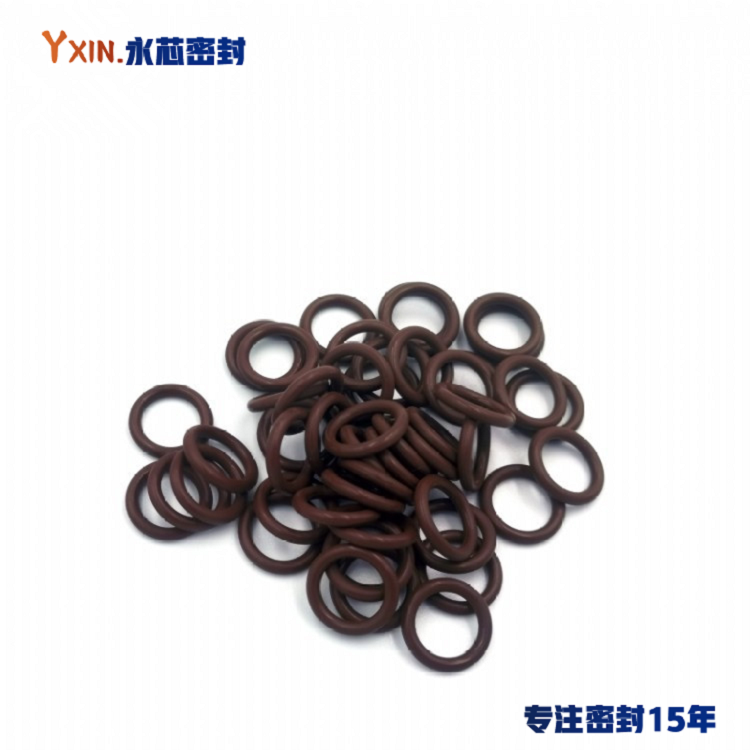
FDA Food Grade FKM Fluororubber O-Ring Seals EPDM
Common food-grade seal materials are typically made from silicone rubber. For food-grade seals, ethylene propylene diene monomer (EPDM) rubber is generally used. A food-grade silicone seal with good tear resistance must meet two conditions: on the one hand, it refers to the high tear resistance of the silicone seal, and on the other hand, it means the seal can pass food-grade inspection standards. Therefore, silicone rubber products are often used in food pipeline sealing.
The differences between tear-resistant food-grade silicone rubber seals and ordinary silicone seals are as follows:

1. Ordinary silicone is not easy to stretch and tends to turn white, whereas tear-resistant silicone rubber seals do not turn white during stretching, have better elongation, and are not easy to break.
2. Tear strength, crack resistance, and elongation are all better than ordinary silicone rubber.
3. Compared to ordinary silicone rubber, transparency is much higher.
4. Production costs are higher than ordinary silicone rubber, and environmental performance is better.
Silicone rubber seal product characteristics include:
1. Resistant to high and low temperature impact.
2. Fast curing speed during operation.
3. Extremely low odor; emissions during curing are harmless to humans.
4. Bonds with multiple substrates without the need for primers.
5. Good heat resistance, ozone resistance, and chemical resistance.
6. Excellent electrical insulation properties.
7. Complies with standard food-grade testing.
FDA's authority over food, agricultural products, and seafood is managed by the Center for Food Safety and Applied Nutrition (CFSAN), which ensures that the U.S. food supply is safe, clean, fresh, and properly labeled. The center oversees $240 billion worth of food imports annually, including $15 billion in imported food. Key monitoring focuses include: 1. Food freshness; 2. Food additives; 3. Food biotin and other harmful ingredients; 4. Seafood safety analysis; 5. Food labeling; 6. Post-market tracking and alerts. According to the law passed by the U.S. Congress in 2003, foreign food enterprises must register with the FDA before exporting to the U.S. and provide shipment notifications to the FDA upon export. Under the U.S. Public Law 107-188, foreign food production and processing enterprises that must register with the FDA include: 1. Alcohol and alcoholic beverages; 2. Infant and child food; 3. Bakery products; 4. Beverages; 5. Candy (including chewing gum); 6. Cereals and ready-to-eat cereals; 7. Cheese and cheese products; 8. Chocolate and cocoa products; 9. Coffee and tea products; 10. Food colorings; 11. Conventional and medicinal foods, meat substitutes; 12. Dietary supplements (i.e., health foods, vitamin drugs, and herbal products); 13. Seasonings; 14. Fish and seafood; 15. Materials and products placed in or in direct contact with food; 16. Food additives and safe ingredient-based edible products; 17. Food sweeteners; 18. Fruits and fruit products; 19. Edible gums, lactase, puddings, and fillings; 20. Ice cream and related foods; 21. Imitation dairy products; 22. Pasta and noodles; 23. Meat, meat products, and poultry products; 24. Milk, butter, and dried milk products; 25. Meal foods, gravies, sauces, and specialty products; 26. Dried fruits and nuts; 27. Shell eggs and egg products; 28. Snacks (flour, meat, and vegetable-based); 29. Peppers, special flavors, and salt, etc.; 30. Soups; 31. Soft drinks and canned water; 32. Vegetables and vegetable products; 33. Vegetable oils (including olive oil); 34. Vegetable protein products (meat analog foods); 35. Whole grain foods and flour-processed foods, starches, etc.; 36. Products primarily or entirely for human consumption.
Large-size EPDM O-Ring Seals Large-dimension EPDM O-Rings EPDM Gasket Washer Characteristics:
For resistance to chemical acid and alkali corrosion, fluororubber or EPDM O-ring seals are generally used. Simply put, the difference between the two is: fluororubber has better chemical resistance, higher temperature resistance (up to 250°C), while EPDM O-rings can only withstand up to 160°C. Fluororubber can resist oil media, whereas EPDM cannot. The advantage of EPDM is its lower cost, making it commonly used in sewage treatment or other water treatment products. EPDM is the English abbreviation for ethylene propylene diene monomer. The common color of EPDM is black, but it can be made in any color if you provide a color code or sample; Yongxin Company can produce it for you. The main chain of EPDM is a fully saturated linear structure without double bonds, with diene on the side chain, allowing vulcanization with sulfur. EPDM has excellent aging resistance, chemical resistance (e.g., strong alkalis, oxidizers, alcohols, acids), ozone resistance, weather resistance, and heat resistance (can be used long-term in 120°C environments), but it is not resistant to aliphatic and aromatic solvents. EPDM has a high filling characteristic in rubber due to its low density, but it lacks self-adhesion and mutual adhesion. Additionally, EPDM has outstanding steam resistance and can be used to make steam-resistant diaphragms and other sealing products. EPDM is widely used in components for televisions and washing machines, door and window seals, or various composite profile rubber strip production.
The above provides information on the physical characteristics of EPDM O-rings. In addition, there are NBR rubber O-rings, VITON fluororubber O-rings, SIL silicone rubber O-rings, AEM butyl rubber O-rings, and other material O-ring seals.
Rubber Material Description:
Nitrile Rubber (NBR) Heat resistance 120°C, hardness around 70, black, good oil resistance.
90-Degree Rubber (NBR) Same NBR material, higher hardness, better pressure resistance.
Silicone Rubber (VMQ) Heat resistance 200°C, average oil resistance, none, good waterproofing (high-temperature silicone available, resistant up to 280°C).
Fluororubber (FKM) Heat resistance 250°C, good oil resistance, corrosion resistance.
EPDM Heat resistance 150°C, not oil-resistant, acid and alkali resistant.
Hydrogenated Nitrile Rubber (HNBR) High-temperature resistance 130-180°C, low-temperature resistance -55 to -38°C.
Common Materials: Nitrile Rubber (NBR), Fluororubber (VITON), EPDM, Silicone Rubber (VMQ), Chloroprene Rubber (CR), Styrene-Butadiene Rubber (SBR), Hydrogenated Nitrile Rubber (HNBR), and dozens of other rubber materials; products with Shore hardness 50–90 can be provided.
EPDM Seals Eco-friendly Silicone O-Rings Fluororubber O-Rings Rubber Sealing Rings Waterproof Ring Size Standards
The size of the O-ring affects the sealing effect and service life, so it is important to carefully select the appropriate size when choosing an O-ring. Consult our engineers to verify standard seal sizes based on your required working conditions.
O-Rings Japanese Standard American Standard For Shafts For Holes Standard Specifications Complete Size Range,
Custom rubber rings for various materials and special requirements.
Under static conditions, O-ring seals prevent leakage of liquid and gas media.
Under dynamic conditions, O-ring seals can also be used as dynamic sealing elements for axial reciprocating motion and low-speed rotation.
| Industry Category | Hardware & Tools/Seals & Gaskets/Other Seals |
|---|---|
| Product Category | |
| Brand: | |
| Spec: | YX01D |
| Stock: | 20000 |
| Manufacturer: | 苏州永芯 |
| Origin: | 113205 |


