


Heat of Combustion Tester for Thermal Insulation and Fireproof Building Materials
Contact Info
- Add:鹤壁市长风路, Zip: 458000
- Contact: 师文亮
- Tel:0392-2700039
- Email:598945101@qq.com
Other Products


Thermal Insulation Fireproof Building Material Calorific Value Tester Thermal Insulation Fireproof Building Material Calorific Value Tester Hebi Yinte Instrument and Meter Factory
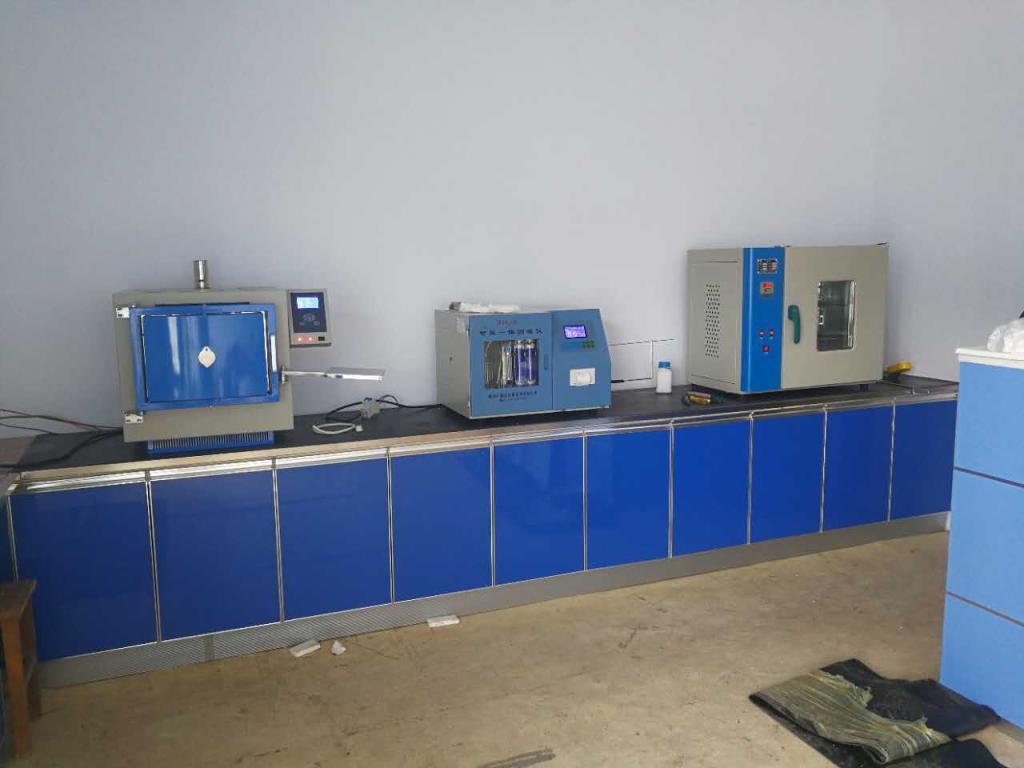
1. Installation and Debugging
(1) Explanation of the determination method: Weigh 0.9g to 1.01g (accurate to 0.0002g) of an air-dried sample with a particle size of less than 0.2mm in the combustion crucible. For samples prone to splashing during combustion, wrap them tightly with a lens-cleaning paper of known mass before testing, or first press into a pellet and cut into 2mm-4mm pieces. For samples that are difficult to ignite, place an asbestos pad at the bottom of the combustion crucible, or spread a layer of asbestos wool at the bottom and compact it by hand. Quartz or stainless steel combustion crucibles do not require any lining. If the sample still fails to ignite with a lining, increase the oxygen filling pressure to 3.2 MPa, or wrap the weighed sample with lens-cleaning paper of known mass and calorific value, compact it by hand, and then place it in the combustion crucible.
(2) Take a piece of ignition wire of known mass, connect both ends to the two electrode posts, and bend the ignition wire close to the sample, ensuring it either touches the sample or maintains a slight distance (for coals prone to splashing: avoid letting the ignition wire contact the combustion crucible to prevent short circuits that could lead to ignition failure or even damage the crucible. Also, prevent short circuits between the two electrodes and between the combustion crucible and the other electrode.
(3) When using a cotton thread for ignition, fix one end of the cotton thread to the ignition wire connected between the two electrode posts (clamped in the spiral of the ignition wire), and let the other end contact the sample. Adjust the degree of contact based on the sample's ignition difficulty. For coals prone to splashing, maintain a slight distance.
(4) Add 10 mL of distilled water to the oxygen bomb, carefully tighten the bomb lid, avoiding any displacement of the combustion crucible and ignition wire due to vibration. Slowly fill the oxygen bomb with oxygen until the pressure reaches 2 to 3 MPa. The oxygen filling time must not be less than 15 seconds. If the oxygen pressure accidentally exceeds 3.3 MPa, stop the test, release the oxygen, and refill to below 3.2 MPa. When the oxygen pressure in the cylinder drops to 5.0 MPa, the filling time should be appropriately extended. If the pressure falls below 4.0 MPa, replace the oxygen cylinder.
(5) Add sufficient water to the inner bucket of the instrument so that the top surface of the oxygen bomb lid (excluding the protruding gas inlet/outlet valves and electrodes) is submerged 10 mm to 20 mm underwater. The amount of water used in each test should be consistent with that used during the calorific capacity calibration (within about 1 gram difference).
(7) Place the oxygen bomb into the inner bucket filled with water. If no bubbles leak from the oxygen bomb, it indicates good airtightness. If bubbles appear, it indicates leakage. Identify the cause, correct it, refill with oxygen, and then check if the ignition plug is properly connected. Check the stirring motor to confirm if it is stirring. After confirmation, close the lid.
(8) Press the calorific value key or heat capacity key on the operation keyboard. Observe whether the ignition indicator light flashes, whether the temperature on the color screen rises, and whether timing starts. If the temperature rises rapidly and timing begins, it indicates successful ignition. The test will be completed in about 15 minutes, and the instrument installation and debugging are finished.
| Industry Category | Construction & Building Materials/Glass/Processed Glass |
|---|---|
| Product Category | |
| Brand: | 英特仪器 |
| Spec: | DW-80L |
| Stock: | 16 |
| Manufacturer: | 鹤壁市英特仪器仪表厂 |
| Origin: | 114106 |


