


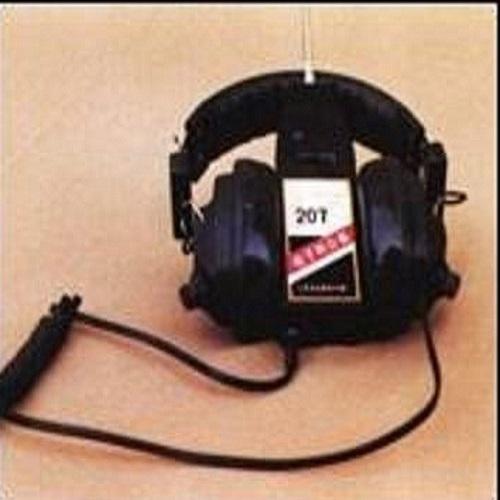


Machine Fault Stethoscope
Contact Info
- Add:城南工业园兴园一路, Zip: 225800
- Contact: 葛先生
- Tel:13952500168
- Email:server@zd88.com
Other Products

The Model 207 Machine Fault Stethoscope is a basic, essential portable electronic instrument for inspecting machine faults. All performance indicators are equivalent to the Swedish LE-12 electronic stethoscope.
The Model 207 electronic stethoscope can detect impact vibrations generated by defects and faults in operating parts such as bearings, gears, valves, valve bodies, crankshafts, cylinders, and gearboxes while the machine is running. Even in extremely harsh noise environments, the Model 207 allows maintenance workers to clearly identify the location and severity of machine noise.
Scope of Application
The Model 207 electronic stethoscope can be applied in metallurgy, building materials, chemical industry, light and textile industries, electric power, mining, electric motors, ships, automobiles, aircraft, machine tools, and various engineering machinery, heavy machinery, and all types of rotary and reciprocating machinery. It is particularly necessary for large equipment, critical and complex equipment, and machinery that operates continuously for long periods.
The Model 207 electronic stethoscope is an essential instrument for every maintenance worker, inspection technician, and mechanical workshop team, serving as a high-performance tool for checking machine faults.
Principle
A normally operating machine produces relatively stable simple harmonic vibrations. The main frequency of vibration is consistent with the machine's operating speed, and the acceleration amplitude of machine vibration is generally small. When faults occur, such as local wear, foundation settlement, component deformation, scratches, cracks, defects, rotor imbalance, misalignment, lack of lubrication, or inconsistent oil film thickness, the machine's vibration signal will include various complex impact vibrations with different frequencies and amplitudes. Therefore, the conclusion can only be that vibration reflects the machine's condition. By detecting and analyzing the machine's vibration and impact signals, the location and severity of faults can be determined.
The Model 207 electronic stethoscope contains a highly sensitive vibration acceleration sensor that converts mechanical vibrations of various frequencies (including extremely weak vibrations) into electrical signals. The magnitude of the electrical signal is proportional to the amplitude of the vibration acceleration.
The electrical signal measured by the sensor is amplified by a high-gain, wide-band linear amplifier. Through stereo headphones, one can directly hear the machine's various vibration responses amplified thousands of times. The output can be connected to an ordinary tape recorder to record the machine's vibration signals on cassette tapes, or it can be directly connected to recording instruments such as oscilloscopes.
;It must be emphasized: the Model 207 electronic stethoscope directly converts the machine's vibrations into electrical signals and amplifies them multiple times; it does not simply amplify environmental noise caused by vibrations. Therefore, the Model 207 features high sensitivity, strong analytical capability, good anti-interference, and accurate judgment.
Main Performance Parameters
Sensor Type: Piezoelectric Acceleration Type
Sensitivity: Approximately 800 mV/g
Signal-to-Noise Ratio: >60 dB
Probe Resonant Frequency: >20 kHz
Probe Length: 100 mm
Power Consumption: <15 mW
Power Supply: DC 9V
Dimensions: Length 170 mm, Width 50 mm, Height 33 mm
Weight: 240 g
Usage
1. General Use: The instrument is very easy to use. Tightly screw the probe onto the sensor base, plug the headphones into the output jack, and put on the headphones. Turn on the amplifier knob and indicator light, gently stroke the probe with your hand, and a rustling sound can be heard in the headphones. Adjust the volume knobs on both headphones to maximum. Place the probe in contact with a part of the operating machinery, and you can clearly hear various vibrations of the machinery through the headphones.
2. Correct Judgment:
When clear, sharp sounds are heard in the headphones, it indicates high-frequency vibrations, usually from relatively small components, small cracks, or local defects in higher-strength metal parts.
When low, muffled noises are heard, it indicates low-frequency vibrations, typically from larger, longer components, larger cracks or defects, or materials with relatively lower strength.
When the noise in the headphones is louder than usual, it indicates that the machine fault is developing; the louder the sound, the more severe the fault.
If the noise in the headphones becomes random and杂乱无序 instead of规律间歇性, it indicates that a component has become loose, and an accident may occur at any time.
3. Fault Detection in Low-Speed Machinery:
Even for low-speed operating machinery with faults, such as a ball mill running at 60 RPM (1 Hz), the Model 207 electronic stethoscope can detect the location and severity of the fault. When the ball mill operates under ideal conditions, the simple harmonic vibration measured from the bearing housing is 1 Hz. The Model 207 headphones have no response at low frequencies (the sensor and amplifier can work at low frequencies, and the amplified signal can be output to other display and recording instruments), and the human ear cannot hear sounds at 1 Hz (infrasound). However, when a fault occurs in the ball mill, such as a crack in the bearing ring, an impact vibration is generated with each revolution. The frequency of impact vibrations is very rich, generally covering both audible sound (20–20,000 Hz) and ultrasound. That is, every 1 second, the Model 207 detects an impact vibration. Therefore, the Model 207 electronic stethoscope is fully capable of detecting faults in low-speed machinery.
The Model 207's ability to detect impact vibrations at low frequencies can be verified with a watch. Place the probe against the metal case of the watch, and you can clearly hear the sound of the watch.
Another experiment can be done with a radio. When the radio is playing music, place the Model 207's probe against the metal case (or metal ring) of the speaker. You can clearly hear the music through the Model 207's headphones. When moved away from the metal ring, the Model 207 does not function as a microphone amplifier. This phenomenon shows that the music played by the speaker causes the metal ring to vibrate, the Model 207 converts the metal ring's vibrations into electrical signals and amplifies them, and the headphones convert the amplified electrical signals back into music (sound). Since the Model 207 can clearly distinguish between bass and soprano, brass and percussion, from the vibrations of the metal ring, it can also be used to detect and judge various faults in machinery. Of course, this requires some accumulation of practical experience.
| Industry Category | Instruments & Meters |
|---|---|
| Product Category | |
| Brand: | TB |
| Spec: | 207 |
| Stock: | 17 |
| Manufacturer: | |
| Origin: | China / Jiangsu / Yangzhoushi |


